Joining a course6 minutes

Dance class waitlist as a couple: When do you move up together?

By Bernhard De LucaUpdated

In short
  • A couples' waitlist doesn't secure spots for you, it records your wish to move up together.
  • Couple spots and individual spots may be managed differently, especially when dance roles are planned in advance.
  • To move up together, you need an offer for both people with the same acceptance deadline.
  • Your position on the list alone guarantees neither that you'll get in nor a specific wait time.

The open spot on a class list tells only half the story. The allocation also depends on the room, how the class is organized, and sometimes the balance of dance roles, which determines which waiting couple can actually join.

DefinitionCouple spot

A couple spot is a class capacity allocated jointly to two people who have registered together. A dance school can manage its waiting list by these units instead of by individual people.

A cancellation can leave different gaps

A dance school can count capacity in people, couples, or designated dance roles. This distinction changes your chances of getting a spot when one opens up. A deliberately simplified example: A course is planned for ten couples. If a complete couple cancels, a full couple unit becomes available. If only one person cancels, one individual spot initially remains. Whether the school can turn that into additional capacity for another couple depends on its teaching model.

With a fixed allocation of leading and following roles, it also matters which positions become available. Two cancellations on the same side create two spots for people, but not necessarily the combination intended for you. A cancellation on each side, on the other hand, may suit a joint offer, even if the cancellations are from different couples. With flexible role assignments, this restriction may not apply.

This explains why a couple with a suitable role combination sometimes receives an offer while others continue to wait. This does not mean that couples are generally given preference. The provider sets the rules. By the way, registering as a couple does not automatically mean you are in a relationship, as the guide to taking a couples course without being in a romantic relationship explains.
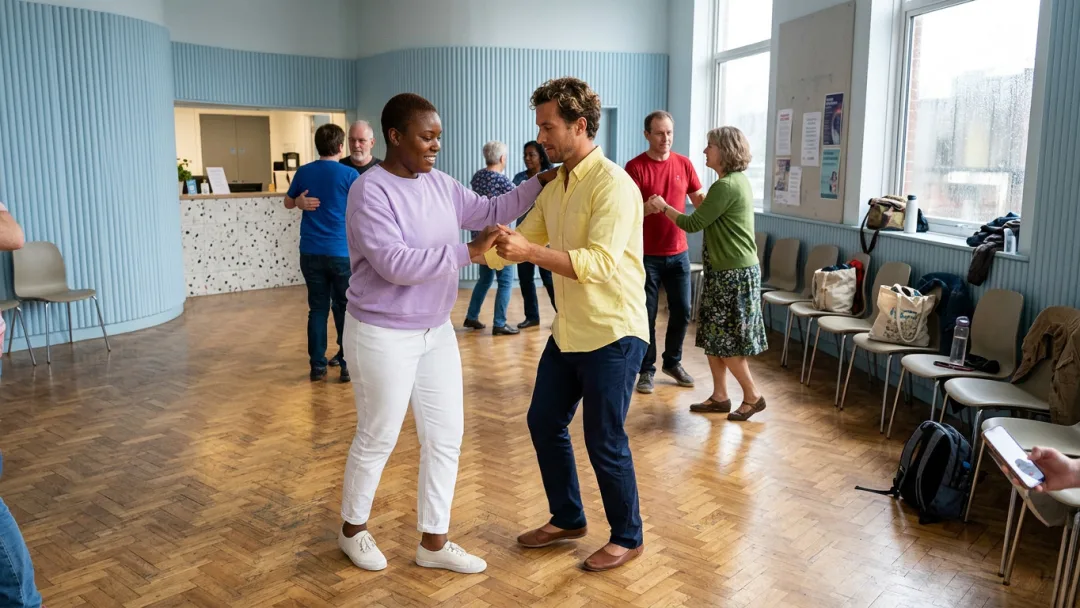
Empty chairs say little about available course spots: People who are registered but absent today still keep their place.

List position is not a reliable forecast of when you’ll get a spot

A waitlist can work strictly by order of registration or first consider the oldest suitable request. In the second model, being number one does not mean every available spot is suitable for you. If you’re waiting for a spot for a couple and only one individual spot becomes available, your request may remain active while that spot is filled by someone else. This is only understandable if it aligns with the allocation rules.

The timing of a cancellation also matters. A beginner couple can be accommodated differently before the first class than after several lessons have already built on each other. So a spot that opens up later is not automatically a pedagogically appropriate starting point. In particular, a dance intensive course with lessons that build on each other may offer little opportunity to catch up on missed fundamentals once it has started.

You therefore can’t use your list position to make a reliable estimate of how many days remain. A helpful status update distinguishes between your position, the capacity you need and the latest possible start date. For example, it could say: Your request as a couple remains on the list, but you can only join before the course starts. This describes an actual limitation without promising you spots that aren’t guaranteed.

How to tell when you've both confirmed

So, yes

  • The waitlist offer names both people waiting
  • Both places remain reserved until the same deadline
  • Accepting the offer applies to the same course and start date
  • An individual offer leaves the shared waitlist position intact

Not like this

  • Only one person receives a place confirmation
  • The second person is only supposed to receive an offer later
  • The offers are for different course start dates
  • An individual offer closes your pair waiting list without resolving the issue

A waitlist position describes the order, but only the allocation rule explains which available offer is right for your couple.

udansa-Redaktion

A waitlist offer must be treated as a unit

The decisive step is not being added to the waitlist, but receiving a concrete offer of places. For you to start together, this offer must include both people in the same course. Especially with waitlists managed individually, a message to one person is not enough to confirm whether the other person has also been considered.

It’s important to remember that a reservation is not the same as acceptance. For example, a time-limited offer may hold places until a specified time. Only your timely acceptance results in a booking under the stated procedure. If both people can reply separately, the joint reservation must still remain in place until that deadline. Otherwise, the very risk a couple’s waitlist is meant to avoid can arise.

One concise question is enough: “We only want to move up the waitlist together. Can you confirm that an offer will include both people, that both places will remain reserved until the same acceptance deadline, and that declining a place for just one person won’t end our joint waitlist request?”

This wording does not require a guaranteed place before you cancel. Instead, it separates two commitments: the school either promises places that are already available, or merely promises not to split up your request when places become available. The latter protects your plan to start together, even though it remains to be seen whether a suitable offer will come up at all.

Two ways to manage available capacity

As couples

Couples move up together

The school allocates places to couples as a unit

If a registered couple withdraws, a place becomes available for a waiting couple. If only one person withdraws, that does not necessarily free up a place for a couple. This model makes group classes easier to organize, but can mean longer waiting times.

Individual spots

Two suitable spots are paired

The school manages individual spots

Available spots can arise from different cancellations. For you as a couple, two spots must be available together and held until you accept them. This model can make use of different gaps, but requires explicit joint allocation.

Frequently Asked Questions

  1. Yes, if they create two places that work for your pairing and the school offers them to you together. With roles assigned in advance, for example, one newly available leading role and one following role could match. Two unrelated cancellations, however, do not necessarily make up a suitable place for a couple.

Partner dance classes for your first steps together

On udansa, you can find partner dance classes and request a specific date to get started together.

See all suitable classes

Your start is together

On udansa, you'll find classes for the start you're planning. With udansa connect, you can find a dance partner and arrange to start together later.

Your start is together