
Course registration6 minutes

How to find a dance class for singles near you

By Mary De LucaUpdated

In short
  • A dance course for singles lets you sign up without your own dance partner, as long as individual registrations are explicitly allowed.
  • Depending on the course, partners are assigned in fixed pairs, rotated regularly, or supplemented with additional dance partners.
  • A place on the waiting list does not confirm your participation, and signing up individually does not automatically guarantee you a regular partner.
  • On udansa, you can find suitable partner dance courses and also look for a dance partner to practice with.

You’ve found the right date, but suddenly the registration form shows two dance roles instead of an available spot. This setup determines whether you can actually join in or first have to wait for a suitable pairing.

DefinitionRole balance

Role balance refers to the ratio of leaders and followers in a partner dance group. It determines how many dance pairs can practice at the same time, regardless of the participants’ gender.

Individual registration describes how to join the course

If you're looking for a dance course for singles nearby, you first need an option that lets you take part in partner dancing without bringing a partner. The term singles explains how to join the group, but not yet how things work on the dance floor. A course may accept people individually and still keep the same partners together for several weeks. Another may have partners switch after individual exercises.

Individual registration and partner matching are therefore not equivalent services. With a pairing, the dance school arranges a partner for the lesson. Matching with the aim of establishing a longer-term dance connection goes further. Individual registration also does not automatically accommodate a preference for the other person's gender or age.

Leaders initiate movements, while followers respond to them and shape the movement together. So it is the dance role, not simply the number of women and men, that determines how partners are paired. The significance of these roles becomes particularly clear when getting started with swing dancing: Practicing together requires a suitable pairing, but not a romantic relationship. On udansa, you'll find partner dance options; whether a particular course accepts individual registrations is stated in its participation details.
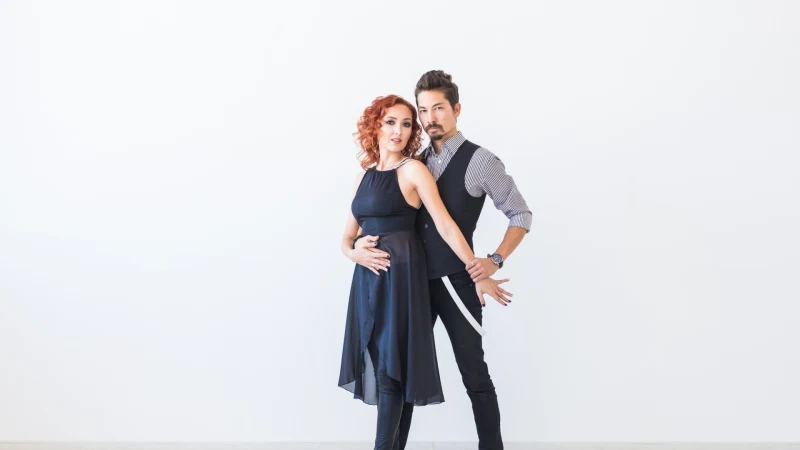
A beautiful couple dancing Bachata against a white background
A pause between two pairings can give you space to mentally process the movement you just saw.

Waiting lists balance roles, not just spots in the room

A free spot in the room may still not mean there is a spot available for your role. If significantly more followers than leaders are registered, another follower may initially be placed on the waiting list. This is an organizational limitation: right now, there is no corresponding partner role for the planned partner exercises. A waiting list can also form because the group as a whole is already full.

When participant numbers are uneven, classes use partner rotation, supporting dance partners, or alternating practice breaks, depending on the format. The instructor can have you practice individual movements without a partner, such as steps and weight changes. Rotation spreads partner time around, but it does not resolve an imbalance between roles: if there are fewer leaders, not all followers can dance with a partner at the same time.

For booking, keep three types of confirmation separate: individual registrations are accepted, your spot is confirmed, or your place in a pair is explicitly guaranteed. A guarantee of participation means only what the provider specifically says it means. Without an additional agreement, it says nothing about having the same partner in every class. If this information is missing, clarify in one conversation before booking whether your role is confirmed and how partner assignments, role imbalances, and absences are handled. A request that is merely noted, on the other hand, is less binding than an explicit confirmation of participation.

How to interpret RSVPs

So, yes

  • Understand individual registration as signing up without your own dance partner
  • Treat a place on the waiting list as an open spot
  • Distinguish confirmation of participation from a firm commitment from a partner
  • Specify the dance role regardless of gender

Not like this

  • Assume an individual registration means you’ll be assigned a permanent partner
  • Show up for the first class as if your place were confirmed when you’re on the waitlist
  • Assume a confirmed place means you’ll be a fixed dance couple
  • Automatically infer the dance role from gender

A confirmed place in a class and a regular dance partner are two different commitments, even if you're looking for both for the same evening.

udansa Editorial

Course places and dance partner searches remain separate

Looking for a dance partner can complement your course registration, but it does not replace its confirmation. On udansa, you can look for someone whose schedule works with your course and who wants to practise the complementary dance role. A specific day of the week is more helpful than a general wish to dance occasionally. The level of commitment you want matters too: coming to class together and also practising regularly are different expectations.

If you find a good match before the course starts, it can make planning easier. However, two interested people do not automatically get two confirmed places. Especially with a role-based waiting list, registrations remain subject to the respective course model. Likewise, a contact made through rotation does not oblige you to arrange additional lessons outside the course.

A gifted taster course to try out a dance style does not replace an organised partner assignment either. Attending the lesson and pairing people remain separate matters, regardless of who pays for the introduction. This lets you clearly distinguish between two goals: getting a reliable place in class and finding someone you would like to practise with over the long term. The two can go together, but they do not have to happen at the same time.

Two ways to schedule practice sessions together

Pairing

A connection with a partner starts in class

Learning together brings you together

Your partner assignment gives you the chance to meet while working on the lesson activity. Whether you go on to practise together regularly is up to you. The class creates an opportunity to connect, but doesn't commit you to anything beyond the lesson.

Search

Connect with a dance partner before class

A shared class time brings you together

On udansa, you can look for someone who wants to attend the same class. You can coordinate your dance roles, preferred day of the week, and practice preferences. Finding a dance partner does not reserve a spot for either of you in the class.

Frequently Asked Questions

  1. For a course you can sign up for individually, what normally matters is that you come without your own dance partner, not your relationship status. An offer explicitly described as a dating event, on the other hand, has a different purpose. The term single dance course alone does not mean that romantic connections are intended.

Partner dance classes you can sign up for solo

On udansa, you can find partner dance classes near you and search for classes that accept solo registrations.

See all matching classes

Find someone who fits your class day

On udansa, you can search for dance partners who match your dance role and the evening you’re available. That turns a suitable class option into a real opportunity to practice together.

Find someone who fits your class day