A course reservation connects two separate commitments
With a partner-dependent registration, two decisions come together: someone wants to learn with you, and the provider accepts both of you into that specific class. Your private arrangement does not replace acceptance. Conversely, a reserved spot for one person does not automatically mean there is also room for your new contact. What matters is the wording of your provisional commitment, not the label “reserved” on its own.
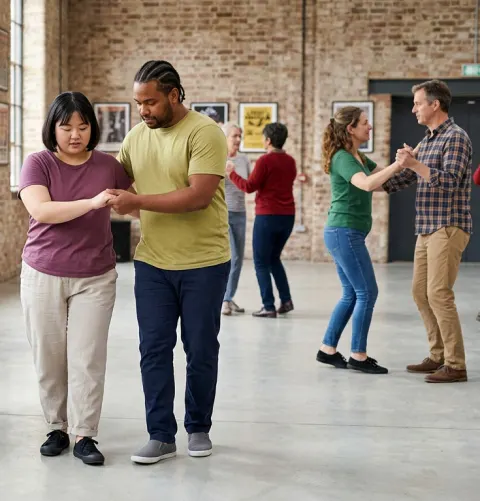
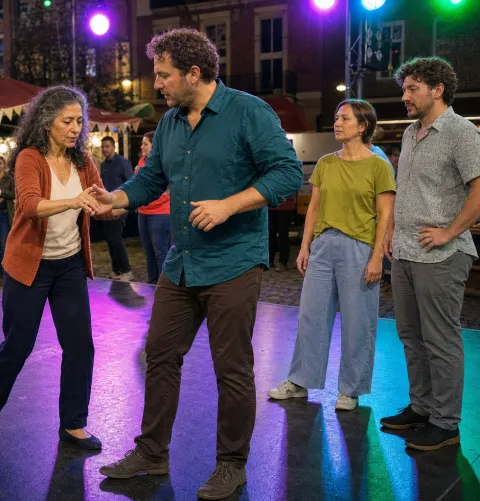
There is a practical reason for this in partner dancing: leaders and followers practice interrelated roles. If the class needs someone in a particular role, an additional person in the other role does not help with the class organization. The same dance style is not enough to make them a match either: a beginner class on Tuesday and an intermediate class on Thursday are different groups. For a later registration as a couple when you have different levels of experience, the guide to different course levels as a couple explains the separate decision.
So keep the course offering, your personal commitment, and the acceptance confirmation separate. Three short notes are enough to see which part is still missing. A general statement about available practice partners does not answer this question about acceptance. The guide to the participation guarantee in a singles class explains what providers mean by different commitments. The coordination below, by contrast, starts with a course that has already been selected and a partner requirement that is still open.