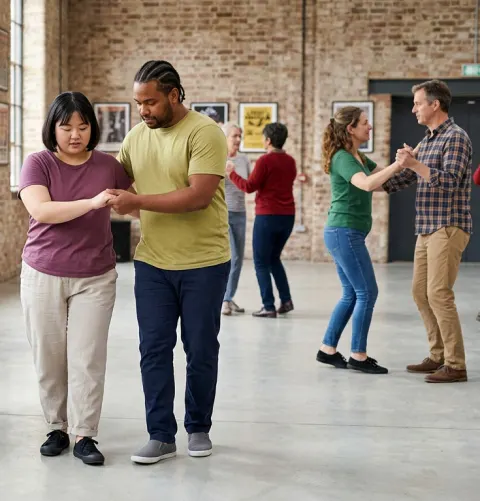
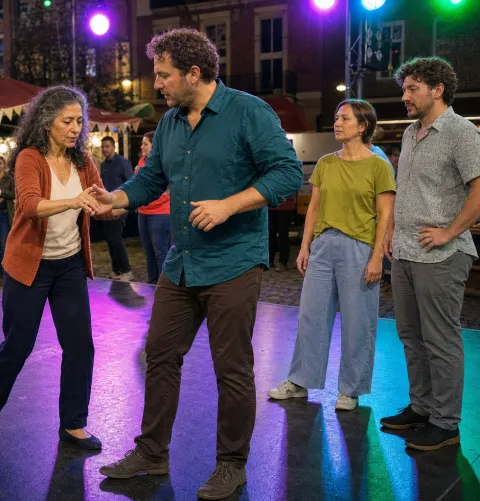
Age groups describe the social setting
In a singles course, adults learn together without bringing a regular dance partner. That is why, alongside the dance style, the advertised group composition may also play a role. For example, a dance school might offer separate classes for ages 25 to 40 and 50 and up, so interested people can choose a setting with people of a similar age. These numbers are examples, not standard or required age limits.
Age groups can shape expectations around meeting people: some would like to chat with people in a similar stage of life after class. Others prefer a mixed adult group. Both are understandable preferences. However, this does not mean that one group learns steps faster or can dance more challenging figures.
Age group and course level describe different things. A beginner class for ages 50 and up is still a beginner class; an advanced course for younger adults still requires prior experience. The division into course levels relates to each person's skill level. For a dance intensive course for adults, the structure of the lessons also explains the learning requirements better than an age number. An advertisement can include both details without one replacing the other.