March dance is the style, a dance guard is the ensemble
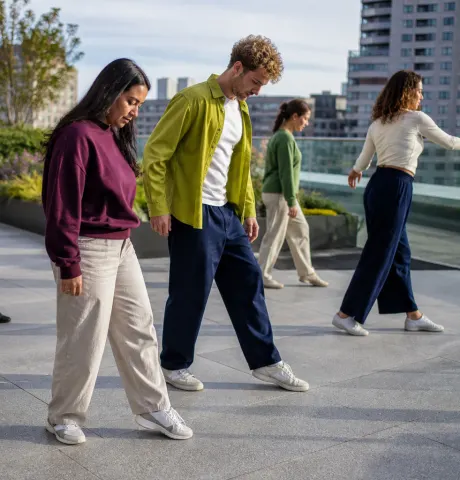
March dance refers to a dance form that combines clear step sequences, distinctive arm positions and precise accents with march music. A dance guard, by contrast, is the ensemble: several dancers perform a coordinated choreography. The two are often treated as the same thing in everyday use, even though the terms describe different things.
Tanzmariechen and Funkenmariechen refer to solo roles in carnival dance. Which term is commonly used depends on tradition and context; there is no universally applicable technical ranking. In addition to step technique, solo dances can include challenging turns, jumps and acrobatic elements.
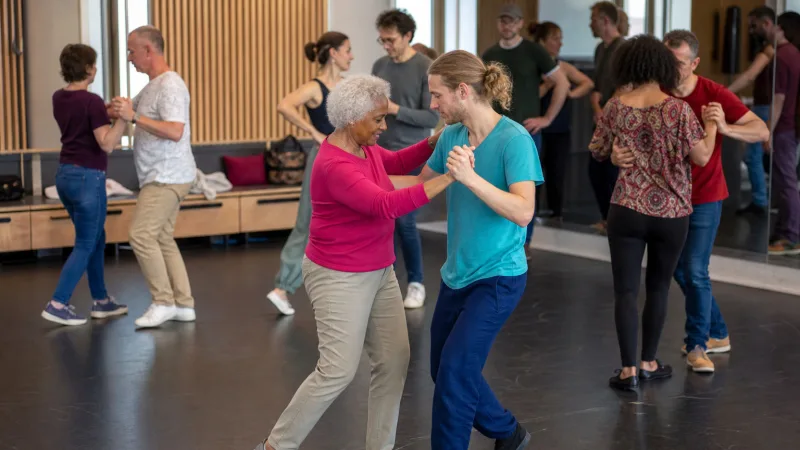
In a dance couple, two people perform a choreography they have rehearsed together. Coordination comes from set routines, not from spontaneous leading as in social dance. Partner work and acrobatic elements may be added, but they are not part of the first beginner lesson.
For beginners, the forms initially differ less in spectacular figures than in where they need to focus: in a group, you keep an eye on the people next to you and the rows; dancing alone, you manage every transition yourself; in a couple, you also coordinate paths and cues with another person. Personal expression is possible in all forms, but it is incorporated into the choreography in different ways.