Dance music5 minutes

Hearing the Salsa beat: Your guide to the Clave rhythm

Kurz gesagt
  • Der Salsa-Takt basiert auf einem 4/4-Takt, bei dem sich die Grundschritte über zwei Takte hinweg auf insgesamt acht Zählzeiten verteilen.
  • Das rhythmische Herzstück ist die Clave, ein charakteristisches Muster aus fünf Schlägen, das den Musikern und Tänzern als Orientierung dient.
  • Um die wichtige Zählzeit 1 herauszuhören, achtet man am besten auf den markanten Doppelschlag der Conga-Trommel, der direkt davor auf der 4 liegt.
  • Der eigentliche Tanzschritt erfolgt auf die Zählzeiten 1, 2, 3 und 5, 6, 7, während auf den Zählzeiten 4 und 8 eine kurze Pause eingelegt wird.

Salsa-Musik sprüht vor Energie, kann Anfänger mit ihren wilden Rhythmen aber auch überfordern. Mit dem richtigen Gehör für die Clave findest du mühelos den Einstieg und setzt jeden Schritt genau auf den Punkt.

Das brauchst du vorher

  • A quiet room without distractions
  • Salsa music with clearly audible percussion
  • A little patience for your own ears

Understanding the rhythmic foundation of Salsa

When you hear Salsa music for the first time, you usually perceive a fascinating, but often confusing web of drums, rattles, and brass instruments. To recognize the beat in this dense tapestry of sound, it helps to take a look behind the scenes of the percussive instruments. The rhythmic foundation of Salsa is based on the clave, a two-bar pattern played by two wooden sticks, the claves. This pattern runs like a golden thread through every Salsa piece and arranges all other instruments around it. When you learn to consciously perceive this rhythmic skeleton, the music loses its complexity and transforms into a clear, danceable structure.

The role of the congas and the bass

Besides the clave, it is primarily the congas that show you the way. They play a rhythmic pattern called tumbao. The characteristic, open double beat of the conga is almost always on counts 4 and 8. When you hear this deep, full drum beat, you know exactly that the important count 1, on which you take your first step, follows in the next moment. The bass, in turn, often works in a syncopated way, meaning it emphasizes the beats just before the actual main beat. This creates the typical, driving forward momentum of Salsa, but can easily confuse beginners when counting salsa rhythm. Therefore, focus primarily on the bright beats of the cowbell or the distinctive conga double beat at the beginning.

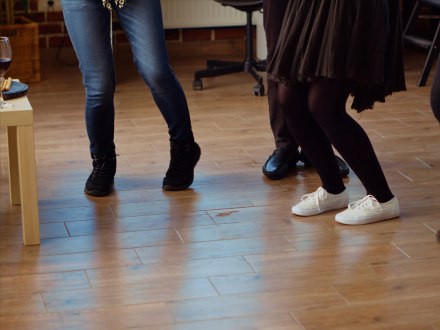
Menschen bei einem Tanzkurs in einem Gemeindezentrum
Concentrated gazes and a focus on the shared step: If you have the rhythm in your ear, you can rely entirely on your partner while dancing with udansa.
udansa-Tipp

Wenn du den Takt verlierst, gerate nicht in Panik. Bleibe einfach einen Moment ruhig stehen, wippe leicht mit den Knien im Rhythmus mit und warte auf den nächsten markanten Conga-Schlag, um wieder auf der Eins einzusteigen.

Learning to hear the Salsa beat, step by step

  1. Den Grundschlag finden

    Suche dir ein mittelschnelles Salsa-Stück und versuche, die gleichmäßigen Grundschläge der Musik zu finden. Klatsche oder tippe mit dem Fuß gleichmäßig im Vierteltakt mit, um ein Gefühl für das Tempo zu bekommen.

  2. Count out loud from one to eight

    Count out loud to the beat from one to eight. Make sure the numbers flow evenly and that you take a short, conscious pause when saying numbers 4 and 8 to internalize the typical Salsa pattern.

  3. Den Clave-Rhythmus isolieren

    Lausche gezielt auf die hellen Holzschläge der Clave oder den markanten Doppelschlag der Conga-Trommel. Dieser markante Trommelsound bereitet dein Ohr perfekt auf die darauffolgende Zählzeit 1 vor.

  4. Den ersten Schritt auf 1 setzen

    Setze deinen ersten Schritt genau dann, wenn die Zählzeit 1 ertönt. Nutze die zuvor gehörten Orientierungspunkte in der Musik, um den Fuß präzise und ohne Zögern auf den Boden zu bringen.

  5. Dance the breaks actively

    Move through the basic step by shifting your weight on 1, 2, 3, pausing briefly on 4, and then continuing to dance on 5, 6, 7, before the second break follows on 8. Repeat this until it flows smoothly.

Salsa-Timing im direkten Vergleich

Correct

  • Focus on the low conga beat
  • Listen carefully before you start
  • Consciously feel the pause on 4 and 8

Falsch

  • Sich von schnellen Trommelwirbeln verwirren lassen
  • Hektisch auf den ersten Ton losstürmen
  • Durchgängig ohne Pause acht Schritte machen

Dein Weg zum perfekten Salsa-Timing

Zuhause trainieren

Vorbereitung

Before the dance

Arrival

Auf der Tanzfläche

Waehrend

Häufige Fragen

  1. Die Eins ist der erste Schlag im Takt und meist der am stärksten betonte Moment im Lied. Du erkennst sie oft am Einsatz des Gesangs, einem neuen Bläsersatz oder dem markanten Conga-Doppelschlag, der direkt auf der Zählzeit 4 davor liegt.

Salsa courses near you

Find the right course and learn how to translate the Salsa rhythm into real partner dancing.

View all matching courses
udansa community

Find your Salsa partner online

Here you can meet other dance enthusiasts who want to feel the rhythm in their blood just like you. Exchange ideas, practice together, and find the perfect companion for the next Salsa night.

Quellen

Erfahrungswerte aus der Unterrichtspraxis deutscher Salsa-Tanzschulen sowie musikwissenschaftliche Grundlagen lateinamerikanischer Rhythmik, Stand August 2026.