
Find your dance community with udansa
Here you can meet other music enthusiasts, find courses for every dance style, and make connections in your area.


By Bernhard De LucaUpdated
Here you can meet other music enthusiasts, find courses for every dance style, and make connections in your area.
Only music brings the dance floor to life and gives meaning to the steps. If you understand the rhythms, you no longer just dance by steps, but move in harmony with the beat.
Dance music is any form of music that has been specifically composed or arranged to rhythmically accompany and guide human dance movements. It is characterized by a clearly structured rhythm and a constant tempo.
To understand how closely movement and sound are intertwined, it helps to look at the question: What is dance music actually at its core? In contrast to pure concert music, which is primarily composed for passive listening, dance music is functional. Its structure, its accents, and its tempo are designed to set the human body in motion. The history of dance music shows that this art form is as old as humanity itself. From ritual drums in the Stone Age to the courtly dances of the Baroque era, and all the way to modern club culture, it has always served the community. Typical dance music instruments like percussion, bass, and rhythmic brass sections form the foundation upon which melodies can first unfold their physical effect.
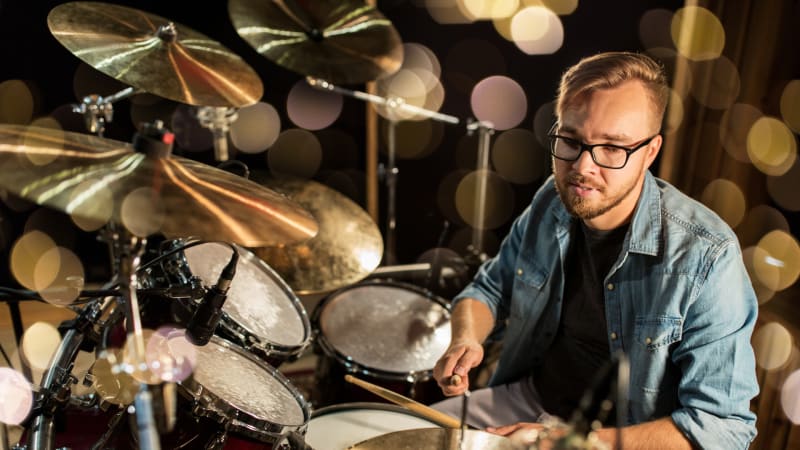
The world of movement is divided into countless dance music genres, each bringing its own unique culture and dynamic. In the well-founded dance music rhythm theory, styles are primarily distinguished by their time signature and the emphasis on specific counts. While the classic Waltz swings in an elegant 3/4 time, modern partner dances like Discofox, West Coast Swing or Salsa are based on the universal 4/4 time. If you want to dive deeper into Latin American rhythms, you will find a detailed comparison in the guide Salsa, Bachata & Kizomba: The styles compared. Each genre uses its own rhythmic patterns to build a very specific emotional connection between the dancers.
Correct
Wrong
Music is the map for our feet: anyone who learns how to read it correctly will never get lost on any dance floor in the world again.
To move confidently on the dance floor, a strong sense of rhythm for dance music is essential. The dance music speed, measured in beats per minute (BPM), determines not only the dynamics but also the character of the steps. Slow, emotional dance music songs invite fluid movements, while fast beats require precision and quick reactions. If you want to understand the interplay of leading and musical interpretation in detail, you should familiarize yourself with the concept of lead & follow in partner dance. Only when you learn to consciously hear the supporting instruments and the accents of the rhythm does simply reeling off steps turn into real, improvised dancing.
Maintaining the rhythmic foundation
Here, the focus is on exactly keeping to the counts and the structure of the song. Perfect for beginners to gain confidence in their steps and to understand the mathematical side of the music.
The emotional interpretation
Here, dancers use melodic arcs, pauses, and vocal lines for spontaneous accents. It requires experience to playfully stretch the structure of the music without losing the basic beat.
Dance music is characterized by a strongly emphasized, steady rhythm and a constant tempo. This structure helps dancers to perform steps in sync with the music.
The speed is measured in BPM and ranges from about 80 BPM for slow dances like Rumba to over 200 BPM for fast dances like Quickstep. Every genre has its typical tempo range.
The best way to train your sense of rhythm is by consciously listening to the bass or drums in songs during everyday life. Clapping along to the heavy beats also helps enormously.
Sign up and learn to move perfectly to the rhythm of the music.
BallroomMeißen · Germany
Tanzkreis | PROFESSIONALTuesday · 20:15 · Oct 27, 2026 - Jan 5, 2027
“Ein Haus für Vieles” - Saal Tanzkurse
Couple danceLimbach-Oberfrohna · Germany
PaartanzkreisThursday · 18:50 · Oct 8
Limbach-Oberfrohna
 Salsa, Bachata & Kizomba: Comparing the stylesSalsa, Bachata or Kizomba? Our comprehensive comparison shows you the differences in music, dynamics and atmosphere so you can find the perfect style for you.
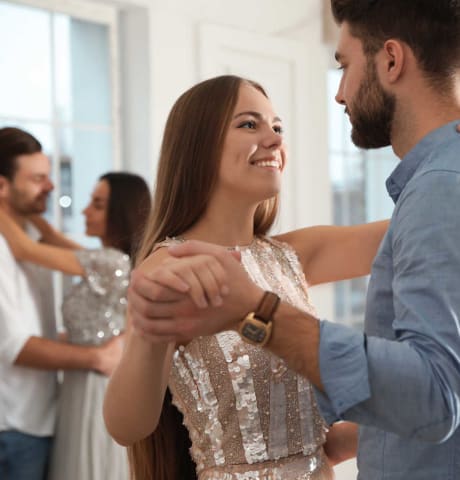 Lead & Follow: Partner dance as teamworkLeading and following is more than just "directing" and "trailing." Learn how you and your partner can achieve perfect harmony on the dance floor!
 Recognizing the beat in dance music: How to hit every rhythmA sense of rhythm is not a secret, it is a matter of practice. Learn how to pick out the beat in dance music and move confidently in rhythm.
 Dance music for events: The DJ and event guideThe right music selection determines the success of every dance event. Our guide shows DJs and organizers how to keep the dance floor full.
 Music for solo dance: The magical rhythms of world musicDive into the fascinating world of solo dance music. Learn how traditional instruments and modern beats can shape and inspire your dance without a partner.
 History of dance music: How rhythms moved the worldDive into the fascinating development of dance music and understand how historical rhythms have shaped the dance styles we enjoy today.