Health5 minutes

Is dancing good for you? The effects of movement and music

By Bernhard De LucaUpdated

In short
  • Depending on the pace and range of movement, dancing trains your endurance, coordination, balance and muscular control.
  • Music, focused learning and social interaction while dancing can support your mental well-being.
  • If you experience pain, dizziness or unusual shortness of breath, you should stop and have your symptoms medically assessed.
  • Social dancing is not dance therapy and does not replace medical care or psychotherapy.

A turn you nail, a rhythm you recognize, an evening without constantly checking your phone: when you dance, you often notice your progress right away. But for your health, it also matters how much exertion you can handle and how much you enjoy coming back.

DefinitionKoordination

Koordination bezeichnet das abgestimmte Zusammenspiel von Wahrnehmung, Nervensystem und Muskeln bei einer Bewegung. Beim Tanzen brauchst du sie etwa, um einen Schritt passend zur Musik zu setzen und gleichzeitig die Richtung zu wechseln.

Dancing engages several physical skills

When you dance, it’s not just one foot following the other. You shift your weight, keep your body balanced over your base of support, and adapt your movements to the rhythm. A step to the side requires different control than a turn. This means endurance, balance, and coordination are all challenged in the same activity, though not to the same degree in every dance class.

A slow sequence with lots of pauses for explanations mainly challenges your attention and movement precision. Several upbeat songs in a row put extra strain on your heart and circulation. Bending your knees more deeply and landing steps in a controlled way require muscular effort. The dance style alone therefore says little about the actual training load. Tempo, step length, breaks, and your skill level all affect it significantly.

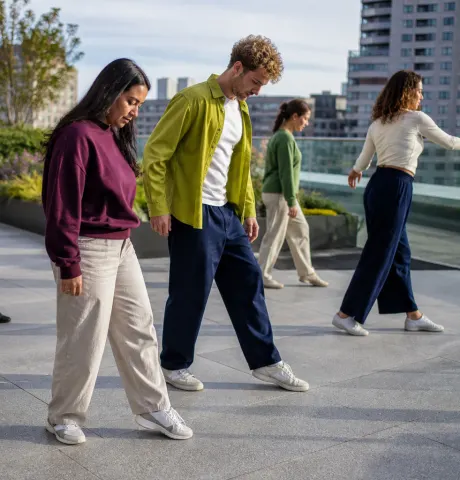
You can recognize physical progress in more ways than simply being able to keep going for longer. Perhaps you stay more stable after changing direction, or need fewer recovery steps when doing the same sequence. The basic steps and learning components in Line Dance show, for example, how weight shifts support movement. These kinds of technical improvements are part of the benefits of dancing, even if your watch doesn’t show any striking workout stats.

The class time also includes explanations and breaks, so a full hour doesn't mean continuous training.

Musik und Lernen verändern deine Aufmerksamkeit

Während du eine Tanzfolge lernst, musst du zuhören, Bewegungen erinnern und den nächsten Einsatz erkennen. Die Musik gibt einen zeitlichen Rahmen vor. Deine Aufmerksamkeit richtet sich auf eine konkrete Aufgabe statt gleichzeitig auf viele offene Gedanken. Das kann eine entlastende Unterbrechung des Alltags sein, ohne dass Sorgen dadurch automatisch verschwinden.

Auch kleine Lernerfolge zählen: Du erkennst den Beginn einer musikalischen Phrase oder schaffst einen Übergang, an dem du zuvor gestockt hast. Solche Erfahrungen können dein Zutrauen in die eigenen Fähigkeiten stärken. Sie entstehen nicht erst bei einem Auftritt. Eine vertraute Gruppe bietet zusätzlich regelmäßigen Kontakt, gemeinsame Rituale und Gelegenheit für kurze Gespräche. Für diesen Zugang brauchst du keinen festen Partner, wie der Ratgeber zu Tanzkursen für Singles erklärt.

Die Wirkung auf deine Stimmung ist trotzdem nicht bei jeder Person gleich. Lautstärke, Körperkontakt oder das Gefühl, beobachtet zu werden, können unangenehm sein. Ein Fehler vor anderen kann zunächst verunsichern. Ein Unterricht, der Wiederholungen erlaubt und niemanden bloßstellt, schafft bessere Bedingungen fürs Lernen. Du musst nach einer Stunde weder euphorisch noch völlig entspannt sein, damit die Bewegung einen Wert hat.

How to tell if the intensity is right for you

So ja

  • Schritte verkleinern, wenn deine Kontrolle nachlässt
  • Bei stechendem Schmerz die Bewegung beenden
  • Nach einer Pause mit ruhigen Schritten einsteigen
  • Deinen Fortschritt an sichereren Bewegungen messen

Not this way

  • Force bigger steps despite an unsteady stance
  • Test sharp pain with more repetitions
  • Start with jumps immediately after a break
  • Measure your progress only by how much you sweat

Eine Tanzstunde darf anstrengend sein, ohne dass jede Bewegung bis an deine Belastungsgrenze gehen muss.

udansa-Redaktion

The health benefits have limits when it comes to symptoms

Dancing is healthy above all when the exertion suits you. Faster breathing and tired muscles can be part of physical effort. Sharp pain, dizziness, chest pain or unusual shortness of breath, on the other hand, are not training goals. Stop exercising and get these symptoms checked by a medical professional; if you have severe acute symptoms, get help immediately. A group or a song playing is no reason to keep going.

If you have an existing condition, are recovering from an injury or take medication, there may be individual limitations. General statements about health benefits do not answer which movements are suitable for your situation. An instructor can explain steps and adapt exercises, but cannot diagnose you. Even an enjoyable class does not prove that a condition has improved.

Dance therapy is a targeted therapeutic service, not another name for a health-oriented class. Movement and bodily experience are addressed as part of qualified therapeutic support. By contrast, recreational dancing aims to help you learn and practise a dance. For this recreational path, the guide to dance classes for adults explains different ways to get started. Enjoyment, movement and social connections are valuable outcomes, even without attributing medical effects to them.

Zwei Zugänge zu Bewegung und Musik

Solo

Find your own rhythm

Awareness of your movement

When dancing solo, you decide how much space to use and how big your movements are. You can repeat a sequence until the music and steps come together, without also having to respond to another person’s cues.

Gemeinsam

Bewegung miteinander abstimmen

Aufmerksamkeit für dein Gegenüber

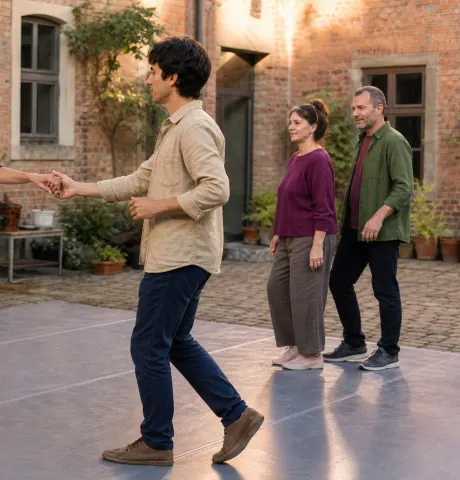
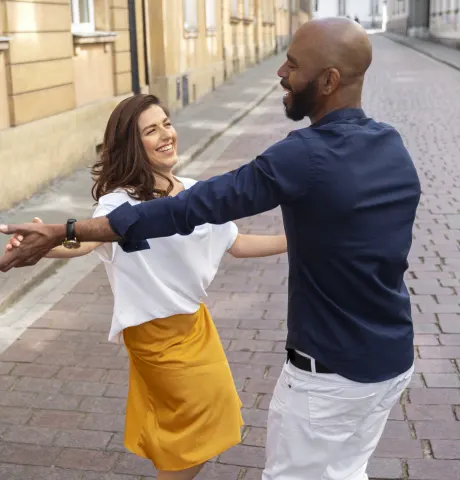
Beim Paartanz reagierst du auf Gewicht, Richtung und Timing einer anderen Person. Ein vertrauter Grundschritt bleibt dadurch eine Aufgabe für deine Wahrnehmung, auch wenn du keine neue Figur lernst.

Häufige Fragen

  1. Nein, auch einfache Schritte beanspruchen deinen Körper und deine Aufmerksamkeit. Für den Einstieg reichen Gewichtswechsel, Schritte am Platz und kleine Richtungswechsel. Schwierige Figuren sind keine Voraussetzung für Bewegung; entscheidend ist, dass du die Abläufe kontrolliert und mit passender Belastung ausführen kannst.

Mit Bewegung dranbleiben

Auf udansa connect findest du Menschen, mit denen du regelmäßig tanzen kannst. Ein gemeinsamer Termin hilft dir, aus gelegentlichen Tanzabenden eine verlässliche Gewohnheit zu machen.

Mit Bewegung dranbleiben