
Find your Mambo-rhythm with us
Here you will find like-minded dancers, suitable courses in your area, and exciting events to bring the captivating rhythm directly to the dance floor.


By Bernhard De LucaUpdated
Here you will find like-minded dancers, suitable courses in your area, and exciting events to bring the captivating rhythm directly to the dance floor.
Mambo is much more than just a dance, it is a way of life full of energy, elegance, and rhythmic sophistication. Learn how the gripping beat conquered Cuba, became a cult in New York, and how you can make your start on the dance floor.
Mambo refers to both a music genre of Afro-Cuban origin and the corresponding partner dance, which is characterized by its signature emphasis on the second beat of the measure. The dance combines structured footwork with expressive improvisation.
The roots of Mambo reach deep into the Cuban music history of the early 20th century. Emerging from a fusion of traditional Danzón, Afro-Cuban rhythms, and influences of American jazz, Mambo music revolutionized the Latin American music world in the 1940s. Famous bandleaders like Pérez Prado made the driving sound with its distinctive brass sections world-famous. When the spark finally jumped to New York City, the dance developed into a true mass phenomenon at the legendary Palladium Ballroom. There, the styles of the most diverse cultures merged into a dynamic partner dance, which still forms the basis for many modern dance styles today.
It is often mistakenly assumed that Mambo is merely an older variant of Salsa. Although there is a close relationship and Salsa emerged directly from Mambo, the decisive difference lies in the structure. While Salsa is mostly danced on the first beat of the measure (On 1) today, classic Mambo emphasizes the second beat (On 2). If you want to train your ear for the subtle difference, you will find valuable tips in the guide Salsa On 1 vs. On 2. This rhythmic shift gives the dance its very special, elegantly delayed dynamic.
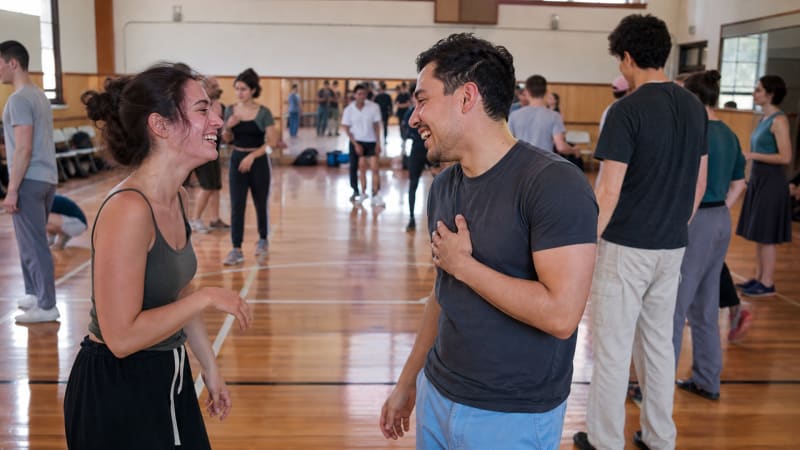
Anyone who wants to learn Mambo today faces a fascinating challenge that primarily trains your sense of rhythm. The basic Mambo steps are based on a quick-quick-slow pattern, where the actual step is taken on the second beat of the measure. The first beat is used as a pause or a gentle weight shift, which gives the dance its typical, springy character. In a good Mambo dance school, you will quickly learn that it is less about rigid figures and more about the subtle interplay of pelvic movement, body tension, and musical accentuation.
Especially for beginners, the unusual emphasis on the second beat takes some getting used to at first. However, anyone who dares to make the transition from a dance class to the dance floor will quickly realize how much freedom this structure offers. The dance allows for an enormous range of solo steps (shines), where partners briefly separate from each other to celebrate their own improvised step combinations to the music. This mix of synchronous partner work and individual joy of movement is what makes it so special.
Correct
Mistakes
Mambo is not a dance that you only dance with your feet. You have to feel the rhythm of the brass instruments in your whole body and let it flow.
In the modern dance scene, classic Mambo has a loyal and highly professional community. At international congresses and in specialized studios, the style is often cultivated under the term Salsa On 2 or Nightclub Mambo. The boundaries between the styles are fluid, but the elegance and jazzy playfulness of the original New York style remain unmistakable. To fully enjoy this sophisticated dynamic, a harmonious partner is indispensable. A suitable Mambo dance partner should share the passion for precise timing and be ready to fully engage with the rhythmic play.
Those looking to get started do not necessarily have to aim for a professional level right away. Many dance schools offer special introductory courses where the basics are taught patiently. If you are wondering how best to start or whether you can sign up without a fixed partner, our guide on the topic going to a dance class alone will help you overcome your initial reservations. In the end, one thing counts most in Mambo: the joy of movement and the direct connection to the music.
The elegance of the golden era
Classic Mambo, often referred to as Palladium-style, focuses on precise dancing on the second beat (On 2). It is characterized by fluid elegance, jazzy footwork, and a deep connection to the brass sections of big band music.
Playfulness and show elements
The modern Mambo style integrates elements from jazz, contemporary, and Salsa. It is characterized by rapid turns, complex solo steps (shines), and an athletic dynamic that is particularly visible at international dance congresses and shows.
Mambo is traditionally danced on the second beat of the bar (On 2), while most Salsa styles like the line style emphasize the first beat (On 1). Furthermore, Mambo is strongly influenced by jazz.
Yes, Mambo is considered challenging due to its fast tempo and the unfamiliar rhythm on the second beat. However, with patience and the right basic exercises, even beginners can successfully learn the dance.
Classic Mambo music by legends like Pérez Prado, Tito Puente, or Tito Rodriguez is best. Modern Salsa Dura, which conveys the typical On 2 feeling, is also ideal for training.
Find the right course and learn the steps directly from experienced instructors.
Couple danceLimbach-Oberfrohna · Germany
PaartanzkreisFriday · 18:15 · Oct 23
Limbach-Oberfrohna
BallroomMeißen · Germany
Tanzkreis | PROFESSIONALTuesday · 20:15 · Oct 27, 2026 - Jan 5, 2027
“Ein Haus für Vieles” - Saal Tanzkurse
 Salsa On 1 vs. On 2: The rhythmic differenceSalsa On 1 or On 2? This guide explains the rhythmic difference and how to hear the timing for both styles perfectly.
 From dance class to the dance floor: How to make the moveTaking the leap from dance class to the social dance floor takes courage. Use these proven tips to overcome your nerves and put what you have learned into practice.
 Going to a dance class alone: How to overcome your fearAre you nervous about attending a dance class alone? We debunk the biggest myths and show you how easy it is to get started without a partner.
 Mambo history: The fiery rhythm and its rootsDive into the fascinating history of Mambo: Learn how Afro-Cuban rhythms and New York big bands created one of the most exciting dance styles of all time.
 Learn to dance Mambo: The perfect guide for beginnersLearn how to master the Mambo basic step as a beginner, unlock the secret of On 2 timing, and shine with the right technique.
 Mambo vs. Salsa: Which rhythm suits you?Mambo and Salsa may look similar at first glance, but their rhythm and dynamics are fundamentally different. We show you how to distinguish these styles in your ears and your feet.
 Find a Mambo dance partner: Your community guideMambo is pure energy and joy of life. Learn how to dress optimally for social dancing and easily find the perfect dance partner for fiery Mambo nights.