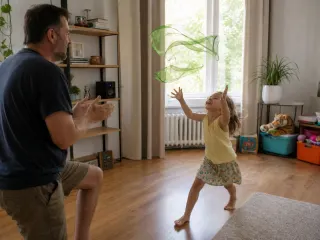
Parent-child dance
Moving together
First dances with mum or dad by your side - for safety & closenessDiscover through play
Music, rhythm and movement as a colourful world of experience for the little onesStrengthen the bond
Time together that brings parents and child even closer together
The first steps in life - with music, movement and security
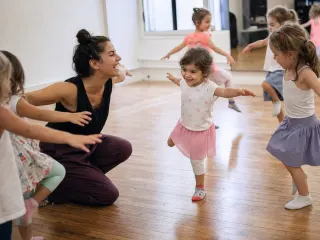
Even the youngest children respond enthusiastically to music and movement. In parent-child dance, babies and toddlers from around 12 months to 3 years can gain their first dance experience - always accompanied by a trusted carer. The focus is on closeness, joy and shared experiences.
Find parent-child dance courses in your area
Discover the best parent-child dance classes in your area:
No courses for this dance style here yet
Why is parent-child dance valuable for your child?
Parent-child dance combines playful movement with valuable family time. Your child discovers music, rhythm and movement in a natural way - supported by finger games, kneeling riders, lullabies or little dances. Motor skills, physical awareness and language development are encouraged. For you as a mum or dad, it is a wonderful opportunity to spend time with your child, be active and build social contacts with other families.
How does a parent-child dance lesson work?
3. Play and rest phases
1. Welcome song on arrival
2. Small movement exercises often in a circle or dances to simple songs or rhymes
4. Closing ritual with song or movement game
Questions and answers about parent-child dance
Here you can find answers to the most important questions about parent-child dance classes:
- Most classes start from around 12 months, when children can sit securely or take their first steps. Some dance schools also offer groups for babies from 6 months, which are more focused on rocking, rhythm, and parental closeness.
- No, parent-child dance is not about fixed steps, but about discovering music and movement together. Every child participates at their own pace, without any pressure to perform.
- You are your child's most important dance partner. Together, you try out movements, sing, and dance. Your closeness gives your child security, so they feel confident enough to try new things. At the same time, you strengthen your bond.
- For children: comfortable clothing in which they can move freely, and non-slip socks or soft-soled shoes. For parents: loose clothing and flat shoes or socks. The important thing is freedom of movement, not a specific outfit.
- The classes promote motor skills, balance, a sense of rhythm, and language. Your child learns to orient themselves in a group, make contact, and develop a joy for movement. At the same time, dancing together strengthens the trust between you and your child.
- That depends on the dance school. With twins, participation is often possible if both parents are present. For siblings, the rule is: older children are usually allowed to watch or join in occasionally, it is best to ask the dance school directly.
- You can also playfully introduce your child to music and movement at home: sing children's songs, dance together in the living room, or incorporate little rhymes and movement games into your daily routine. Even short, regular moments are enough for your child to associate positive experiences with dance and music. Important: everything should remain light, playful, and without pressure. This way, the joy of dancing is preserved quite naturally.
Related dances
Discover more dances for children