Modern Dance dance
When expression, fitness and creativity come together
Dance as expression
Modern dance lives through emotions, every step tells a story, every impulse comes from withinFreedom of movement
No rigid rules, but fluid, creative movements that leave room for personalityBody & Health
Trains strength, flexibility and body awareness, a workout for body and soul
Experience Modern Dance
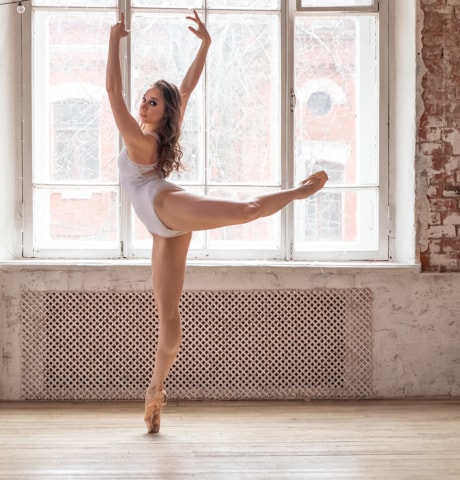
Modern dance emerged at the beginning of the 20th century as a counter-movement to classical ballet. Instead of rigid forms, the focus is on naturalness, expression, and individual interpretation. Today, it is one of the most popular dance styles for adults who want to combine movement and creativity. Modern dance feels free, powerful, and often meditative, like a dialogue between body, space, and music.
What makes modern dance so special?
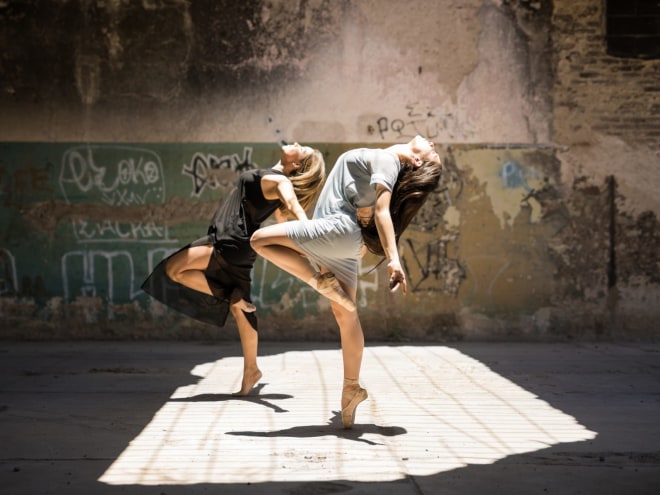
Modern dance is a style of dance full of freedom and expression. Instead of fixed sequences of steps, the focus is on feeling, energy, and individuality. Sometimes fluid and soft, sometimes powerful and dynamic, every movement emerges from the moment. Modern dancers use the entire space, from the floor to the air, discovering entirely new ways to let the body speak. Modern dance is training, art, and self-discovery all at once, a dance that moves you both inwardly and outwardly.
Find modern dance classes in your area
Discover the best modern dance classes in your area
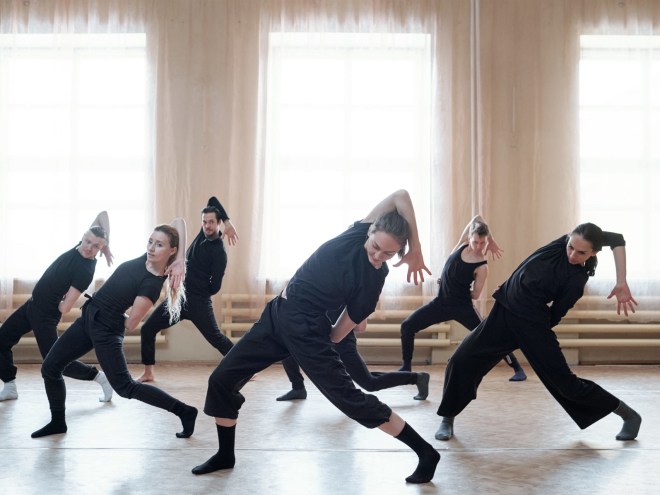
Dance steps in modern dance
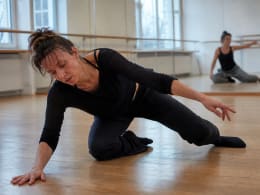
Typical of modern dance are fluid movements, floor elements, jumps, and turns. Movement quality, breathing, and the body's center of gravity play a central role. Many exercises begin standing and transition to the floor, the body utilizes space in all directions. The dance level? Modern dance is also suitable for dancers with little prior experience, as technique is taught step-by-step. With growing experience, more complex combinations are developed.
What does modern dance sound like?
Modern dance is danced to a variety of music: from classical to jazz to pop and electronic sounds. What matters less is the beat than the atmosphere of the music, which inspires the movements. Fast and slow sequences often alternate, allowing dancers to immerse themselves in different emotions.
Modern Dance is a perfect fit for you if you...
- want to express emotions through movement
- are looking for a dance without rigid rules
- enjoy creativity and improvisation
- want to train body awareness and fitness
- are looking for a balance to everyday life
- are interested in dance with depth and personality
FAQ on learning Modern Dance
Here you will find answers to the most important questions about Modern Dance.
- No, Modern Dance is also perfectly suitable for dance beginners. Many courses are explicitly aimed at adults or teenagers without prior knowledge. The basics are taught step by step: breath control, center of gravity, fluid movements, and initial floor work. Those who already have experience from ballet, jazz, or fitness classes will have an easier time, but it is not strictly necessary.
- Modern Dance is freer, more individual, and less bound to rigid forms than ballet. While ballet works with fixed positions, clear lines, and a lot of technique, Modern Dance places value on naturalness, expression, and personal interpretation. Jazz Dance, on the other hand, is more rhythmic and show-oriented with a focus on stage presence and clear beats. Modern Dance often combines elements from both directions, but is more strongly focused on emotion, improvisation, and the interplay between body, music, and space.
- Absolutely, Modern Dance can be learned at any age and is offered in many dance schools for adults. Especially people who did not dance as children discover a new form of movement here that is simultaneously artistic, health-promoting, and expressive. Many adults report that Modern Dance helps them release tension, gain self-confidence, and rediscover the joy of creative movement.
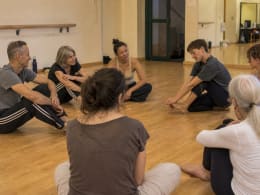
- Modern Dance is generally danced without a fixed dance partner. Instead of partner dance, it is about individual movement, expression, and choreography. You usually learn the technique and figures in a group that trains together, but all participants dance for themselves. Often, short sequences or choreographies are practiced at the end, which everyone presents together to increase the sense of community.
- Modern Dance is fundamentally suitable for all fitness levels. Introductory courses start with simple movements that are gradually expanded. Of course, the dance requires strength, coordination, flexibility, and endurance, as jumps, floor work, and turns challenge the entire body. However, most dance schools offer exercises at different difficulty levels so that both beginners and advanced dancers benefit. Those who train Modern Dance regularly improve not only their fitness but also their posture, balance, and body awareness.
- The best choice is comfortable, form-fitting clothing that allows full freedom of movement: for example, leggings, dance pants, and a tight top or t-shirt. You usually dance barefoot, with socks, or with dance slippers so that the feet have direct contact with the floor and balance, jumps, and turns can be executed cleanly. Important: No slippery shoes, as these restrict mobility.
Related dances
Discover more fitness and health dances