Dance together in London
On udansa connect, you can find dance partners in London to learn and dance together. Describe whether you're just starting out or already want to practise a particular dance.

By Bernhard De LucaUpdated
On udansa connect, you can find dance partners in London to learn and dance together. Describe whether you're just starting out or already want to practise a particular dance.
If you're new to London or want to bring movement into your everyday life, it doesn't have to become a regular hobby right away. Even a single dance night or a performance can show you what you're really interested in.
Social Dance refers to dancing together to music in a social setting without being judged by a panel. The term describes the occasion, not a specific dance style.
When dancing in London, it helps to start by distinguishing between a few things: Do you want to learn movements, dance to music with others, find a reliable practice partner, or experience a performance? These preferences can overlap, but they call for different settings. A dance style alone therefore does not tell you which way to get started.
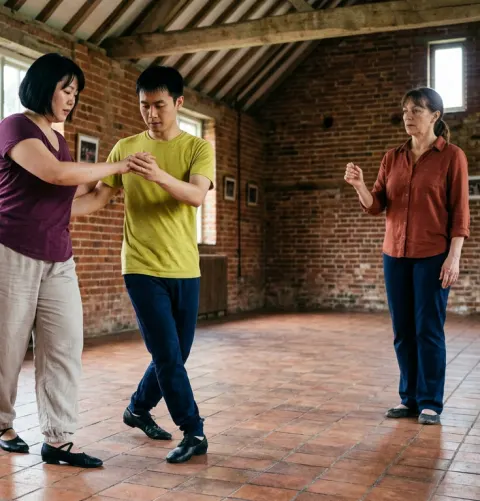
In a class, movements are broken down and repeated. For example, a teacher explains which foot your weight is on or when a change of direction begins. In social dance, the music keeps playing while you choose from the steps you already know. Finding a dance partner is about working together: Similar expectations around frequency, skill level, and commitment make it easier to practice together.
The name of a dance does not automatically describe how an offering works. A choreography class may teach a set sequence, while another course builds the foundations for dancing more freely. The difference between learning a scene and learning a dance style is therefore important when you're getting started, too.
If you live in London or are moving there, you can explore these options independently. Going to a performance does not commit you to taking a class, and a beginner class does not assume that you have a performance as your goal.
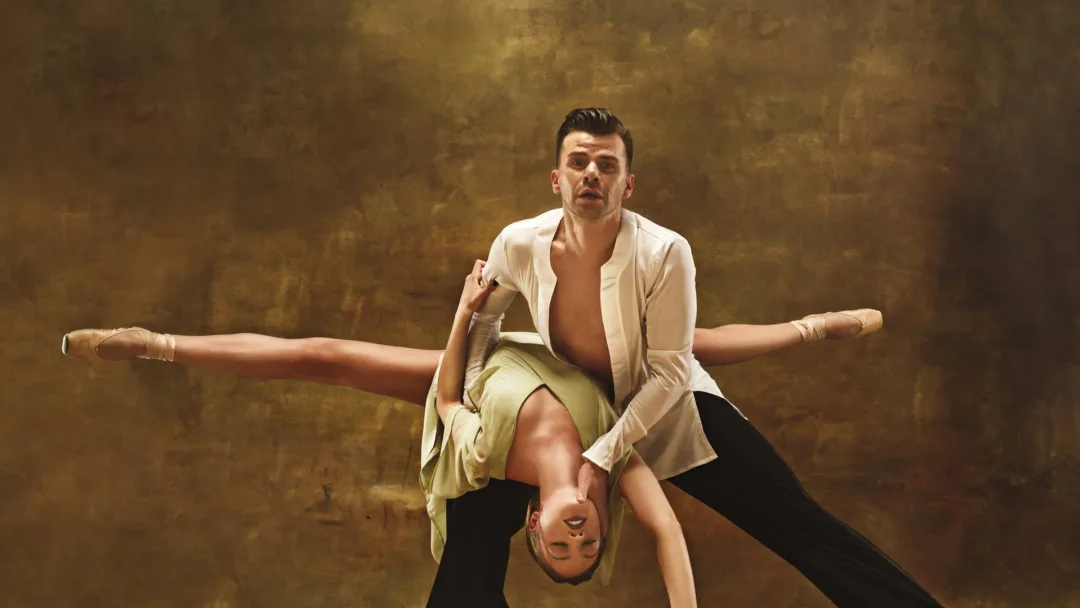
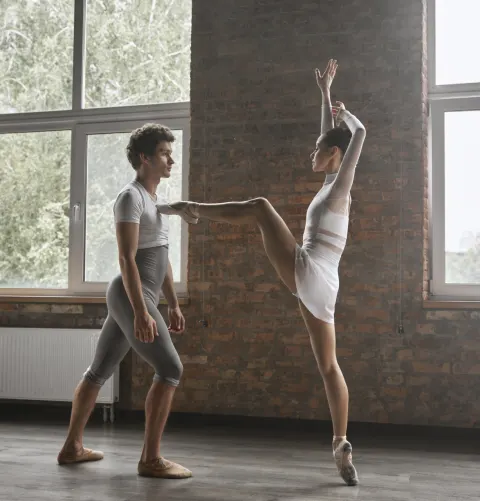
A smoothly danced stage sequence can give the impression that dancing is mainly about knowing lots of moves. But behind it are decisions about space, timing, expression and coordination. In beginner classes, skill often looks less spectacular: you transfer your weight fully, find the beat again after a pause or deliberately keep a step small.
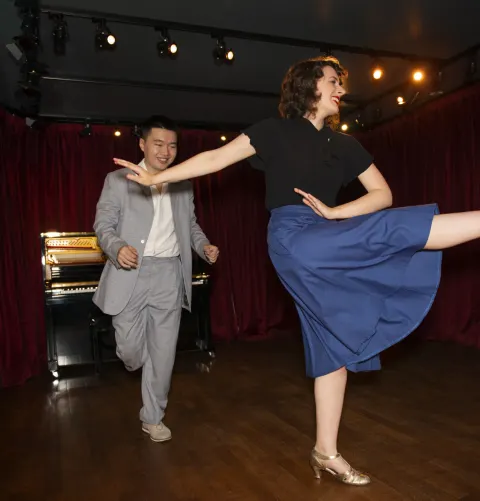
When dancing with someone, knowing figures is not all that matters either. In open partner dancing, a movement is coordinated between two people rather than performed independently by each of them. The available space also changes on a crowded dance floor. A short, well-coordinated movement can be more appropriate there than an expansive sequence.
Observing and performing a move yourself are different skills. Understanding a sequence while watching does not necessarily mean you can perform it physically. It is often hard to see which leg is bearing your weight or how a movement is prepared. The article about common mistakes when copying dance moves explains this gap in more detail.
This also helps explain why an interest in dance theatre does not automatically point to a particular class. Perhaps you're interested in the production, or perhaps in the movement technique. Both are valid ways in.
That's right
Not like this
In the course filter on udansa, you'll find current classes in London to get started with dancing.
A great moment on stage can make you want to dance, but your first step can be much smaller.
In London, different approaches to dance can also be traced through history. In 1931, Ninette de Valois founded the Vic-Wells Ballet with the support of Lilian Baylis at Sadler's Wells Theatre. In 1946, the company moved to the Royal Opera House in Covent Garden with a new production of The Sleeping Beauty; in 1956, it was given the name Royal Ballet. This history represents the development of a professional performing art.
The Lambeth Walk took a different path. The song was part of the 1937 musical Me and My Girl. A strutting walking dance grew out of the stage choreography, which dance teacher Adele England adapted as a social dance. The dance version spread from the Locarno Dance Hall in Streatham in the late 1930s. Here, a staged movement became a shared dance beyond the stage.
Other historical points of reference broaden the picture: Dance Umbrella was founded in 1978 as a festival for modern and contemporary dance. Breakin' Convention began at Sadler's Wells in 2004 and brought hip-hop theatre into a festival setting. These founding dates tell the story of different artistic approaches, not current events.
For your own orientation, this means that classes, social dancing and stage culture are not successive stages. You can start from any one of them and discover connections later. Find current classes and events in London using the filters on udansa.
Experience weight, rhythm and connection
When you dance, you notice how a change of direction or a pause feels. The movement doesn't have to look impressive for you to learn something about balance and music.
Space, light, and group formations come into view
As you watch, you can see how movements connect and what effect repetition has. You can experience a performance attentively without mastering the dancers' technique yourself.
You don't need any dance experience for a class specifically designed for beginners. The material includes basics such as shifting your weight, simple step sequences and keeping the pulse of the music. Feeling confused on your first try is normal, because observing and moving at the same time are different tasks.
Open Class usually refers to a single class you can attend, not necessarily a class for beginners. A certain level may still be required. So an open booking format says something about participation, but little about how difficult the movements are.
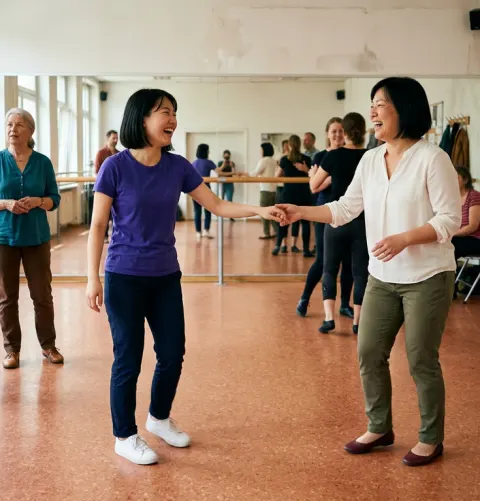
You don't necessarily need a regular dance partner for partner dancing. In classes that rotate partners, pairs are formed during the class; registering as a fixed couple, on the other hand, requires two places booked together. If you want to practise together regularly, having a reliable arrangement can be helpful.
You can experience dance theatre and form your own impressions without any prior knowledge. Movement doesn't have to tell a story that can be translated unambiguously. Pay attention to closeness and distance, tempo, repetition and the relationship to the music; you can notice these changes even without knowing technical terms.