Your dance journey starts with lessons
On udansa, you’ll find dance classes in London that match your learning goals. Use the course filter to find current offerings and dates.

By Mary De LucaUpdated
On udansa, you’ll find dance classes in London that match your learning goals. Use the course filter to find current offerings and dates.
A course can feel wrong simply because it teaches something different from what you expected. A beautiful choreography won't help you much if what you actually want to learn is to dance to the music without a set sequence.
A foundations course introduces recurring movement principles of a dance style, such as weight transfer, rhythm, and body alignment. Individual step sequences serve as practice for these principles.
If you want to learn to dance in London, your choice starts with the kind of movement that interests you. A dance school's name tells you less than the content of the class. A class can teach body technique, improvisational dancing, or a set choreography. These goals overlap, but they are not interchangeable.
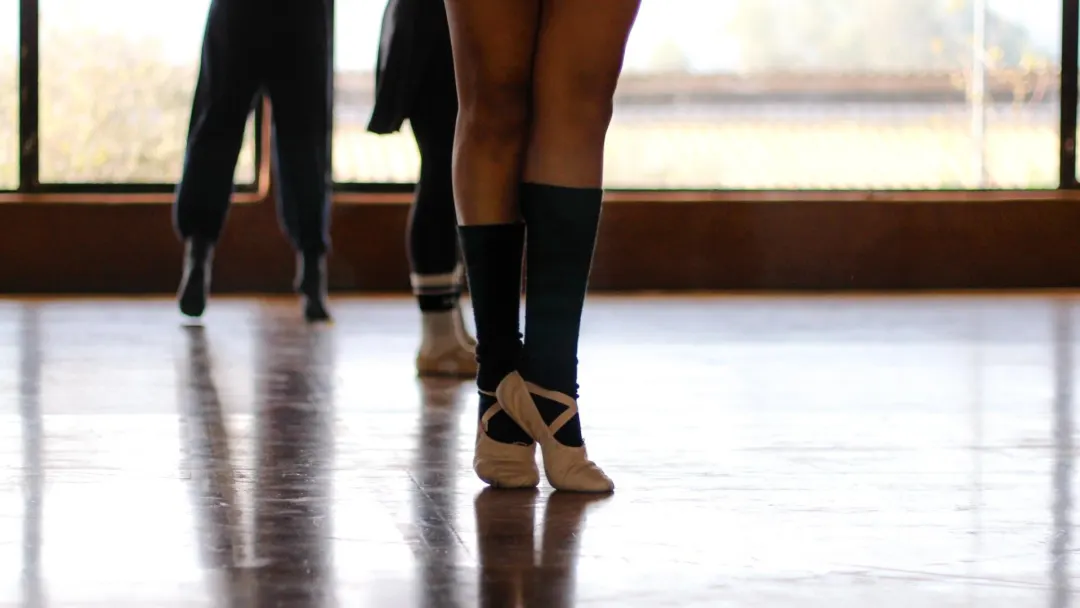
In ballet classes, you learn body alignment, controlled footwork, and coordination of your arms and legs, among other things. A Hip Hop class might start with groove, weight shifts, and rhythmic accents. Partner dancing adds coordination with another person: having your own stable step and a clear connection go hand in hand.
Choose not only the music, but also the movement task you want to learn. A fast sequence can be fun without explaining why your weight stays behind when you change direction. Fundamentals classes break down these connections and leave room for repetition.
If a particular movie scene or stage sequence motivates you, that's a good learning goal. A choreography class teaches something different from an introduction to free dancing. There, you first learn a specific sequence, not automatically the entire movement system of the style.
Beginners and advanced dancers cannot be reliably distinguished by the number of classes they have attended. What matters is which tasks you can manage without constantly looking to the teacher for guidance. Can you keep a simple rhythm, shift your weight fully, and start again after an interruption? These are more useful indicators than completing a course a long time ago.
Previous experience transfers only partially between dance styles. Someone who brings body control from ballet may need to learn a less upright posture and a different relationship with the beat in Hip Hop. Someone who knows many figures in partner dancing may still need support with making independent decisions when dancing solo.
A suitable beginner course gives you time to observe, try things out, and make corrections. Learning slowly does not mean you lack talent. Often, it is unclear which leg is supporting you or whether the teacher is demonstrating in reverse. The article about common observation mistakes when copying dance movements explains these stumbling blocks in more detail.
Your stage of life also affects how you get started. After a long break, your movement knowledge may still be there, while your stamina and resilience need time to return. For older beginners, stable steps and enough repetition may be important; children need age-appropriate tasks and shorter explanations. Age alone does not determine your learning level.
That's right
Not this way
In the course filter on udansa, you'll find current courses and dates in London to get started or get back into dancing.
If you can show me which foot your weight lands on, we have a foundation for the next movement.
An ongoing course series builds on previous tasks. Repeated exercises make it clear what has improved and where the same uncertainty remains. A one-off workshop, on the other hand, focuses on one topic: You can try out a style or learn a specific technique, but afterward you’ll need to keep practising the material on your own.
Private dance lessons are especially useful when you have a specific goal. A teacher can, for example, spot why you lose your balance when turning and break the task down into smaller steps. Group classes offer different learning opportunities: You observe different approaches, keep a shared pace and get chances to practise that aren’t tailored just to you.
For your everyday life in London, the format of participation also matters. If you’re only living there temporarily, a self-contained course block may be a better fit than a long-term programme. If your work schedule changes, a flexible format can help, as long as each class makes sense on its own. Flexibility alone can’t make up for a lack of repetition.
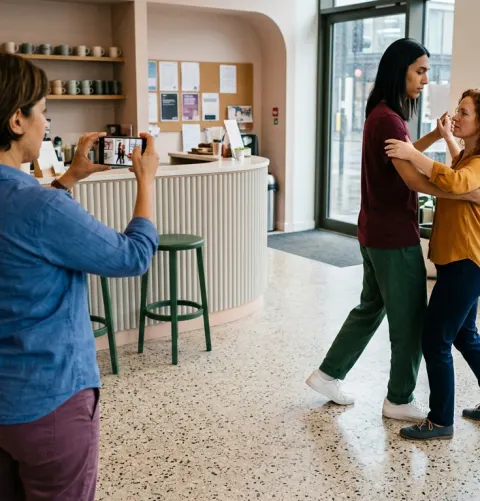
What you learn in class stays with you between sessions when you take away a manageable task to practise. A short practice clip from the dance class can help jog your memory, provided recording is allowed and other people aren’t identifiable without their consent. What matters is what you practise with it, not how many videos you collect.
Shared Tempo and Different Examples
In a group, you see how others approach the same task. Practicing together gives you structure, and in partner dancing, dancing with different partners can sharpen your awareness. However, individual corrections are shared among several learners.
Your own pace and focused feedback
In private lessons, the teacher can adapt an exercise directly to your movement. This can help with an uncertain turn or a rhythm that's hard to hear. You won't automatically gain experience dancing with different partners or in a group.
For many beginner classes, comfortable clothes and clean shoes that give you a stable footing are suitable. Your clothes should allow you to bend your knees and move your arms without slipping out of place. Ballet requires different shoes and freedom of movement than Hip Hop; high heels are not a general requirement for getting started.
Yes, you can start ballet as an adult. In beginner classes, you work on posture, footwork and coordination without needing the flexibility seen in stage performances. Turnout comes from the range of motion available in your hips, and is not achieved by forcibly twisting your feet.
Above all, you need to understand the language of instruction well enough to follow directions and safety instructions. Demonstrations make learning easier, but they do not replace every explanation. If you're unsure about English terms, check what language the class is taught in; individual technical terms will become more familiar through repeated use.
Practise a short, familiar movement with one clear focus, rather than trying to recreate the entire class. For example, you can slowly repeat the weight change and then do it to music. To help you remember, a few notes about direction, supporting leg and count are more useful than a long list of figure names.