
Learn your wedding dance, completely relaxed
On udansa you will find the right dance school, specialized wedding courses, and experienced instructors in your area who will tailor your opening dance perfectly to you.


By Mary De LucaUpdated
On udansa you will find the right dance school, specialized wedding courses, and experienced instructors in your area who will tailor your opening dance perfectly to you.
The first dance as a married couple is a magical moment, often accompanied by great nervousness. With the right mindset and relaxed preparation, the obligation turns into pure joy.
The wedding dance is the first official dance of a newlywed couple to open the dance floor at their wedding reception. Traditionally, it is often danced as a Viennese Waltz, but today it is increasingly opening up to modern styles and individual favorite songs.
The moment when all eyes turn to the newlyweds is considered one of the most emotional highlights of any wedding celebration. However, the traditional bridal dance is far more than a rigid chore that must be completed without errors. It symbolically marks the first step together into a new chapter and officially opens the dance floor for the entire wedding party. Whether classically elegant or surprisingly modern: the first dance of the wedding sets the energetic tone for the rest of the evening and creates a lasting memory for the couple and their guests.
Often, however, this moment is loaded with unnecessary pressure. Couples worry about wrong steps, tripping over the wedding dress, or being judged by the spectators. Yet, at its core, the opening dance of the wedding is about the tangible connection between two people. Those who view the dance not as a choreographed test, but as a shared, intimate moment, quickly lose their shyness in the spotlight. A solid foundation in partner dance helps you feel secure and comfortable on the dance floor.
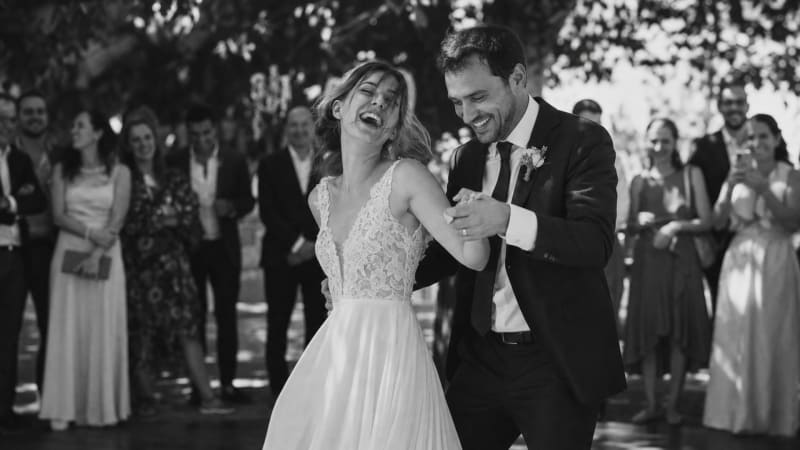
The myth that a successful wedding dance must be a fast-paced Viennese Waltz with complicated turns persists in many minds. This false expectation often leads couples to completely overwhelm themselves. A wedding dance for beginners does not have to be artistically valuable or perfectly synchronized. The assumption that only a show routine rehearsed for months will delight the guests ignores reality: authenticity and visible joy in moving together are far more contagious than a stiffly performed professional choreography where you can read the stress on the partners' faces.
Another misconception is that a modern wedding dance must consist of a humorous mashup of different pop songs. Creating a modern wedding dance simply means adapting it to your own personality. This could be a soulful blues to your favorite indie song or a relaxed Discofox to a current chart hit. Whatever feels good and genuine for you as a couple is allowed. Those starting without prior knowledge should find a suitable dance course for beginners in good time to build up basic coordination without stress.
Correct
Wrong
The most beautiful wedding dances are not the ones where every step is perfect, but those where the couple looks deep into each other's eyes while dancing and forgets everything around them.
Anyone who changes their perspective and views the opening dance as a playful project will benefit from a completely new sense of body awareness. What starts as a chore quickly becomes a welcome break from the often stressful daily planning of a wedding. The hours spent together in the dance studio bring you closer and provide valuable time as a couple, far away from seating charts and menu discussions. When the music starts on the big day, it is no longer about counting beats flawlessly, but about experiencing the moment together.
With a few basic wedding dance tips, the transition from the practice floor to the smooth dance floor succeeds effortlessly. It is especially important to keep an eye on the spatial conditions of the venue and the nature of your clothing. Those who practice a few times in their actual wedding shoes beforehand and plan for the train of the dress will not experience any nasty surprises on the evening itself. In the end, only one thing counts: that you look at each other, smile, and enjoy the moment in which the world seems to stand still for three minutes.
The traditional waltz in focus
You are choosing a timeless classic like the Viennese Waltz or the Slow Waltz. The steps are clearly defined, the posture is elegant, and the dance radiates a festive dignity that fits perfectly with a traditional wedding.
Individual rhythms for you
You choose your own personal favorite song, regardless of classic dance styles. Whether it's a soulful ballad, a lively Discofox, or a relaxed improvisation: the focus is entirely on your individual story and a relaxed flow of movement.
Ideally, you should start planning and practicing about three to six months before the wedding. This leaves enough time to learn the basics and get used to the movements without any time pressure.
No, prior knowledge is absolutely not necessary. Special beginner courses start with every couple from scratch and teach simple, effective steps that look elegant after a short time, even without any dance experience.
Any dance style that the couple enjoys is allowed. In addition to the classic Waltz, Discofox, Foxtrot, Rumba, or even a slow Blues are very popular for making the debut on the dance floor relaxed.
A typical opening dance lasts between two and three minutes. Longer songs can be shortened by the DJ or the band to keep the guests' attention high and not tire out the couple.
Prepare for your big moment on the dance floor stress-free together with your partner.
Couple danceLimbach-Oberfrohna · Germany
PaartanzkreisMonday · 19:30 · Oct 12
Limbach-Oberfrohna
Couple danceLimbach-Oberfrohna · Germany
PaartanzkreisFriday · 18:15 · Oct 23
Limbach-Oberfrohna
Couple danceBurgstädt · Germany
Paarkurs - Goldstar TanzkreisSunday · 15:00 · Oct 25
Burgstädt
 Comparing partner dance styles: Which one suits you?Which partner dance is the perfect fit for you? Our comprehensive style comparison highlights the differences between ballroom, Latin, and modern social dance styles.
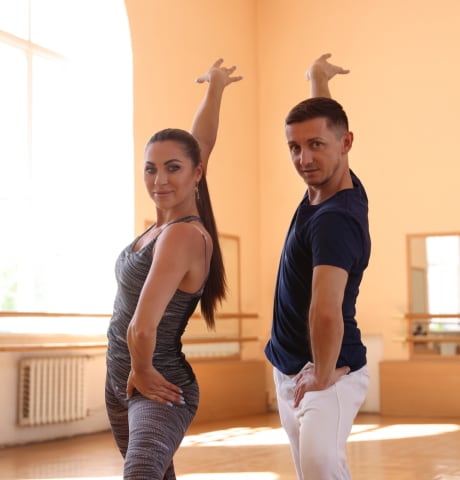 Finding a dance class for beginners: How to get started easilyGetting started is easy: With our guide, you will find the right dance class for beginners and prepare perfectly for your very first dance lesson.
 Preparing your wedding dance: Your stress-free timelineYour opening dance should be the highlight of your wedding celebration. With our stress-free timeline and helpful preparation tips, you will learn to dance in a relaxed way without any pressure.
 Wedding dance songs: The perfect soundtrack for your momentChoosing the right wedding dance songs defines the atmosphere of your first dance. Discover how to use classic melodies, modern songs, and creative mixes perfectly for your big performance.
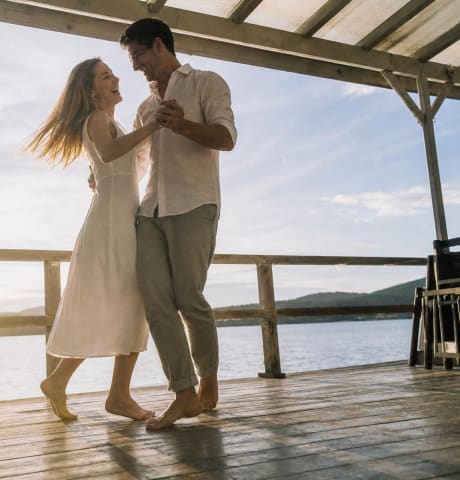 Wedding Dance Choreography: How to master your first danceYour first dance should be your personal highlight. With the right choreography and the perfect steps, you will dance into your wedding night feeling completely relaxed.
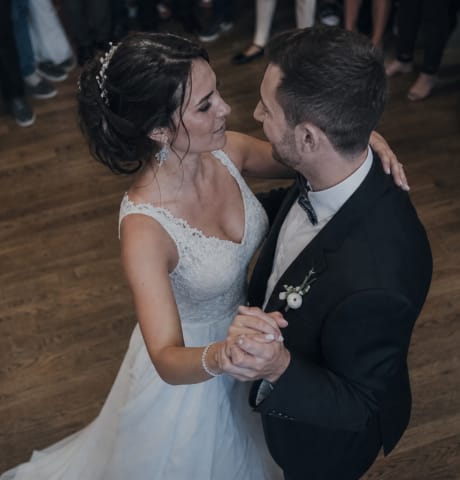 Wedding Dance Guide: How to Perfect Your First DanceYour wedding dance is approaching and the excitement is building. With our guide, you will master the flow, handle your wedding dress with ease, and dance your way into marital bliss, completely relaxed.