Wedding dance5 minutes

Wedding dance sequence: How to make your opening dance a success on your wedding day

By Mary De LucaUpdated

In a nutshell
  • A clearly structured sequence from the entrance and the parent dance to opening the dance floor gives the bridal couple confidence.
  • Wedding attire and shoes must be checked for dance suitability in advance and adjusted if necessary.
  • Deep breaths, focusing on your partner, and the composure to simply smile away small mistakes help with stage fright.
  • A well-prepared surprise or a smooth transition lightens the mood and perfectly involves the wedding guests.

Experience the perfect dance moment together

On udansa you will find like-minded people, experienced dance instructors, and the right preparation courses in your region. This makes your shared dance journey, from the first practice session to the big performance on your wedding day, a pure pleasure.

Experience the perfect dance moment together

The opening dance is the emotional highlight of every wedding celebration. With the right preparation for the big day, you will turn stage fright into pure anticipation and master your dress, shoes, and the sequence of events with confidence.

DefinitionWedding dance schedule

The wedding dance schedule describes the timing and organizational structure of the opening dance at the wedding reception. It regulates the couple's entrance, the music transitions, and the subsequent involvement of the guests on the dance floor.

How to make the opening dance of the evening go perfectly

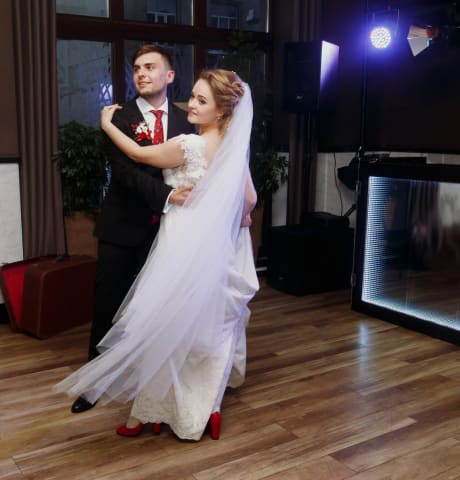
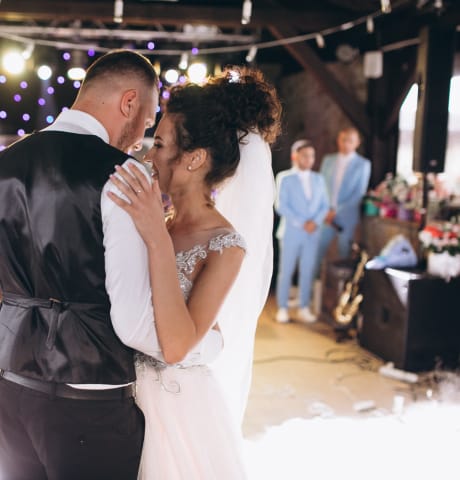
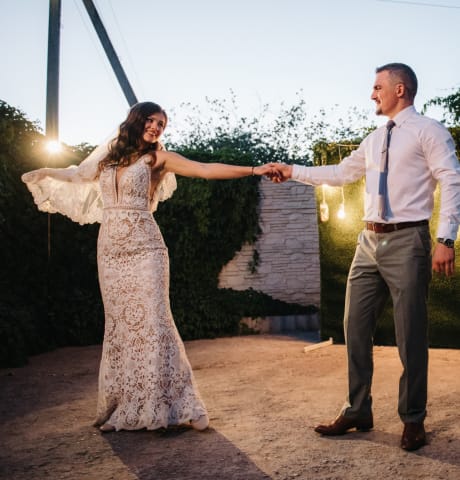
The moment is approaching, the guests fall silent, and all eyes turn to the dance floor. A structured sequence takes the stress out of the opening dance. The classic wedding dance sequence begins with a clear announcement by the DJ or the wedding master of ceremonies. The bride and groom enter the dance floor, take their positions, and give the musician a short signal. As soon as the first bars play, you focus entirely on yourselves and your shared rhythm.

After the actual opening dance, the traditional inclusion of the family follows. With the subsequent parent-child wedding dance, where the bride and father of the bride as well as the groom and mother-in-law dance, the dance floor opens up step by step. Only then is the dance floor officially opened to all guests. Anyone who knows from the start who is taking over which dance partner and when avoids awkward pauses and ensures a dynamic transition into the party evening.

The moment belongs entirely to the bridal couple: a deep eye contact before the first step makes the stage fright vanish instantly.

Mastering the pitfalls of wedding dresses and wedding shoes

Clothing on your wedding day is fundamentally different from outfits in a dance school. A long wedding dress with a train or a stiff suit massively restricts your freedom of movement. For the wedding dance, the length of the dress is particularly crucial: the bride should not step on her own hem when taking a backward step. A pinned-up train or a discreet wrist loop are essential aids here.

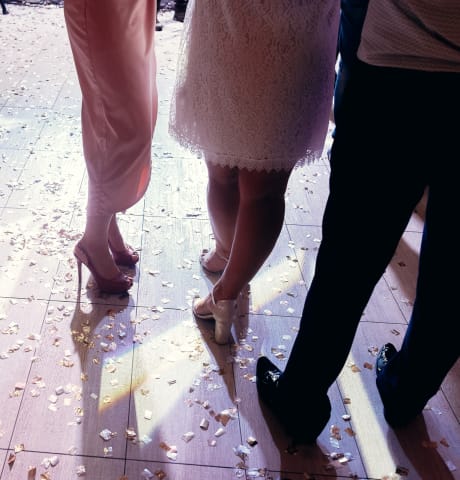
Wedding dance shoes also play a major role. Freshly bought leather soles are extremely slippery on polished parquet floors. It is recommended to break in the shoes beforehand or to slightly roughen the sole. If you want to play it safe, switch to comfortable change-of-shoes with a good grip for the opening dance. In our guide on choosing clothing for dancing, you will find further useful tips for the perfect dance outfit.

Confidently through your wedding dance in the evening

Correct

  • Securely pin up the train of your dress before the dance
  • Break in your wedding shoes on a parquet floor beforehand
  • Clearly coordinate the transition to the parent dance with the DJ
  • If you make a mistake, just smile and keep dancing

Wrong

  • Wanting to dance with an unsecured, long veil
  • Wearing brand-new shoes with smooth leather soles
  • Asking guests onto the dance floor spontaneously without prior arrangement
  • Giving up in frustration after a wrong step

The opening dance does not have to be a flawless show, but rather an honest, emotional moment between two people that kicks off the party.

Wedding DJ, Frankfurt am Main

Dealing with stage fright and smiling through mishaps

Sweaty palms, a racing heart, and the sudden thought that you have forgotten the steps: wedding dance stage fright is completely normal. The best way to combat nervousness is to consciously focus on your partner instead of the audience. Look into each other's eyes and take a deep breath before you start. Even if a step goes wrong, the audience usually won't even notice as long as you just smile and keep dancing.

A charming way to ease the tension is a planned wedding dance surprise. A sudden change of music from a slow waltz to a fast Discofox or a humorous choreography will make the guests laugh and immediately take the pressure off. If you want to solidify the basics beforehand, you should use a trial lesson in a dance course to practice dancing in front of other people under real conditions.

Two ways to open your wedding dance

Classic

The traditional waltz entrance

Waltz and tradition for the evening

The classic opening relies on elegance and tradition. With a Viennese Waltz or a Slow Waltz, the couple leads the guests into the evening in style, followed by the traditional parent dance.

Modern

The creative dance surprise

Show effect and party vibes

A surprising change in music breaks the ice. After a few bars of Waltz, the rhythm shifts to a modern party mix that immediately sweeps the guests along and fills the dance floor in no time.

Frequently Asked Questions

  1. The wedding dance should take place as soon as the formal part of the evening with dinner and speeches is finished. This is usually around 9:00 PM or 10:00 PM to initiate the smooth transition to the party.

Wedding dance courses in your area

Prepare for your big moment together with professional support.

View all suitable courses

Everything about the wedding dance sequence: How to make your opening dance a success on your wedding day