Wedding dance5 minutes

Wedding dance and opening the dance floor: How to get your guests involved

By Bernhard De LucaUpdated

In short
  • The targeted handover to parents and witnesses breaks the ice and fills the dance floor immediately.
  • The traditional order dictates that the bride dances with her father and the groom with his mother after the opening dance.
  • A quick consultation with the DJ ensures a charming announcement at the moment the floor is opened.
  • Witnesses and close friends act as prepared mood-setters who are the first to enter the dance floor.

Conquer the dance floor together

On udansa you will find experienced dance teachers and suitable dance courses in your region, which will prepare you and your family perfectly for the big day. Simply sign up and start your shared dance journey in a relaxed way.

Conquer the dance floor together

The opening dance was a success, but what happens next? Learn how to use the moment to get your guests onto the dance floor without hesitation and in a completely natural way.

DefinitionOpening the dance floor

Opening the dance floor refers to the coordinated moment during a wedding celebration when the dance floor is officially opened to all guests after the bridal couple's first dance.

The perfect transition from wedding dance to party

The moment the bride and groom take the final step of their opening dance is magical. Yet, immediately after follows one of the biggest logistical hurdles of the evening: how do you ensure the dance floor doesn't suddenly empty, but instead fills with celebrating guests in the blink of an eye? Anyone hoping for luck here risks an awkward pause. A structured transition is the secret to a lively party.

Traditional etiquette offers a proven roadmap for this that takes the pressure off the newlyweds. By planning the transition precisely in advance, you actively involve your loved ones and ensure a natural dynamic. It is about turning the attention of the guests into movement at the right moment. A successful wedding dance sequence therefore never ends abruptly, but instead opens the dance floor step by step for everyone.

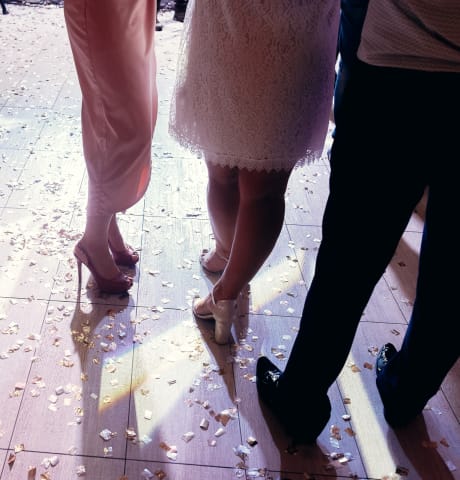
Wedding guests dancing on a dance floor in a restaurant while confetti falls and light effects move
The smooth transition from the intimacy of the opening dance to the exuberant group celebration works best with a clear structure.

Following the traditional order with parents

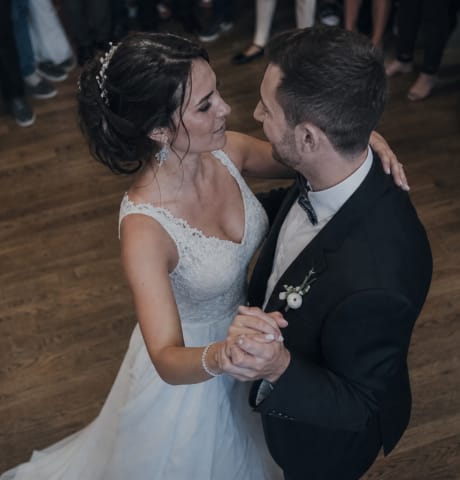
Classically, the first change after the opening dance is reserved for the closest family. There is a fixed order for this, which avoids misunderstandings. As soon as the bridal couple has finished the first song or gives a signal in the middle of the second song, the parents join in. The bride now traditionally dances with her father, while the groom asks his mother-in-law or his own mother to dance. This gesture has a symbolic character: it shows the merging of two families on the dance floor.

After a short sequence, the partners change again so that eventually the parents-in-law and the own parents dance with each other and the bridal couple finds each other again. Only when this family round is established is the signal given for the entire party. Anyone who briefly discusses this sequence with their parents in advance prevents searching looks at the moment of transition and ensures a harmonious overall picture.

The smooth transition in comparison

Correct

  • Inform parents and witnesses about their role in advance
  • Agree on a clear schedule with the DJ or the band
  • Actively initiate the transition with a gesture or an announcement
  • Use the witnesses as the first icebreakers

Wrong

  • Hoping that the guests will get up all by themselves
  • Leaving the moment of transition to chance
  • Pulling the parents into the spotlight unprepared
  • Allowing a long musical break after the opening dance

A well-coordinated transition eases the tension for the bride and groom, and transforms the formal atmosphere into a lively party in no time.

Wedding planner, Hamburg

How best men and maids of honor help set the mood

After the family has made the start, it is time for the best men, maids of honor, and close friends to shine. They act as emotional icebreakers. As soon as the signal is given to open the dance floor, they are the first to rush forward and take hesitant guests by the hand. This removes the shyness for other guests to be the first ones in the spotlight.

A charming introduction by the DJ or the band supports this process immensely. A short, warm invitation is completely sufficient to mobilize the party. As soon as the first couples fill the dance floor, a momentum is created that carries the rest of the evening. If you are unsure which dance style best suits your guests, a look at our overview of popular partner dance styles in comparison will help you find the perfect start.

Two ways to the open dance floor

Classic

Structured sequence

The traditional family handover

You keep full control over the sequence and actively involve your closest family in the ceremonial moment. This creates emotional highlights and maintains a beautiful tradition that means a lot, especially to parents.

Modern

Instant party vibes

Immediate access for everyone

After the opening dance, the dance floor is immediately opened to everyone, often supported by a quick change in music or a flash mob. This provides an instant energy boost and lightens the mood right away.

Frequently Asked Questions

  1. Traditionally, the bride dances first with her father and the groom with his mother. Afterwards, the partners switch so that the parents-in-law are included before the dance floor is opened to all guests.

Wedding dance courses near you

Prepare for your big performance together with your loved ones.

View all suitable courses