
Learn to dance together without stress
On udansa you will find experienced dance instructors and the right dance courses in your region to practice your steps in a relaxed way. This will make your opening dance an unforgettable moment full of ease.


By Bernhard De LucaUpdated
On udansa you will find experienced dance instructors and the right dance courses in your region to practice your steps in a relaxed way. This will make your opening dance an unforgettable moment full of ease.
Your opening dance should be an unforgettable moment full of joy, not a stressful chore. With the right preparation, you will turn stage fright into pure anticipation for your big performance.
A wedding dance choreography refers to the set sequence of steps, turns, and poses that a bridal couple presents to a selected piece of music on their wedding evening.
The opening dance is one of the most emotional moments of your wedding celebration. But you do not need to be professionals to shine on the dance floor: A successful wedding dance choreography is characterized above all by the fact that it suits your personality. Whether it is an elegant Waltz, a lively Discofox, or a modern mix, the key lies in reducing it to the essentials. Focus on a few, clean wedding dance steps instead of overwhelming yourselves with complex figures. If you feel secure on the dance floor, you will radiate that, and it is precisely this harmony that touches your guests.
Before you start training, it is worth taking a look at the various partner dance styles in comparison. This way, you will quickly find out which movement language suits you best. A relaxed introduction to your own possibilities takes the pressure off and creates the foundation for a joint project that should, above all, be fun.
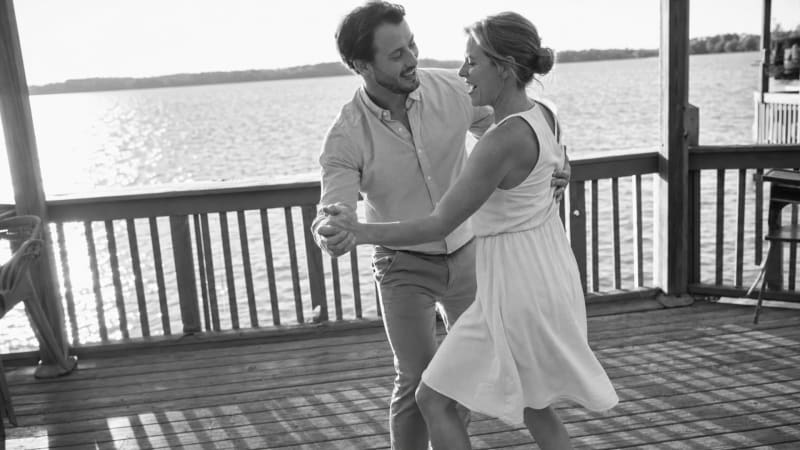
Among the classic partner dances, the wedding dance as a Viennese Waltz is the absolute favorite for traditional weddings. It captivates with its floating turns and majestic elegance. If you prefer something a bit more modern and uncomplicated, go for the wedding dance in Discofox style: This all-rounder fits almost any pop ballad and is also excellent to dance in tight spaces. For the brave who are looking for a big show effect, the wedding dance in Dirty Dancing style with the legendary lift is a popular inspiration, though it requires solid athletic preparation and a lot of trust.
Whichever of the many wedding dance styles you choose, the harmony between your abilities and the music is what matters. A Slow Waltz is more forgiving of small rhythm uncertainties than a fast Viennese Waltz. Analyze your strengths in advance to avoid frustration while practicing.
Correct
Wrong
Less is almost always more on your wedding day. Your guests do not want to see a perfect competitive dance couple, they want to feel the genuine connection and the shared happiness of the bride and groom.
Learning a beautiful wedding dance easily is not a question of talent, but of the right structure. Always start with the basic step alone without music to activate muscle memory. Only when the movement flows smoothly should you add the beat. A simple choreography usually consists of entering the floor, the basic step with two or three simple turns or position changes, and a romantic final highlight like an elegant pose or a deep bow.
Use the preparation time to grow even closer as a couple. If you notice that coordination is difficult for you, a structured introduction helps. Tips for this are offered by a dance course for beginners, which guides you step by step through the basics of dancing together.
Tradition and elegance on the dance floor
The classic waltz captivates with timeless elegance, flowing movements, and a majestic presence in the room. It is perfect for traditional weddings and festive attire.
Flexibility and party vibes guaranteed
Discofox is extremely versatile, easy to learn, and fits almost any modern pop song. It leaves plenty of room for relaxed turns and spontaneous improvisation.
Two to three months before the wedding day is ideal. This gives you enough time to internalize the steps without time pressure and build up muscle memory.
Discofox and the Slow Waltz are particularly beginner-friendly. Both dances are based on simple step patterns that can be learned within a few hours, even without prior knowledge.
A length of two to three minutes is optimal. After that, the guests' attention usually wanes, and it becomes physically and mentally demanding for inexperienced couples.
Yes, that is absolutely possible. In this case, focus on a simple basic step with gentle sway steps and a nice final pose, which often feels more intimate and natural than a stiff choreography.
Find the right dance school to prepare for your opening dance stress-free.
Couple danceLimbach-Oberfrohna · Germany
PaartanzkreisMonday · 19:30 · Oct 12
Limbach-Oberfrohna
Couple danceLimbach-Oberfrohna · Germany
PaartanzkreisFriday · 18:15 · Oct 23
Limbach-Oberfrohna
Couple danceBurgstädt · Germany
Paarkurs - Goldstar TanzkreisSunday · 15:00 · Oct 25
Burgstädt
 Comparing partner dance styles: Which one suits you?Which partner dance is the perfect fit for you? Our comprehensive style comparison highlights the differences between ballroom, Latin, and modern social dance styles.
 Which dance style suits me? The ultimate guide for beginnersYou want to start dancing but don't know which style suits you best? Our comprehensive guide gives you the perfect orientation for your start on the dance floor.
 Finding a dance class for beginners: How to get started easilyGetting started is easy: With our guide, you will find the right dance class for beginners and prepare perfectly for your very first dance lesson.
 Slow Waltz vs. Viennese Waltz for your wedding danceSlow Waltz or Viennese Waltz? We explain the crucial differences in tempo, technique, and style so your wedding dance becomes an unforgettable moment.
 Create your own wedding dance choreography: A guideYou can easily create your own wedding dance, even without any prior experience. This guide shows you how to structure an impressive choreography.
 Mistakes in wedding dance choreography: The 7 biggest pitfallsPlanning your opening dance can lead to typical training pitfalls. Learn about the seven most common choreographic mistakes couples make and how you can avoid them.
 Crazy Wedding Dance: How to Pull Off the Perfect SurpriseThe crazy wedding dance breaks with tradition: Learn how to master the transition from a classic Waltz to an upbeat party mix.
 Salsa and Bachata for your wedding dance: Choreography tipsAre you dreaming of a wedding dance full of rhythm and joy? Our guide shows you how to perfectly incorporate Salsa and Bachata into your first dance.
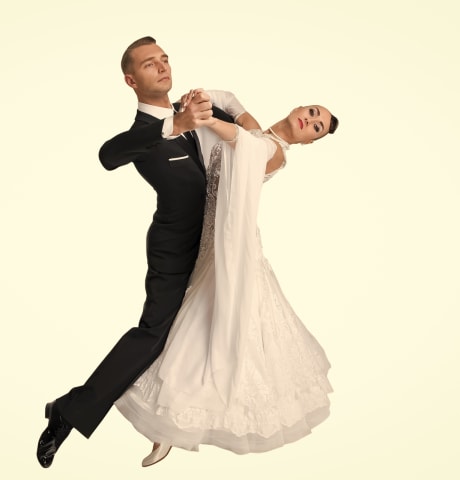 Learning lifts for your wedding dance: Shine with confidenceAre you dreaming of a spectacular opening dance? Learn in our guide how to integrate lifts and poses into your choreography safely and elegantly.
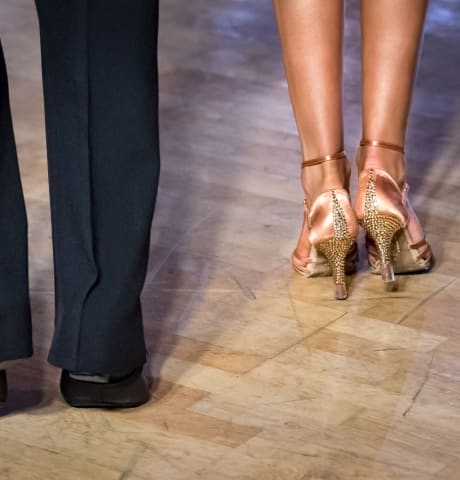 Learn Discofox for your wedding: The guide for your first danceDiscover why Discofox is the perfect, uncomplicated wedding dance for your big day. With simple steps and modern music, you will create the best atmosphere.
 Unique wedding dance: 6 alternative dance stylesForget the classic waltz. We show you six unique dance styles, from Argentine Tango to Lindy Hop, for an unconventional and unforgettable first dance.
 Slow Waltz for your wedding dance: figures and stepsThe Slow Waltz is the classic choice for a wedding dance. Learn how the basic step works and which simple figures will help you shine on the dance floor.
 Modernizing Foxtrot and Quickstep for your wedding danceClassic ballroom dances don't have to be stiff. Use this guide to modernize Foxtrot and Quickstep for your perfect, contemporary wedding dance.
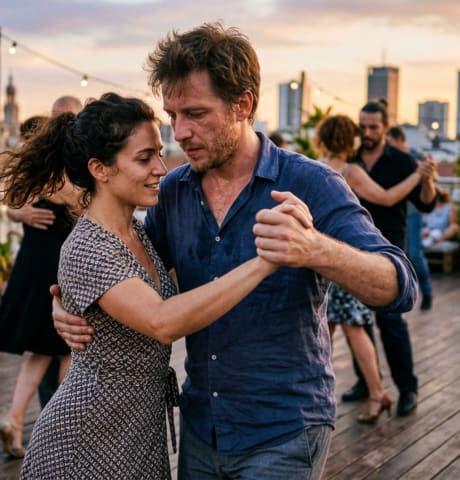 Tango for your wedding dance: Bring drama and elegance to the floorA Tango as your wedding dance brings pure drama and elegance to your celebration. Learn how to master the essential steps and enchant your guests.
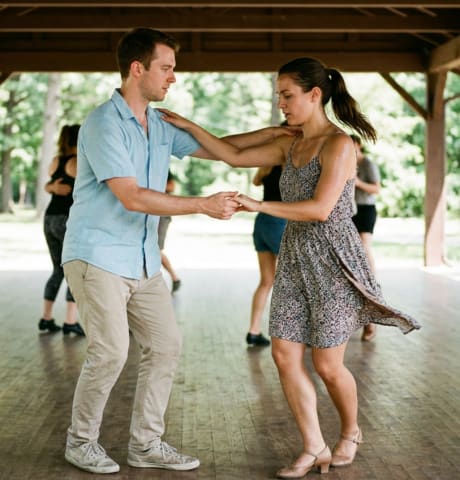 Modern West Coast Swing and Hip-Hop for your wedding danceUrban dance styles are revolutionizing the first dance. Discover how West Coast Swing and Hip-Hop bring a fresh, modern vibe to your wedding celebration.