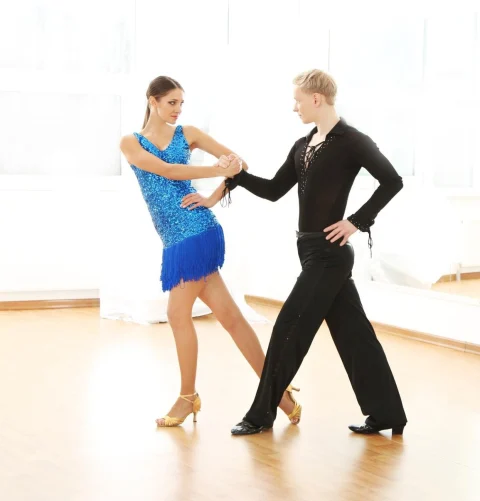
Find people to share your dance with
On udansa connect, you can look for dance connections in London and describe what role, experience, and approach to dancing together you bring.

By Bernhard De LucaUpdated
On udansa connect, you can look for dance connections in London and describe what role, experience, and approach to dancing together you bring.
A pleasant dance together can be the start of a dance practice partnership, but it doesn't have to be. Disappointment often only arises later, when a casual encounter quietly turns into a firm expectation.
Lead and follow describe the leading and following roles in partner dancing. Both roles are independent of gender and can be switched depending on experience and mutual agreement.
When you’re looking for dance partners in London, it helps to distinguish between two things: are you looking for someone to practise with regularly, or just people you can dance with now and then? On udansa, you can make your intentions clear from the first contact. A meaningful text mentions your dance style, your role and a specific experience, such as having secure basic steps but still feeling unsure about turns. “I’m looking to meet people” sounds friendly, but leaves the kind of connection you want open.
Offline, you can meet people while learning together, through acquaintances or on a dance school noticeboard. During partner rotation, you can see straight away whether someone adapts to your pace attentively. At a social dance, an enjoyable dance can make it easier to start a conversation. An invitation to the next dance is still different from agreeing to train together regularly.
Ways of making contact and mutual commitment are two different things. You can start by keeping things casual and develop a practice partnership later. On the other hand, you can explicitly focus your search on training. Having a friend accompany you doesn’t automatically mean you’re a regular dance couple; the article about taking a dance class with a friend as a single explains this distinction.

Two people can name the same dance style and still expect different things. One may want to dance familiar figures at a relaxed pace, while the other wants to repeat movement details and get feedback. Both are valid. Things become difficult when one person sees every interruption as helpful and the other experiences it as unsolicited correction.
Experience level is also more nuanced than the number of classes attended. Can you keep the rhythm, support your own weight, and stay with the basic step after an unclear lead? Descriptions like these tell your partner more than “intermediate.” Practicing together also shows whether you imitate movements quickly or first need to understand their direction. The article about common observation mistakes when imitating explains this difference.
With Lead and Follow, the chosen task matters: leading means offering clear impulses, following means actively noticing them and responding independently. Switching roles requires mutual agreement. Age and height alone do not answer whether you are compatible; stride length, mobility, and comfortable contact are among the relevant factors. The overview of taking a dance class as a couple with an age difference is also relevant.
Do this
Not like this
The current options in the course filter give you a setting where you can connect with other dancers while learning together.
A dance partnership becomes reliable when a friendly “We should practice sometime” turns into a concrete plan.
If you're new to London, a dance acquaintance can initially be a familiar face without yet becoming a close friend. Meeting repeatedly makes it easier to find your feet: you remember names, a figure you practiced together, and your last conversation. Still, closeness can't be inferred from how often you dance together.
For a practice partnership, commitment means that plans, cancellations, and available time all line up. A convenient meeting place helps protect the energy you share. If your stay is temporary, its end should be part of the expectations from the start. This lets your dance partner distinguish between dancing together occasionally and a longer-term collaboration, without taking a later cancellation personally.
When looking for a dance partner for competitive dance, there are additional decisions to make together: discipline, skill level, training commitment, how to split costs, and how to handle the pressure of competition. The requirements for competing depend on the relevant rules, and a good personal fit alone doesn't guarantee eligibility. For your first meeting, choose a public place that's suitable for dancing. You don't have to share personal information early or accept touching or feedback that makes you uncomfortable. A respected boundary is a strong indication that a partnership could work.
Shared habits become familiar
A steady dance partnership makes it easier to work on the same movement over several sessions. You know each other’s signals and can notice changes more precisely. At the same time, it requires agreements that work for both of you in everyday life.
Get to know different signals
An open contact circle lets you experience how differently people lead or respond to the same figure. You practice adapting to new ways of moving. This means there is less shared experience to draw on, and each encounter calls for renewed attention to tempo and boundaries.
Yes, if you both are comfortable with simple moves and a relaxed pace. However, having more experience does not automatically make someone a teacher. A partnership works better when the more experienced person does not constantly correct you, and you can say without embarrassment which moves you are still unsure about.
No, you do not need perfect English for a first dance meetup. A few details about your dance style, role, and availability are often enough to get started. Terms like Lead and Follow make communication easier; when it comes to touch, pain, or wanting to stop, you should be clear.
Looking for a dance partner does not automatically mean looking for a romantic partner. Physical contact while dancing does not mean consent to flirting or private meetups. Be clear early on that you want to keep the connection purely about dancing, and respect a no even if you enjoyed dancing together.
Your first message should include your dance style, role, specific experience, and the kind of connection you are looking for. For example, write that you would like to practise the basics together and are only in London temporarily. A friendly, personal message is enough; you do not need to share your home address or sensitive information.