
Find your dance community
On udansa connect, you will find like-minded people who share your passion for rhythms from around the world. Connect with dancers in your area and discover exciting courses for your favorite solo dance.


By Mary De LucaUpdated
On udansa connect, you will find like-minded people who share your passion for rhythms from around the world. Connect with dancers in your area and discover exciting courses for your favorite solo dance.
Dance music is as diverse as the cultures of our world. When you surrender to the rhythms without a partner, traditional instruments and modern beats open up entirely new ways of physical expression for you.
World music describes a broad spectrum of musical styles that combine traditional folk music from various cultures with modern, often Western influences. In solo dance, it serves as a bridge between historical heritage and contemporary movement art.
Anyone who hits the dance floor without a partner experiences a very special form of creative freedom. The right music for solo dance forms the foundation for expressing emotions, stories, and cultural identities without words. Unlike in classic partner dance, where fixed step sequences and coordination within the pair take center stage, traditional dance music worldwide breaks down rigid structures. It invites you to understand your own body as an independent instrument that reacts directly to the vibrations of the sounds.
The range extends from the earthy rhythms of the African continent and the highly complex beat structures of Asian dances to modern, Western interpretations. Each of these styles uses its own unique arsenal of instruments and rhythm providers. Anyone who understands these musical nuances not only learns to coordinate their steps better, but also develops a deeper understanding of the cultural backgrounds of the movements. A look at the global variety shows how closely music and dance have always been intertwined.

At the heart of many traditional solo dances, rhythm acts as the driving force. This becomes particularly clear when you explore the topic of solo dance in the context of African cultures. Here, African dance music with drums such as the djembe, the talking drum, or the kpanlogo dominates. These instruments often imitate the human voice and communicate directly with the dancers. The rhythm is rarely linear, but rather characterized by polyrhythms, where several different beats occur simultaneously and set the body into multi-layered vibrations.
If you travel further east, the soundscape changes fundamentally. Oriental dance music and its instruments such as the goblet drum darbuka, the frame drum riq, and the Arabic lute oud create a fine, ornamental structure. Here, the body in solo dance often reacts to very specific melody lines or sudden percussion accents. The Indian-influenced world is even more colorful and energetic, where modern Bollywood dance music beats merge traditional instruments like the dhol drum with electronic synthesizers to create an incomparable dynamic that immediately gets into your legs.
Correct
Wrong
In solo dance, there is no partner to lead or distract you. The music is your only dialogue partner, and its instruments determine your movement.
Fascinating forms of solo dance have also developed in the West, based on their own unique musical traditions. A perfect example is Line Dance, which is closely linked to US culture. Typical Line Dance country music combines fiddles, banjos, and acoustic guitars with a clear, driving four-four time, which makes synchronous group dancing easier. If you are interested in this captivating style, you will find detailed insights into the step sequences and the associated community on the special page for Line Dance.
In stark contrast to this is the modern, artistic expression in contemporary dance. Here, dancers use sensitive contemporary dance music and songs, which are often carried by minimalist piano sounds, spherical synthesizers, or orchestral elements. In this genre, it is less about strictly adhering to a rigid beat, but rather about the interpretation of dynamics, silence, and emotional arcs. For everyone who appreciates this free form of expression, the page about Modern Dance offers a wonderful place to explore the connection between the body and contemporary sound more deeply.
Cultural roots and acoustics
Traditional music styles rely on handmade sounds and historical instruments. They convey centuries-old stories and connect the dancer deeply with the cultural roots and ritual origins of the movement.
Synthesizers and urban beats
Modern solo dance music uses electronic beats, synthesizers, and hybrid productions. It breaks up classical structures and enables contemporary, urban interpretations and maximum creative freedom in the studio.
For getting started, music styles with a clear, steady beat are particularly well-suited. Country music for line dance or modern pop beats offer a reliable orientation for your first steps.
The darbuka is a goblet-shaped hand drum that sets the rhythm in oriental music. It produces bright, crisp tones as well as deep bass notes, to which dancers react with precise hip movements.
Yes, many modern solo dancers use playlists with a mix of acoustic instruments and electronic beats. These fusions make it easier to dress traditional movements in a modern guise.
Find the right course now and let yourself be moved by rhythms from around the world.
Modern DanceBerlin · Germany
Modern Jazz Dance ErwachseneThursday · 20:50 · Oct 8
Hebammenpraxis Storchennest
Hip HopLimbach-Oberfrohna · Germany
HipHop 11 - 13 JahreFriday · 15:45 · Oct 9
Limbach-Oberfrohna
Hip HopLimbach-Oberfrohna · Germany
Hip Hop ab 14 JahreFriday · 16:45 · Oct 9
Limbach-Oberfrohna
 Solo danceDancing without a partner means: starting freely, connecting with yourself, and enjoying movement. Discover solo dance styles and find the perfect class with no pressure.
 Line DanceLine Dance is the perfect blend of group dynamics and individual freedom. Experience the great feeling when a whole row of dancers takes the first step in sync with the music.
 Modern DanceModern Dance is a style full of freedom and expression. Instead of fixed steps, the focus is on feeling, energy, and individuality.
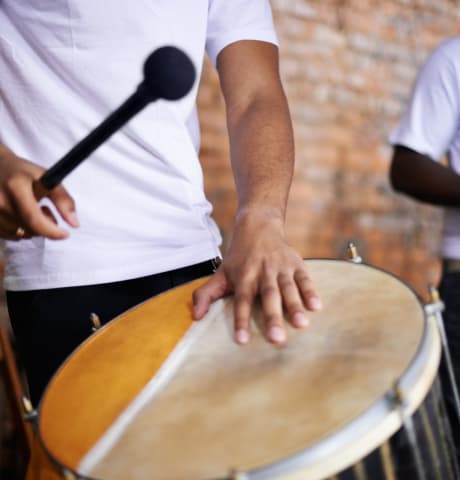 Belly Dance Music: Rhythms and Instruments in FocusDive into the fascinating world of oriental dance music and learn how typical drum rhythms shape your dance. A practical guide for rhythmic understanding.
 Learn to dance Afrobeat and master the rhythmLearn how to decode the infectious 8-beat rhythm of Afrobeat and Dancehall. With this guide, you will master the necessary isolations step by step.
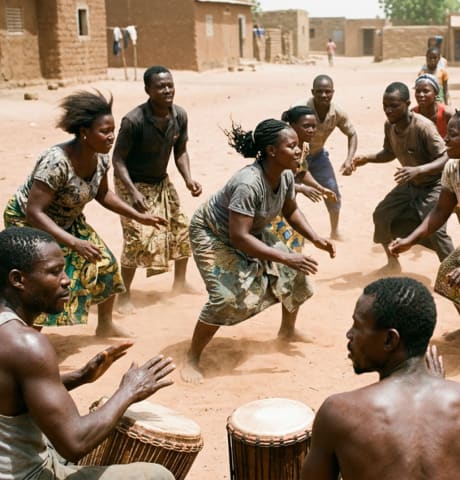 African drum rhythms for dance: The power of the djembeDive into the fascinating world of West African drum rhythms and learn how the djembe and bass drums guide the movements of traditional solo dance.
 Understanding Flamenco music: Rhythm and structure in danceLearn how the complex structure of Flamenco music guides your dance. Master the legendary 12-beat compás and learn how to improvise expressively to Soleá and Bulerías.
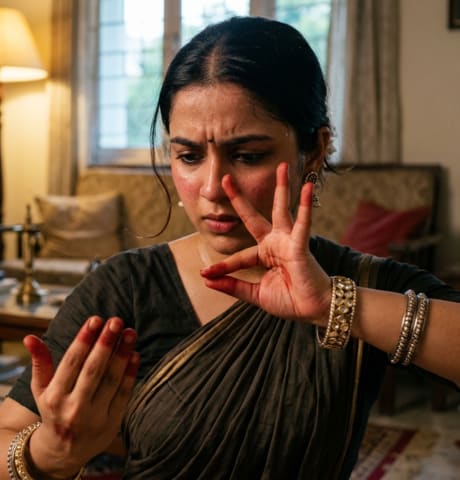 Indian classical dance music: Bharatanatyam rhythmsDive into the fascinating world of Indian classical dance music. This guide explains the complex rhythms of Bharatanatyam and Kathak, as well as the art of rhythmic syllables.
 Drums & Strings: World Music Instruments in DanceLearn how traditional instruments like the djembe, oud, and darbuka shape the rhythm and character of solo dances around the world.
 Dancing polyrhythms: A guide for solo dancersLearn how to dance complex polyrhythms from world music by isolating different body parts. This guide shows you the path to perfect rhythmic independence.
 Which solo dance suits me? The big rhythm testFind out which solo dance truly suits your personality with our big rhythm test. Discover your dance home between folklore, polyrhythms, and club beats.
 Folktronica Dance Trends: The New Passion for Organic BeatsTraditional rhythms merge with electronic beats. Learn everything about the trend towards Folktronica and Organic House in solo dance.
 Irish Dance music: Reels, Jigs, and the rhythm of the feetDiscover how your feet become a percussion instrument in Irish step dance. We explore the difference between Reels and Jigs, plus the captivating rhythms of folk music.
 Sufi music and whirling dance: The hypnotic rhythms of the SemaImmerse yourself in the world of Sufi music and the ritual whirling dance of the dervishes. Discover how the hypnotic rhythms of the Sema guide mind and body into a trance.
 The best solo dance music playlist: Ideas for your practiceFind the perfect rhythms for your dance practice at home. This handpicked selection guides you step by step from simple warm-up beats to complex polyrhythms.
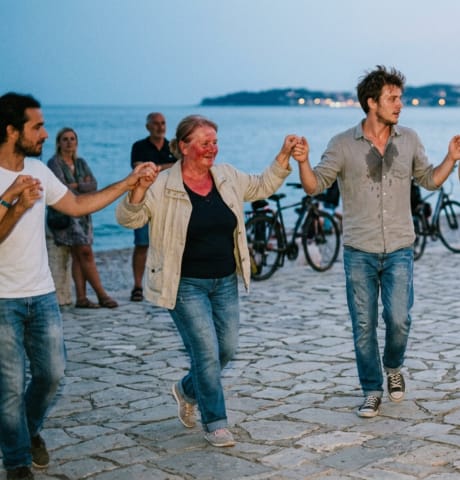 Balkan Dance Music: Understanding and Dancing Odd RhythmsOdd rhythms in Balkan folklore often seem mysterious. With this simple guide, you will learn to count and dance to the rhythms of Kolo and Oro with ease.