
Find your dance community on udansa
On udansa connect, you will find like-minded people who share your passion for fast rhythms, as well as the right courses in your area.


By Mary De LucaUpdated
On udansa connect, you will find like-minded people who share your passion for fast rhythms, as well as the right courses in your area.
Irish step dance has a fascinating dual role: those who dance do not just follow the beat, they actively create it. This becomes particularly clear when dancing in heavy hard shoes (also called heavy shoes), which are reinforced with fiberglass or wooden heels. Here, footwork becomes an independent percussion instrument that fits seamlessly into the structure of the fiddle, tin whistle, and the Irish frame drum (bodhrán). Through targeted strikes with the toe (trebles), the heel (clicks), or the flat foot (stamps), dancers set rhythmic accents that stand in exact counter-rhythm or as syncopated embellishments to the melody. This close integration requires an extreme sense of timing and rhythm in dance, as every imprecise step immediately disrupts the overall musical picture.
Traditional Irish dance music instruments form the foundation for this rhythmic dialogue. While the bodhrán provides the earthy, pulsating bass beat, the melody instruments drive the tempo forward. Dancers use the short, dry tones of their reinforced shoes to double the fast sixteenth notes of the fiddle or accordion or to fill rhythmic gaps. This creates a polyphonic interplay in which the feet form the percussive peak of the ensemble.

Listen closely to the emphasis of the music. Reels have a continuous, straight pulse (1-2-3-4), while jigs convey a driving feeling of triplets (1-2-3, 4-5-6).
Start by moving only in your head to the melody without shoes. Try to internalize the basic beat of the bodhrán drum with a slight nod or by clapping.
Place your feet flat on the floor to hit the heavy beats (stamps) on counts one and three. This gives you a stable rhythmic foundation.
Add quick intermediate beats (trebles) with your toe taps on the off-beats. If your steps sound like a flowing drum roll, you are perfectly in rhythm.
The reel is in a straight 4/4 time signature and sounds fluid, while the jig is played in a dotted 6/8 time signature and has a bouncy character. This directly influences the sequence of steps and the emphasis of the footwork.
The tempo varies greatly depending on the skill level. At championships, the Irish step dance music tempo for heavy jigs is often at a slower 73 BPM for complex beats, while reels in the light-shoe category can reach up to 113 BPM.
No, traditional Irish dance music almost completely avoids syncopation in the basic rhythm. The rhythmic complexity and syncopation only arise through the improvised or choreographed footwork of the dancers themselves.
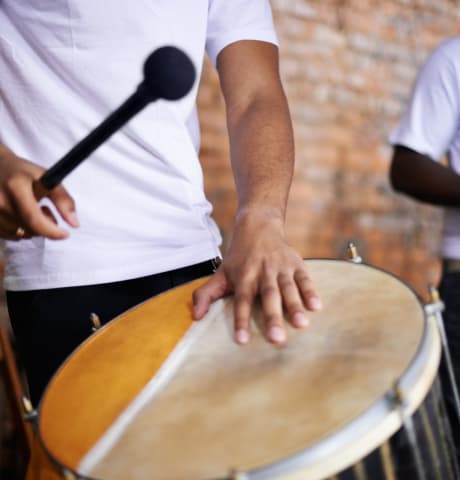 Belly Dance Music: Rhythms and Instruments in FocusDive into the fascinating world of oriental dance music and learn how typical drum rhythms shape your dance. A practical guide for rhythmic understanding.
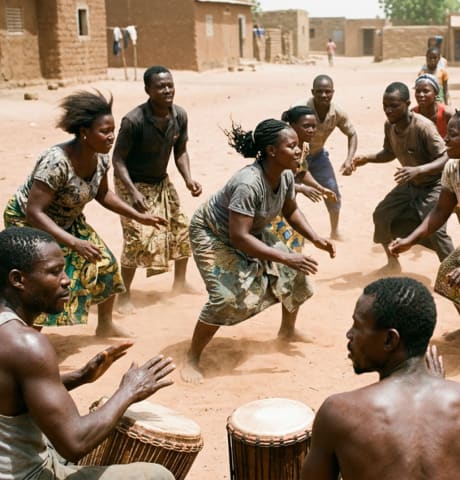 African drum rhythms for dance: The power of the djembeDive into the fascinating world of West African drum rhythms and learn how the djembe and bass drums guide the movements of traditional solo dance.
 Learn to dance Afrobeat and master the rhythmLearn how to decode the infectious 8-beat rhythm of Afrobeat and Dancehall. With this guide, you will master the necessary isolations step by step.
 Music for solo dance: The magical rhythms of world musicDive into the fascinating world of solo dance music. Learn how traditional instruments and modern beats can shape and inspire your dance without a partner.
 Sufi music and whirling dance: The hypnotic rhythms of the SemaImmerse yourself in the world of Sufi music and the ritual whirling dance of the dervishes. Discover how the hypnotic rhythms of the Sema guide mind and body into a trance.
 The best solo dance music playlist: Ideas for your practiceFind the perfect rhythms for your dance practice at home. This handpicked selection guides you step by step from simple warm-up beats to complex polyrhythms.
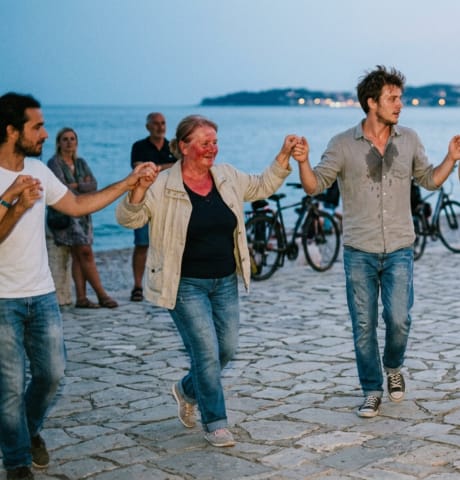 Balkan Dance Music: Understanding and Dancing Odd RhythmsOdd rhythms in Balkan folklore often seem mysterious. With this simple guide, you will learn to count and dance to the rhythms of Kolo and Oro with ease.Belly Dance Music: Rhythms and Instruments in FocusDive into the fascinating world of oriental dance music and learn how typical drum rhythms shape your dance. A practical guide for rhythmic understanding.Learn to dance Afrobeat and master the rhythmLearn how to decode the infectious 8-beat rhythm of Afrobeat and Dancehall. With this guide, you will master the necessary isolations step by step.African drum rhythms for dance: The power of the djembeDive into the fascinating world of West African drum rhythms and learn how the djembe and bass drums guide the movements of traditional solo dance.