How Tala and syllables structure dance
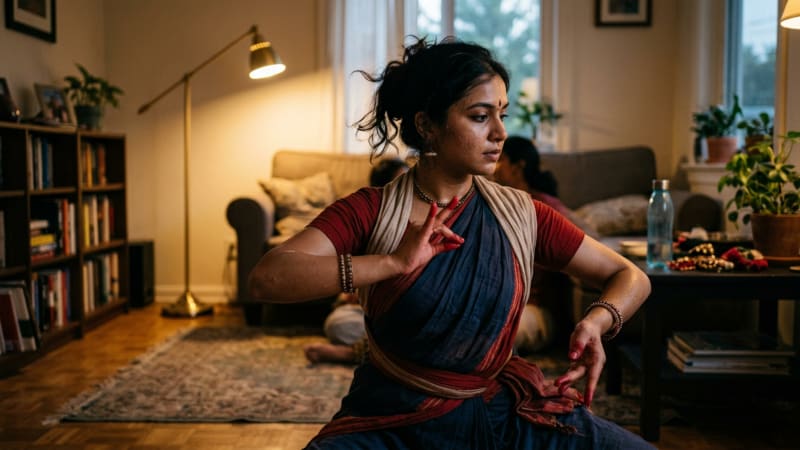
Indian classical dance music differs fundamentally from Western musical traditions due to its unique concept of time and rhythm. While Western music is mostly dominated by steady time signatures like 4/4 time, Indian music is based on the system of Tala. A Tala is a cyclic rhythm pattern that consists of a specific number of beats and repeats infinitely. For the South Indian dance style Bharatanatyam, the Carnatic music tradition is defining. Here, the rhythm is not only created by drums like the Mridangam, but is significantly shaped by Sollukattu. These are spoken syllables that give the dance steps a rhythmic voice.
In North Indian Kathak, on the other hand, the Hindustani music tradition dominates. Here, the rhythmic syllables are called Bol. They imitate the sound of the double drum Tabla or the Pakhawaj. Anyone who wants to understand this music must learn not to perceive the rhythm as a rigid metronome, but as a flowing, breathing entity. Music and dance merge so closely that the musicians on stage react directly to the footwork of the dancers.