
Training comparison5 minutes

Pole Dance or Heels Dance: Which training is right for you?

By Bernhard De LucaUpdated

In short
  • Pole Dance is for you if you want to combine strength and acrobatic movement on a pole.
  • Heels Dance is for you if you’re looking for choreography, musical expression and movement in heels.
  • Twerk emphasizes rhythmic hip movements, while Burlesque develops stagecraft, stage presence and playful expression.
  • Exotic Pole combines pole work, often with heels; Dancehall and African club dances have distinct cultural roots.

A spectacular clip rarely shows what you spend most of a class doing. So when deciding, it also matters whether you prefer working on a single task or moving through a longer choreography.

DefinitionPole Fitness

Pole Fitness refers to pole-based training focused on strength, holds, and acrobatic elements. Dance transitions may be included, but they are not the focus of every class.

The Pole and Heels Emphasize Different Things

In Pole Dance, the pole becomes both equipment and a point of reference for your movement. Depending on the focus, you work on grip strength, shoulder endurance, core stability, and mobility. A class can focus intensely on just a few elements: You try a move, rest, and try again. Pole Fitness places particular emphasis on this physical work, while dance-focused Pole classes give more space to transitions and music.

Heels Dance, by contrast, usually organizes movement into choreography on the floor. Heels change the demands on your balance and the endurance of your feet and legs. Coordination, musical accents, and the ability to shape several movements into a connected phrase also come into play. This can be strenuous too, even without acrobatic elements.

The boundary is fluid: Exotic Pole often combines pole-focused dance with heels and floorwork. The term does not refer to a class structure that is the same everywhere. If you are interested in both the pole and choreographic expression, this combination is worth considering. The guide to Pole accessories will address equipment later, but it does not replace the decision about your main training focus.
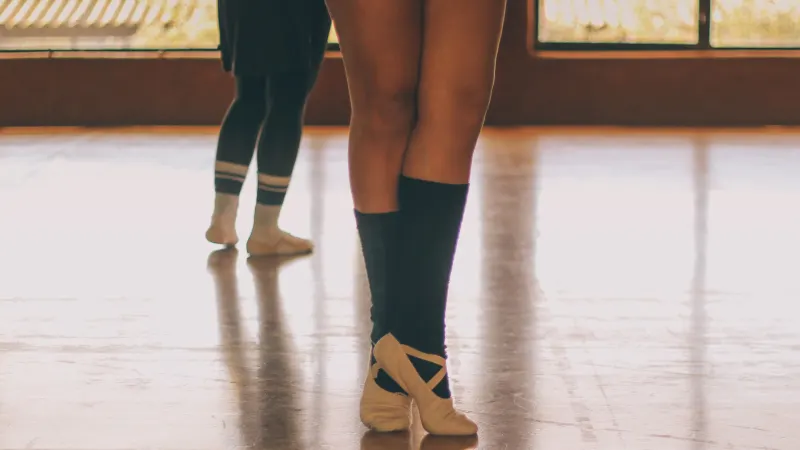
The lower bodies of women in a dance studio are visible.
The same music can accompany strength training and choreography, without both requiring the same skills.

Twerk and Burlesque pursue different goals

Twerk is often offered alongside Pole Dance and Heels Dance, but it has a different focus. It centers on rhythmic pelvic movements, their variations, and the connection to music. A Twerk class especially works your legs, hips, and core; repeated sequences can be physically demanding. Classes may focus on individual movement qualities or combine them into a choreography. Twerk has roots in Black dance cultures, particularly US hip-hop and bounce culture, and is not simply preparation for Pole.

A Burlesque class focuses more on performance: How do you create a stage persona, how does a pause work, how do you direct attention? Gestures, gaze, costumes, and sometimes props all contribute to the performance. Physical demands vary considerably depending on the choreography. Less acrobatics does not mean less work, since deliberate timing and a strong stage presence also take practice.

The class format also differs: technique drills and repetition work well for Twerk, while Burlesque also needs room for short scenes or individual interpretation. Hand fans as a dance accessory are one possible prop, but they are not a requirement for Burlesque. Both styles can encourage confident self-expression without becoming the same kind of training.

How to tell the differences

So, yes

  • Place Pole on the spectrum between strength training and dance
  • Understand Heels as choreographic training in heels
  • Distinguish Twerk and Burlesque by their respective goals
  • Name Dancehall and African styles along with their origins

Not like this

  • Think of every pole class as purely strength training
  • Reduce Heels to wearing high heels
  • Treat Twerk and Burlesque as interchangeable offerings
  • Group everything under a supposedly unified Afro style

Your training goal becomes more tangible when you find the work between successful moments just as interesting as the finished choreography.

udansa editorial team

Dancehall and African club dances stand on their own

A Dancehall class doesn't simply belong in the category of “dancing with hip movements.” Dancehall is a Jamaican music and dance culture. Named steps, their creators, and their connection to the music are important parts of it. Bodywork and choreography may be part of a class, but on their own they don't explain the cultural significance of the movements.

Likewise, an Afro-Dance class doesn't refer to one uniform dance from one uniform Africa. The class name may bring together different club dances, such as Azonto from Ghana or dance styles associated with South African Amapiano. These have their own musical contexts and movement vocabularies. A collective term makes them convenient to list on a schedule, but it doesn't make them interchangeable.

For your comparison, this means that strength, stamina, and coordination describe only part of the training. If you're drawn to a particular groove and its cultural context, that's a goal in its own right, alongside acrobatics or stage performance. A trial class to try out a dance style can help you experience the difference in your own body. One class, however, only shows you that particular lesson, not the full range of a dance culture.

Two ways to experience progress

Element

A move becomes more consistent

Progress on a clearly defined movement

In element-focused pole training, you can feel your progress, for example, when you can perform a position with more control. You can spend time working on one move and clearly notice small changes.

Phrase

A sequence becomes more expressive

Progress across several musical moments

In choreographic Heels training, you can see your progress when transitions fit together and your accents feel more intentional. The same sequence can give you room for a different interpretation time and time again.

Frequently Asked Questions

  1. No, you don’t need significant upper-body strength to take a beginner class. You’ll build strength through training, and challenging holds aren’t a useful benchmark for getting started. What matters is that the exercises match your current ability, rather than using advanced video clips as your starting point.

Your goal sets the direction

On udansa, you’ll find dance classes and people to share your training experiences with. You can connect with others to attend classes together, even if you train without a regular dance partner.

Your goal sets the direction