

Find your breaking crew on udansa
Find motivated training partners, experienced coaches, and the best courses in your city on udansa to bring your first toprocks to the dance floor. Get started together and become part of the local breaking scene.

The journey into the world of breaking is full of energy, creativity, and athletic excellence. Learn how a New York street phenomenon became a global movement and how you can master the basics.
Breaking is an extremely dynamic, acrobatic dance style that originated in the 1970s in the USA and is considered a physical expression of hip-hop culture. It combines a sense of rhythm, strength, and creative self-expression on the floor and standing up.
The roots of breaking lie in 1970s New York, more precisely in the Bronx. In a time of social tension and gang rivalries, a new culture emerged that is known worldwide today as Hip-Hop. DJs like Kool Herc began to play the rhythmic instrumental passages of funk and soul records, the so-called breaks, in a continuous loop. These extended rhythms lured dancers onto the dance floor, where they dueled in circles to these beats. The correct terms B-Boying and B-Girling also originate from this era, with the "B" simply standing for Break-Boy or Break-Girl.
What began as a creative street protest and an outlet for young people rapidly developed into a global art form. Over the decades, the movements became professionalized, and new generations introduced acrobatic feats. Today, the dance has long since moved from the backyards into the large arenas. Its inclusion as a B-Girl dance sport and B-Boy discipline at the Olympic Games shows how much athleticism, coordination, and discipline lie behind the seemingly effortless movements.

Anyone who wants to successfully lay the foundation must understand the four basic breaking elements. Every training session begins standing up with so-called toprocks. These steps serve to tune into the beat of the music, show presence in the room, and present your own style. They are the dancer's calling card before heading to the floor. The transition downwards is called a go-down and leads fluidly into footworks, the fast, rhythmic steps on hands and feet.
Once on the ground, the dynamics of the dance unfold. With freezes, the dancer freezes in the middle of a movement for several seconds, often in extreme, powerful positions on the head, elbows, or one hand. Power moves provide the spectacular highlights. Spins on the head, windmills on the back, or jumps on one hand require years of intensive training. A solid first dance lesson for preparation helps beginners build the right balance between these elements in a healthy way and without injury.
Film yourself while training with your smartphone. In slow motion, you will immediately see if your weight distribution is correct and if your steps fit cleanly to the beat.
Breaking is not just a sport, it is a dance where the music dictates the movement. If you do not feel the beat, you are just doing gymnastics.
Getting started with this dance style requires neither prior acrobatic knowledge nor expensive equipment. The key to success lies in continuous training of the basics. At the beginning, the focus is on a sense of rhythm. The dance thrives on the music, which is why newcomers must learn to hear the breakbeat precisely and coordinate their movements with the snare and bass beats. Anyone who masters the toprocks and simple footworks in time will automatically build the necessary strength in their wrists, shoulders, and core muscles, which is needed later for complex freezes.
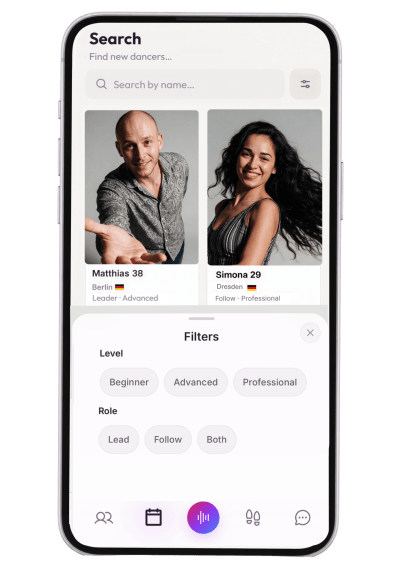
In addition to individual training at the dance school, the exchange within the community is irreplaceable. The breaking platform udansa helps you find like-minded people, instructors, and suitable courses to work on new moves together. Whether you just want to stay fit, are looking for creative freedom, or have the goal of competing in a battle at some point: The journey always begins with the first, clean step while standing. Do not be intimidated by the extreme power moves of the pros, because every champion started with the simple groove of toprocks.
Presence while standing
Dancing while standing serves as an introduction, shows your groove, and builds a connection to the music. This is where you present your personality and claim the space for yourself.
Dynamics on the floor
Working on the floor requires strength, flexibility, and coordination. This is where the fast footwork patterns and the spectacular holds of the freezes are created.
To get started, you need comfortable sportswear that gives you full freedom of movement and flat sneakers with good grip. A cap or beanie will protect your head during your first attempts at spins.
Find the right start and learn the basics from experienced instructors.
 Learn breaking for beginners: Master the basicsEvery beginning is easy: With our guide for beginners, you will learn the four most important elements of breaking and lay the foundation for your own style.
 Power Moves in Breakdance: Athletic Training for SpinsMaster the most spectacular elements of breaking. Our guide shows you how to defy gravity with targeted strength and flexibility training.
 Breakdance Battle Tactics: Understanding Musicality & CultureDive into the world of breaking: Learn how the right battle tactics, a deep sense of rhythm, and the rich history of hip-hop culture shape your performance.
 Find a Breakdance Crew: Your Guide to Training and CommunityThe best way to join the breaking community is through shared training. Learn how to find your crew, dress for success, and train without injuries.