

Find your crew and get started
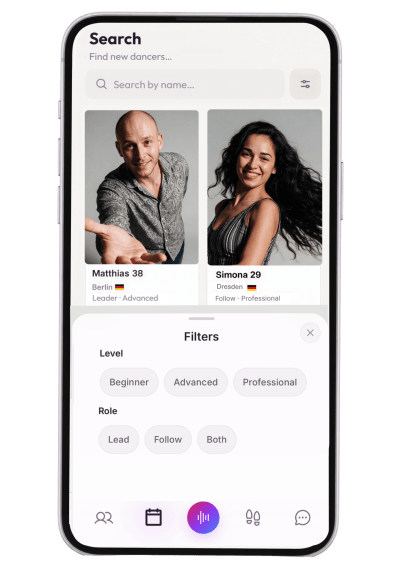
Whether you are looking for a permanent crew, want to gear up for a battle, or need the right training partner for your sessions: on udansa you connect directly with the urban dance scene in your city.

Breaking thrives on community, the energy in the circle, and pushing your own limits together. Find out here how to organize yourself optimally, find your style, and train without injury.
In breaking, practice refers to a free training session without a fixed dance instructor, where dancers work independently on their moves, exchange ideas, and give each other feedback.
Getting started in the world of breaking is fundamentally different from classical partner dances. Instead of fixed dance schools and rigid course times, the urban scene organizes itself into crews and free training groups. Anyone who wants to organize their B-Boy training often faces the challenge of finding the right space and the right people. A solid community not only motivates you, but is the key to truly gaining a foothold in breaking.
Beginners and advanced dancers can best find their own breakdance crew where the scene lives: at open practice sessions, in youth centers, or through specialized networks. On udansa, you can specifically search for like-minded people in your area to share gym times or train outside on linoleum sheets in the summer. It is only through direct exchange and mutual feedback during a session that your own style and the necessary dynamics develop.

In breaking, clothing is far more than just a fashion statement: it is functional equipment that determines the success or failure of a move. The right breakdance clothing style combines aesthetics with protection. Loose cuts offer maximum freedom of movement, while robust materials like abrasion-resistant cotton or special nylon protect the skin from burns during floor contact. Shoes are particularly important: they require a flexible but well-cushioned sole and sufficient grip on the edges.
Additionally, accessories play a functional role in training. A so-called spin cap with a smooth surface makes headspins much easier, while elbow and knee pads are indispensable, especially during the learning phase. If you want to prepare optimally for your sessions, you can also find valuable tips on equipment in the guide on preparing for your first dance class, so you can stand on the court injury-free and stylish from the very beginning.
Use thin caps or special beanies without thick seams as an affordable way to start your first headspin attempts, to protect your scalp.
In Breaking, you learn the most by watching others and through direct exchange in the circle. The crew is your family on the floor.
The athletic demands of Breaking are extremely high. To be able to prevent painful Breaking injuries, a structured warm-up before every session is a must. Wrists, neck, shoulders, and the lower back bear the main burden during freezes and floorwork. Anyone who jumps straight into power moves without a targeted warm-up risks strains and joint damage. A subsequent cool-down ensures that the stressed muscles regenerate faster and flexibility is maintained in the long term.
In addition to physical protection, preparation for Breaking events also includes the right mental mindset. Anyone working towards a battle or a cypher performance should pace their energy wisely and take their body's signals seriously. With the right dance partner for Breaking by your side, whom you can easily find via udansa, training is not only safer but also more motivating. Together, you can provide assistance with difficult moves and stick to training plans in a disciplined manner.
Grow together and compete in battles
Training in a fixed crew brings you closer together, encourages collective exchange, and gives you support during battles. You share studio time, push each other to new levels of performance, and represent your style to the outside world together.
New influences and spontaneous sessions
Free sessions with changing dance partners challenge your adaptability. You are constantly getting to know new influences, adapting to different musical styles, and building a broad network in the urban dance scene.
On udansa, you can filter specifically for b-boys and b-girls in your area. Attending open practice sessions at local youth centers or dance schools is also an excellent way to make connections.
Find the right courses on udansa and learn the basics from experienced coaches.
 Starting a breakdance crew: Your step-by-step guideThe path to your own breaking crew requires structure and team spirit. Learn how to find like-minded people, define common goals, and establish a consistent training routine.
 Breakdance gear: What belongs in your gym bagWith the right breakdance gear, you train more safely and protect your joints from hard impacts. Find out here what belongs in your gym bag.