Breaking basics4 minutes

Breakdance crew or solo: which training type are you?

In short
  • Training in a crew offers fixed structures, immediate feedback, and strengthens team spirit through shared goals.
  • Solo sessions allow for maximum scheduling flexibility and undisturbed focus on your personal dance weaknesses.
  • A structured self-test helps you categorize your own preferences and habits without performance pressure.
  • Both forms of training can be combined in everyday life to promote both your own technique and social dynamics.

The decision between the focus of a solitary training session and the energy of a fixed crew shapes your entire development in breaking. Find out now where your dance home lies.

The dynamic between community and focus

In breaking, there are no fixed rules for what your athletic journey should look like. Some b-boys and b-girls only thrive when they push each other to peak performance within a solid community. Others need the absolute silence of a solo session to spend hours refining a single freeze or perfecting the Salsa step in breaking all on their own. Both have their place and will help you progress as a dancer.

The decision between training in a collective and the lonely battle against gravity depends heavily on your personality. While the crew offers you a fixed structure, immediate feedback, and emotional support, solo training gives you maximum flexibility in terms of time and creativity. If you understand what type of trainee you are, you can make your sessions much more efficient and specifically avoid frustration in your daily training routine.

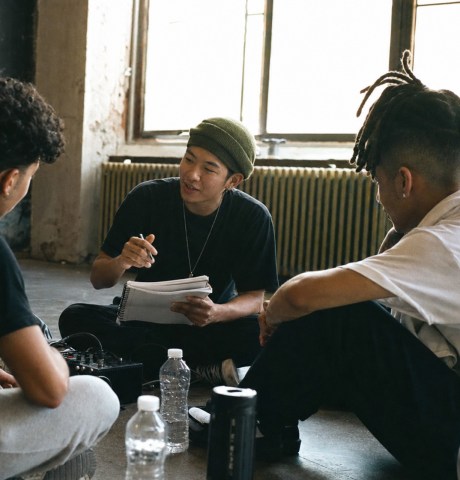
Take the breaking training type test

  1. How do you prefer to motivate yourself for a demanding session?

    • A: I set myself firm personal goals and just get it done
    • B: I make plans with others because the group keeps me going
  2. How do you react when a new move doesn't work at all right away?

    • A: I repeat it alone for hours until the movement sequence feels right
    • ,B: I immediately ask someone for advice and have them show me the mistake
  3. Which atmosphere in the practice room inspires you the most?

    • A: Absolute silence and focus on my own body
    • ,B: Loud music, loud cheering and the energy of the others in the room
  4. How important is a fixed structure of regular training times to you?

    • A: I prefer to train spontaneously, whenever I have the time and feel like it
    • ,B: Fixed appointments help me to stay on track and take the training seriously

Your evaluation

Mostly A: The focused solo dancer

You love independence and can concentrate best when you are all by yourself. Use this strength to specifically refine your technique and your power moves without getting distracted.

Via udansa, you can specifically search for individual training partners for casual sessions to get fresh input every now and then, without giving up your freedom.

Mostly B: The born crew player

You draw your energy from the community and direct exchange with others. Pushing each other in a group helps you progress the fastest in your dancing and motivates you even on bad days.

Look specifically for a fixed crew in your city or use udansa to find like-minded people with whom you can start a new group.

Solo sessions vs. crew training in direct comparison

CriterionSolo trainingCrew training
FlexibilityVery high, free schedulingBound to fixed arrangements
FeedbackMust be analyzed yourself via videoDirect correction by crew members
MotivationRequires high self-disciplineCommunity pulls you through on weak days
FocusStrong concentration on your own detailsFocus is often on group dynamics and shows

The choice of training form depends heavily on your personality and your time resources.

How to use your test result for your training

As soon as you have your test result in black and white, it is time for practical implementation. If you are the crew type, you should specifically look for existing communities or find like-minded people to build your own group. Sharing successes together and collectively overcoming setbacks brings you closer together and gives you an enormous motivational boost.

If you are more of a solo type, that is not a sign of a lack of team spirit, but rather of a high capacity for self-reflection. You can plan your sessions exactly when you have the most energy. Use platforms like udansa to find like-minded people for casual jam sessions when needed, without having to commit yourself directly to a fixed group. This way, you keep your freedom and still remain an active part of the urban dance scene.

Frequently Asked Questions

  1. For beginners, a mix of both worlds is often suitable. In a crew or a fixed training group, you learn the basics faster by watching others directly, while solo sessions give you the space to repeat the movements at your own pace without an audience.

Breaking courses near you

Find the right course or the perfect training group for your style.

View all matching courses

Find your breaking match on udansa

Whether you are looking for the solid structure of a crew or just need like-minded people for a relaxed solo session in the park: on udansa you connect directly with the urban dance scene in your area.

Find your breaking match on udansa