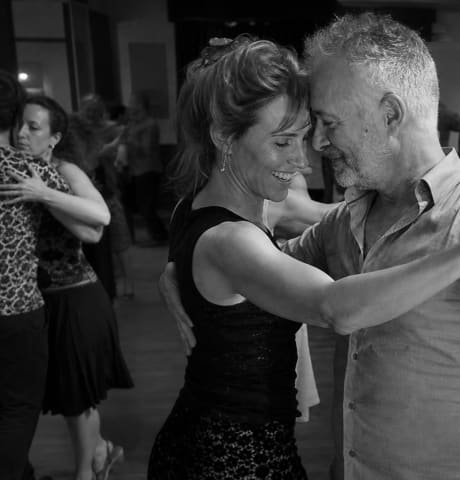
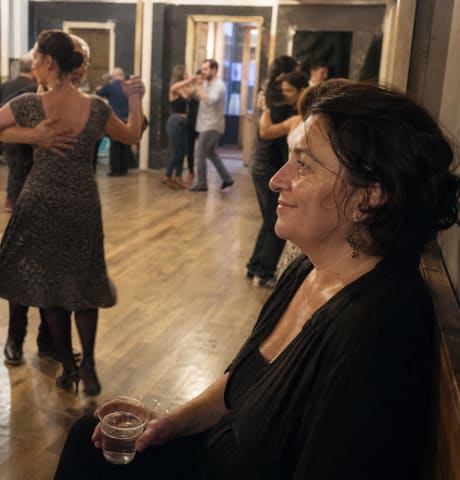
Dance scene5 minutes

Dancing in Cologne: An overview of dance schools, styles, and the scene

By Bernhard De LucaUpdated

In short
  • Cologne offers a diverse range of dance options, from classic ADTV dance schools and specialized studios for Salsa, Bachata, Swing, and Tango to independent street dance crews.
  • Dance life is concentrated in Ehrenfeld, the Belgian Quarter, the Cologne Rings, and summer locations like the Tanzbrunnen and the Mediapark.
  • For most social dance parties in Cologne's community centers and clubs, you need neither prior experience nor a fixed dance partner.
  • Open trial classes before dance evenings allow for an uncomplicated and flexible start in Cologne without long-term contracts.

Cologne combines Rhenish conviviality with a surprisingly dense scene of traditional dance schools, trendy clubs, and open-air spots along the banks of the Rhine. If you want to hit the dance floor here, you just need to know which rhythm beats in which neighborhood.

DefinitionSocial Dance

Social Dance refers to dance events where the focus is on socializing and spontaneous dancing with changing partners. Unlike competitive dance, there are no judges or fixed choreographies.

How Cologne's dance scene is distributed across the Veedel

When people think of dancing in Cologne, they often first think of carnival marches or guard dance. However, beyond the fifth season, the cathedral city possesses one of the most vibrant dance landscapes in Western Germany. The Cologne dance scene is distributed across characteristic Veedel: in the Belgian Quarter and around the South City, urban studios for Contemporary, ballet, and Hip-Hop dominate, while Ehrenfeld, with its repurposed factory halls, forms the stronghold for Swing, Lindy Hop, and free improvisation. On the banks of the Rhine, in turn, such as around the Tanzbrunnen in Deutz or the open stairs at the Rheinboulevard, regular open-air meeting points establish themselves during the warm months.

For Cologne's dance schools, one principle is defining: the offerings are noticeably divided into classic dance schools of the world dance program and specialized scene studios for individual dances like Salsa, Bachata, West Coast Swing, or Argentine Tango. If you want to gain a foothold in Cologne, it is best to orient yourself towards the focal points of the districts: on the right bank of the Rhine, you will often find spacious halls for Ballroom and Latin, while on the left bank, the club culture pulses with integrated dance evenings. A look at the different focal points offers a good start: whether you are looking for the basics of Ballroom, are interested in trust in leading, or are tracking down urban rhythms, Cologne has suitable spaces ready.

Why social dancing in Cologne requires no prior knowledge

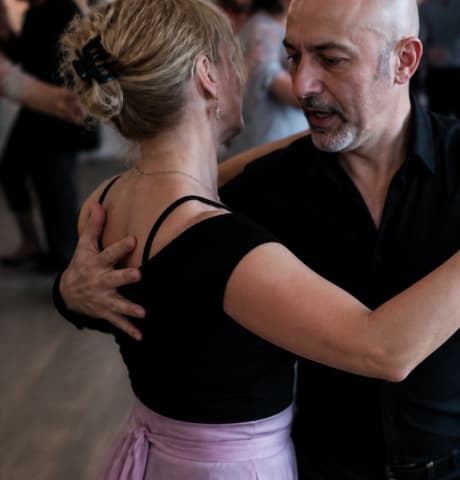
A common misconception among newcomers is that if you want to dance in a Cologne dance school, you must arrive as a couple or commit to a months-long contract immediately. In practice, the local community works completely differently. Almost all Cologne social dance formats, from the Salsa evenings in the clubs along the Rings to the Lindy Hop sessions in community centers like the Bürgerhaus Stollwerck or the Alte Feuerwache, begin with open trial classes before the actual party. Here, dance roles are constantly switched, and arriving without a fixed partner is the absolute norm.

Equally deceptive is the assumption that dance parties are purely showcases for competitive dancers. On the contrary, Cologne is characterized by a distinct culture of inclusion. If you are still unsure about the right movement to the music, you will quickly notice how forgiving the atmosphere is on Cologne dance floors. Even in styles like Bachata or Argentine Tango, social dance is not about choreographed perfection, but about non-verbal communication. Even if you initially wonder how to choose the right embrace for Tango or which tempo suits you: at Cologne parties, the shared experience in time with the music counts for far more than tournament figures.

Cologne dance scene: What matters

How to get started

  • Use open trial classes before the party for a relaxed start
  • Bring shoes with clean, smooth soles suitable for parquet floors
  • Accept invitations from other dancers in a friendly and open way
  • Try out different neighborhoods and styles to find the right environment for you

Common misconceptions

  • Waiting only for a fixed dance partner to attend socials
  • Turning on delicate wood floors while wearing high-grip street sneakers
  • Getting intimidated by experienced couples on the sidelines
  • Postponing visits to open dance nights out of fear of making mistakes

The beauty of Cologne is its openness: No one expects flawless footwork, as long as you step onto the dance floor with a smile and enjoy the music.

Dance instructor for Salsa and Bachata, Cologne

How to find your place in the Cologne scene

The diversity in Cologne leads to a clear conclusion for your personal dance journey: do not start by searching for the perfect final destination, but use the permeability of the scene. The Cologne dance scene thrives on the exchange between styles. Many dancers start with a ballroom dance course in a traditional dance school, switch to Afro-Latin styles for musicality, and end up dancing free Forró or Zouk on the cobblestones at Mediapark in the summer.

To establish your own rhythm in Cologne, a three-step approach is recommended. First, visit an open 'práctica' or a trial workshop before a social, test the floor and the acoustics of different locations, and connect with the local community. Due to the close integration of the Rhine-Ruhr region, Cologne events also attract dancers from Bonn and Düsseldorf, which ensures constant fresh impulses on the dance floors. Whether you are thinking about contacts as an introverted dancer or want to jump straight into the fray: getting started in Cologne succeeds through participation, not through perfection.

Two ways to dance in Cologne

Dance school

Traditional dance school

Classic structure with fixed partners

Fixed course levels from the beginner course to the dance circle with a clear curriculum based on the World Dance Program. Ideal for fixed dance couples who want to learn Ballroom and Latin with solid posture.

Scene

Open social dancing

Open parties and free choice of roles

Open drop-in classes, rotating partners during social dance, and spontaneous learning on the spot. Perfect for solo dancers and those curious about Salsa, Bachata, or Lindy Hop.

Frequently Asked Questions

  1. No, you can attend almost all socials in Cologne on your own. Before parties, there are usually open taster classes with partner rotation, and on the dance floor, it is common to ask each other for individual dances.

Dance courses in Cologne

Find the right course for your dance style right in your Cologne neighborhood.

View all matching courses

Find your rhythm in Cologne

Meet dance partners from Ehrenfeld, Nippes, or the Südstadt and find dance courses as well as parties in the entire Cologne area directly on udansa.

Find your rhythm in Cologne