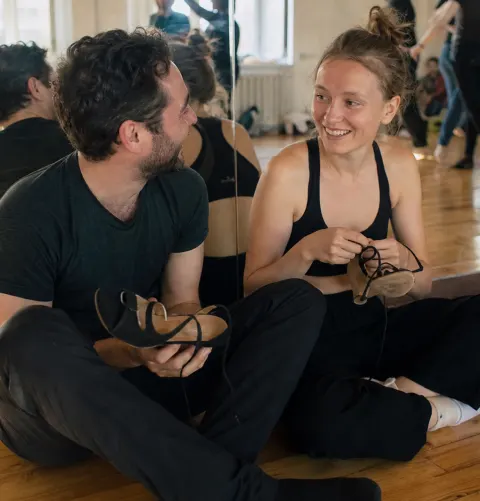
In Cologne, nobody likes to dance alone
On udansa, you will find like-minded people for your next dance night and see current courses as well as events in the city area at a glance.

By Bernhard De LucaUpdated
On udansa, you will find like-minded people for your next dance night and see current courses as well as events in the city area at a glance.
When you go out dancing in the evening, you are looking for more than just loud bass: social dance connects musical rhythm with genuine encounters on equal terms.
Social dance refers to social dance events where the focus is on dancing together and getting to know each other, rather than athletic competition or stage performances. People usually dance in changing pairs to styles such as Salsa, Swing, or Tango.
If you want to go dancing in Cologne, you are often faced with a colorful range of different evenings. Social dance describes casual dancing outside of a fixed classroom setting: there are no choreographies to learn and no exams to take. The focus is on spontaneous encounters on the dance floor. For newcomers, the same question usually arises: do you absolutely need a fixed partner to visit a dance party in Cologne? The clear answer is no, because formats like Salsa socials, Lindy Hop evenings, or swing meetups thrive on regularly changing partners. If you are still unsure which dance style suits your mood for the evening, you will find valuable guidance in the dance style self-test for Cologne before your first night out.
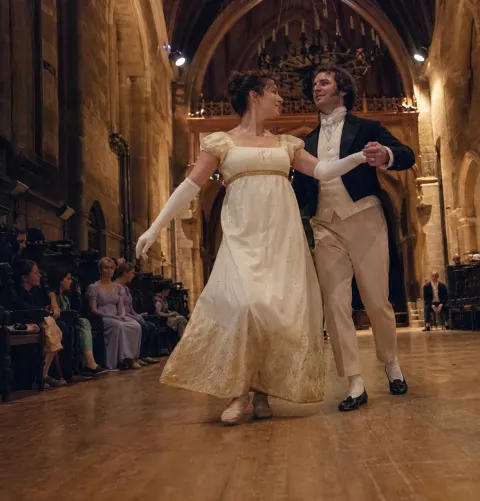
Nevertheless, a dance evening differs noticeably from a regular club visit. The style of music determines the movement, and unwritten rules for space allocation and mutual consideration apply on the floor. Whether it is a historic dance floor in a traditional building like the Gürzenich or the dance floor of an independent venue: at social dance, experienced dancers meet curious people who want to take their first steps outside of the practice room.
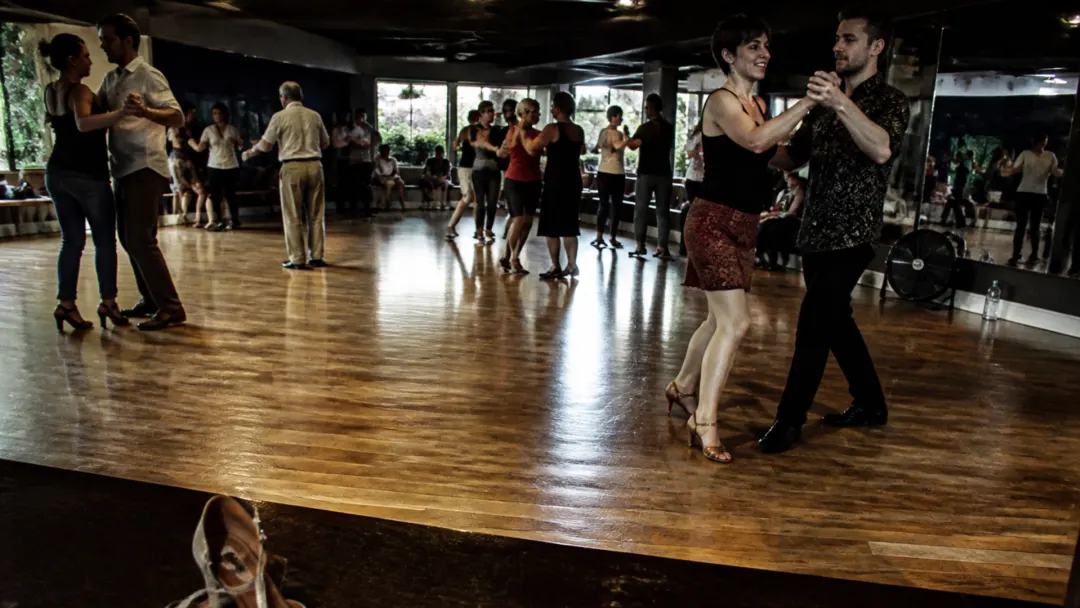
Milongas follow a tradition-rich structure that differs significantly from a Caribbean dance party. In Argentine Tango, the dance direction counter-clockwise determines the flow of traffic on the outer circle. Fast turns or wide lunges belong exclusively in the center of the dance floor to prevent collisions in the circuit. Furthermore, the music is played in tandas: blocks of three to four songs by the same orchestra, which are separated by a short musical pause, the cortina. Anyone diving deeper into this scene should know the subtleties of the Cologne tango community and its etiquette.
A central component is the traditional invitation via eye contact and a nod, known as cabeceo. This subtle invitation protects both sides from awkward moments: if the gaze is not returned, the invitation is considered declined unnoticed, without an open no having to be spoken. Anyone visiting a milonga in Cologne enjoys a respectful and highly concentrated atmosphere that leaves room for musical depth.
Recommended
Avoid
At a social, it is not about dancing without mistakes, but about listening to the music and giving your partner a good feeling on the dance floor.
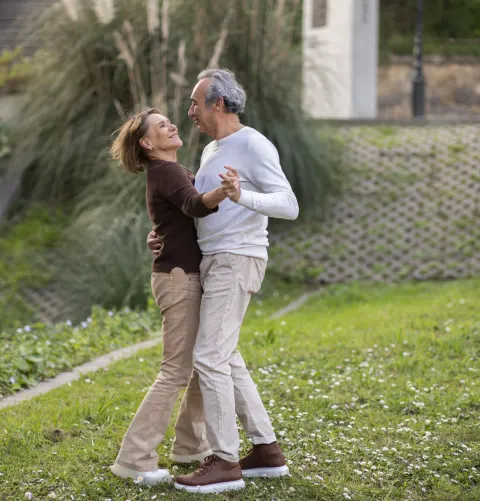
As soon as milder temperatures set in, dancing often moves outdoors. Open-air dancing in Cologne has its own charm: the open sky and casual music attract onlookers and dance enthusiasts alike. Historically, this open-air tradition in Cologne is closely linked to places like the Tanzbrunnen in the Rheinpark, whose striking star-wave tent over the rotunda has been known for dance events for decades. However, anyone who wants to dance outside must adapt their equipment. Sensitive chrome leather soles quickly get damaged on stone slabs, asphalt, or wooden floorboards and lose their turning comfort.
Experienced dancers therefore use sneakers with smooth plastic or rubber soles for outdoor events, which offer enough ease of turning without putting too much strain on the knee joints. Changing surfaces and weather conditions also require special attention. Anyone who informs themselves in advance about the respective format and the local conditions will experience pure dancing joy outside without painful surprises.
Open and lively
At relaxed socials for Salsa, Bachata or Swing, there is a dynamic rotation. Verbal invitations are standard, mistakes are laughed off and the tempo changes from track to track.
Concentrated and tradition-conscious
The milonga focuses on elegance, mindfulness, and calm. Dancing takes place in closed rounds, invitations are made discreetly through glances, and the music follows thoughtful historical arrangements.
No, that is by no means necessary at most social dance events. Formats for Salsa, Bachata, or Swing thrive on individuals coming and switching partners after every song. Only for balls or special galas is a fixed companion advisable.
Normal street shoes often stop too abruptly on indoor floors and put strain on the knees. Shoes with a clean leather sole or special dance sneakers with a pivot point are best, while soft chrome leather soles are intended only for well-maintained indoor parquet floors.
A no is completely legitimate, but should always be communicated politely and without long excuses. If you need a break or do not like the song, decline briefly and kindly, but then usually wait until the next piece of music.
The cabeceo is the traditional invitation in Argentine Tango through targeted eye contact and a slight nod of the head from a distance. If the other person spots the gesture and nods back, both meet on the dance floor, which avoids embarrassing rejections in front of other guests.
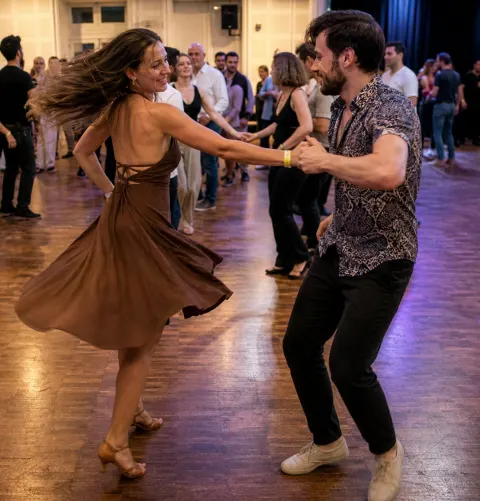 Social Dance in Cologne: What to expect at a dance night
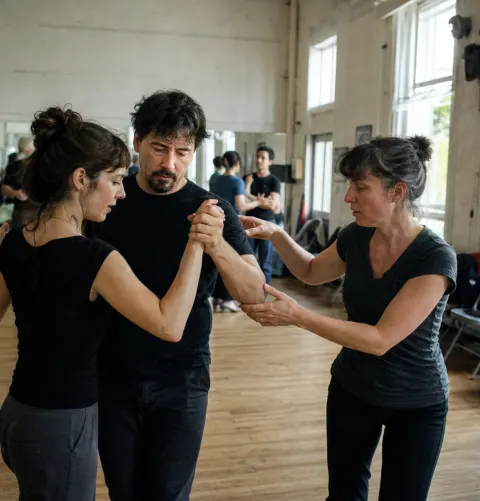 Milonga in Cologne: Experience elegant Argentine Tango evenings
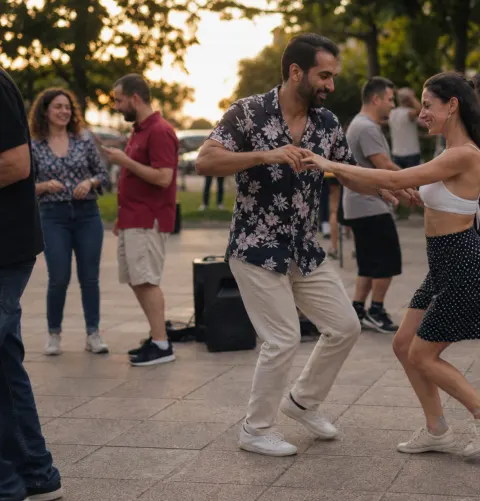 Open-air dancing in Cologne: A guide to outdoor dancing in summer
 Salsa Party Cologne: Social Dance for Salsa, Bachata and Kizomba
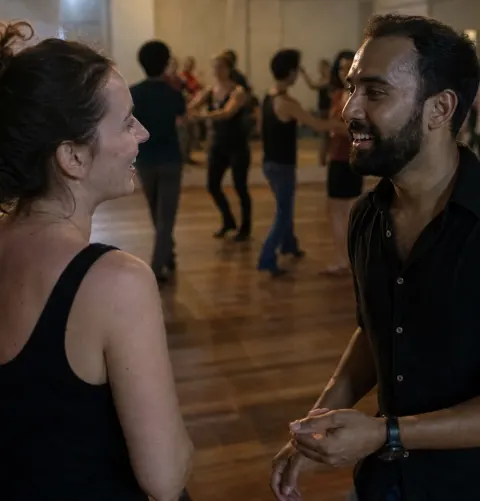 Going dancing alone in Cologne: How to make it a success
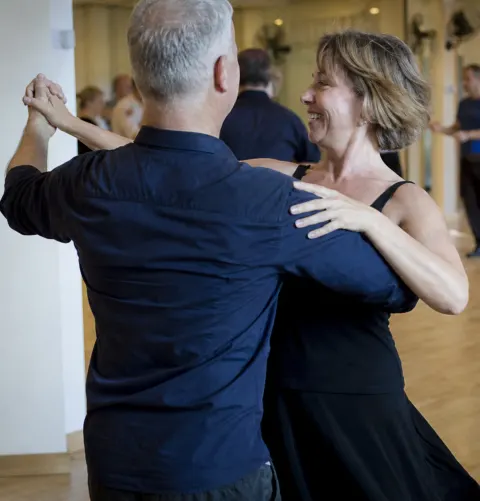 Ballroom and Latin Dance Parties in Cologne
 Ball in Cologne: Elegant dancing with poise and etiquette
 Queer dancing in Cologne: Experience vibrant parties and socials
 Swing Dance Night in Cologne: Lindy Hop parties and vintage socials
 Go dancing for Discofox in Cologne: dance venues and meetups
 Forró Köln Party: How to master Brazilian dancing
 Which dance party in Cologne suits you? The test
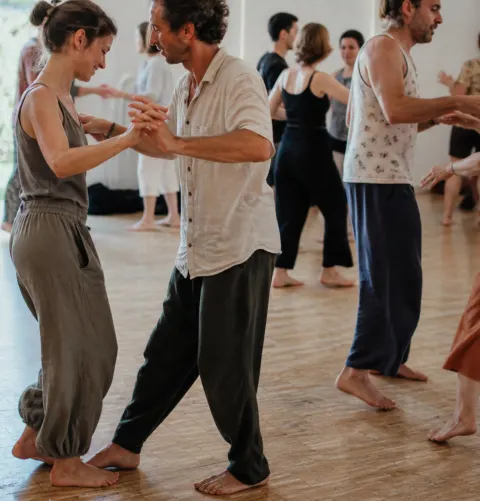 Ecstatic Dance in Cologne: Free dancing without alcohol
 Dancing at Tanzbrunnen Cologne: Open-air tradition
 Gürzenich Cologne Dance: From dance hall to carnival stage
 Stippeföttche in Cologne: The Rote Funken dance at the Funkenbiwak