Social Dance4 minutes

Queer dancing in Cologne: Experience colorful parties and socials

By Mary De LucaUpdated

In a nutshell
  • At queer social dance in Cologne, leading roles are chosen and swapped freely, regardless of gender identity.
  • Venues like the Bürgerhaus Stollwerck or locations near Schaafenstraße offer regular queer dance parties and socials.
  • Consent and mutual agreement before dancing are the top priority.
  • Prior knowledge is usually not required, curiosity and respect are enough to get started.

In the Cologne scene, partner dance is breaking with dusty conventions: Here, connection and the joy of movement determine the dynamics, completely without fixed gender roles.

DefinitionEquality Dance

Equality Dance refers to competitive and social dancing where couples dance together regardless of gender or gender identity and freely assign roles. The term stands internationally for an egalitarian dance culture.

Cologne dance evenings thrive on casual diversity

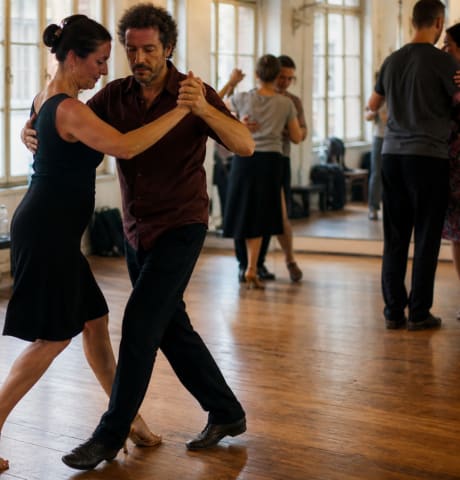
Anyone attending queer dance evenings in Cologne enters spaces with a certain sense of naturalness. Traditional gender roles play no part here: whoever wants to dance together does so, regardless of gender or identity. Well-known Cologne cultural centers like the Bürgerhaus Stollwerck in the Südstadt repeatedly offer open formats and queer tea dances for this purpose, while the vibrant club and bar scene around Schaafenstraße provides the perfect breeding ground for casual dance parties. Unlike private events, the threshold is kept deliberately low. Anyone stopping by for the first time will experience an open atmosphere characterized by mutual respect.

What is special about queer partner dance is the freedom from traditional expectations. At typical evenings for social dance in Cologne, familiar patterns often still dominate. The Cologne LGBTQ scene deliberately breaks these conventions. Dancing together is understood as an honest dialogue, where it is not appearance or gender that determines the role, but the joy of movement and connection.

Eye contact and clear communication before the first step replace outdated conventions on the dance floor.

Consent and awareness shape the dance floor

The foundation of queer socials and tea dances is consent. Before every dance, both people briefly clarify who leads, who follows, or if they will switch fluidly. No one has to justify themselves if a dance style or a role does not fit at that moment. A respectful no is just as much a part of dance culture as a warm invitation to the dance floor.

Especially at protected evenings like FLINTA dance events, awareness is a top priority. Clear rules ensure that all visitors can feel safe and comfortable. For elegant dance styles like queer Tango, which offers a unique dynamic compared to the classic Milonga in Cologne, the following also applies: The space belongs to everyone who brings mindfulness and a passion for dance.

Etiquette at queer dance events

That's how it works

  • Ask who wants to lead or follow before the first step
  • Accept a clear no without discussion in a friendly way
  • Pay close attention to signals for a role change while dancing
  • Respect the boundaries and personal space of others

What not to do

  • Assume a dance role based on appearance without asking
  • Keep pushing or pressuring after a refusal
  • Forcefully or unexpectedly take over the lead
  • Force physical closeness without consent

When the music starts, all that matters is the connection between the pair. Who leads and who follows is a matter of agreement, not gender.

Dance teacher for Equality Dance, Cologne

Switching opens up completely new perspectives in dance

Role swapping, also known as switching, is not about acrobatic peak performance, but about mindfulness. When the lead is passed on in the middle of a swing or after a turn, it requires trust and a keen sense for the other person's body language. The Cologne audience appreciates this dynamic especially because it frees partner dance from rigid step patterns and makes it more playful.

To participate, you need neither special prior knowledge nor a fixed dance partner. An open mind, comfortable shoes with soles that allow for turning, and the willingness to rethink roles are perfectly sufficient. The dance floors of the cathedral city prove on every one of these evenings how lively, inclusive, and liberating modern social dance can be.

Fixed roles or fluid switching in a pair

Focus

Fixed roles in dance

Stability through clear role distribution

One person leads throughout the entire dance, while the other follows. This gives both clear orientation and allows them to fully engage with their own sense of role and musicality.

Exchange

Switching in the flow

Playful switching on the dance floor

Switch roles mid-dance using tactile signals or turns. This requires mutual mindfulness and gives both dancers a much deeper understanding of the dynamics within the pair.

Frequently Asked Questions

  1. You do not need a fixed partner, as almost all queer socials and dance evenings in Cologne are structured in a way that you can ask others to dance spontaneously and rotate partners on the spot. Many guests come alone and find people to dance with right away.

Queer dance events in Cologne

Discover open socials, tea dances, and queer parties in Cologne.

View all matching events

Find your dance partner in Cologne

Meet like-minded people for the next social dance in Cologne, make plans in advance, or find dance partners who are just as flexible with roles as you are.

Find your dance partner in Cologne