In tango you encounter yourself
Find suitable milongas, practice evenings, and dance partners in Cologne. Exchange ideas with other dancers and discover your next event.

By Bernhard De LucaUpdated
Find suitable milongas, practice evenings, and dance partners in Cologne. Exchange ideas with other dancers and discover your next event.
A milonga has its own laws of glances, rounds, and musical discipline. If you understand the etiquette, you will experience a fascinating dance evening full of elegance and depth in Cologne.
A milonga is both the traditional evening event for Argentine Tango and an independent, cheerful, rhythmic style of this music. At such dance evenings, people dance according to established social conventions.
If you are visiting a traditional milonga in Cologne for the first time, you are entering a space with clear, unwritten rules. A milonga is much more than an ordinary party: it is a social dance evening that thrives on mindfulness, musical structure, and respectful interaction. While people often dance in a disorganized way at a casual dance party, the entire floor here moves together counter-clockwise in concentric circles. The Cologne scene cultivates this culture in various halls and studios where lovers of Argentine Tango come together.
Musically, the evening follows a fixed dramaturgy. The music is not changed randomly, but played in so-called tandas: blocks of usually three to four pieces by the same orchestra from the golden era of Tango Argentino. These rounds are separated by a cortina, a short interlude of other musical styles. Only the cortina signals the end of a round, at which point you say thank you and leave the dance floor. If you want to get to know the right tango community in Cologne, you should internalize these basic rules to move confidently from the very beginning.

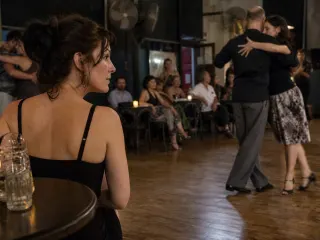
The most important element of making contact at a classic Tango Milonga in Cologne happens completely silently through eye contact. This decades-old tradition is called mirada and cabeceo. Instead of walking across the room and speaking to someone directly at their table, dancers seek eye contact (mirada). If this is returned and held, a subtle nod of the head (cabeceo) follows as an invitation. Only when both nod do the pair stand up and meet at the edge of the dance floor.
This system protects both sides from embarrassment or uncomfortable rejection. Anyone who does not want to dance or needs a break simply looks away, chats, or looks into their glass without losing face. If you are new to Cologne and looking for an invitation, it is best to sit in a way that keeps the dance floor in view. For many newcomers, this form of invitation feels unusual at first, but it ensures a relaxed and cultured atmosphere that enriches going out. The question of the right attire also plays a role, which is why many dancers opt for Tango Argentino gift ideas and elegant clothing.
How to succeed at a milonga
Typical faux pas
Find courses and workshops for Argentine Tango in Cologne and get ready for your next milonga.
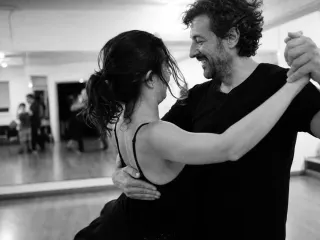
Tango is not about complicated step sequences, it is about the quality of the embrace and the respect for the shared space of all couples.
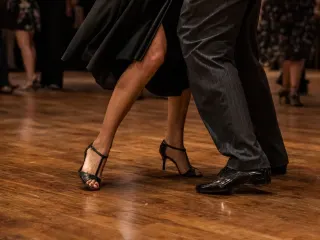
On the dance floor itself, dance floor etiquette determines the action when couples go dancing tango in Cologne. The ronda, the dance flow in a shared lane along the outer edge, has top priority. Couples do not overtake recklessly and do not push into tight gaps. Fast, expansive embellishments like high boleos definitely do not belong on a well-filled dance floor, but remain reserved for the practice room. The focus is on the embrace and the shared musical experience as a couple.
Especially those who still feel insecure benefit from this clear order. As a leader, you protect the couple from collisions, while as a follower, you can blindly trust the orientation in the room. If you are still looking for the right course to gain confidence before your first evening, you can use a dance style finder for Cologne to check whether traditional Tango or a related style best suits your wishes. This way, visiting a Cologne milonga becomes an intense and completely successful experience.
Fixed rules and historical orchestras
Classic milongas rely on traditional tango music from the 1930s to the 1950s, elegant attire, and strict adherence to cabeceo and ronda.
Freer music and a relaxed atmosphere
Modern formats often offer non-tango or Neotango, dispense with strict seating arrangements, and allow for a decidedly relaxed, casual dress code.
The best choice is elegant clothing that allows for sufficient freedom of movement in the legs. Women usually wear dresses or skirts with a slit, while men prefer dress pants and shirts.
Traditionally, you dance a complete tanda of three to four songs together. You only part ways when the cortina plays, and then you thank your partner warmly.
In principle yes, as long as you can move safely on the dance floor within the ronda. For newcomers, it is recommended to watch from the edge first and soak up the atmosphere.
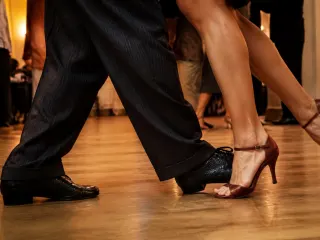
Yes, shoes with smooth leather soles or special chrome leather are essential. They allow for the necessary rotation of the forefoot without putting harmful strain on the knee joints.
 Go dancing in Cologne: experience social dance, milongas, and dance parties
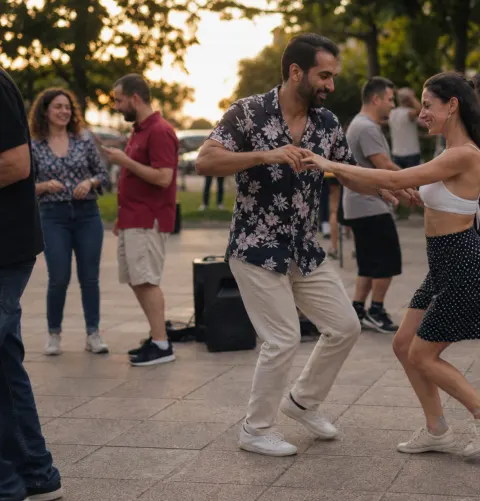 Open-air dancing in Cologne: A guide to outdoor dancing in summer
 Salsa Party Cologne: Social Dance for Salsa, Bachata and Kizomba
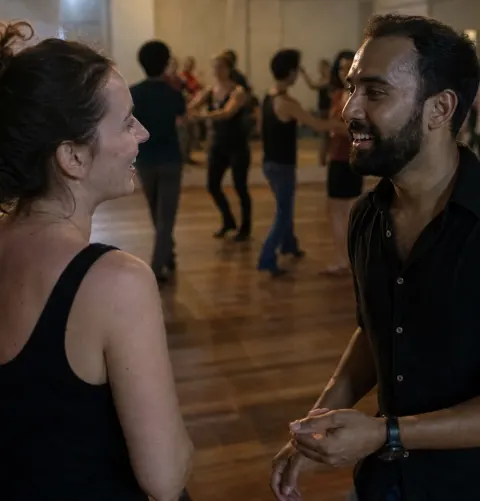 Going dancing alone in Cologne: How to make it a success
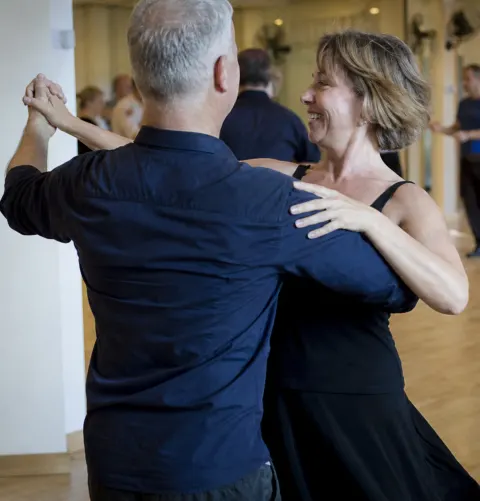 Ballroom and Latin Dance Parties in Cologne
 Ball in Cologne: Elegant dancing with poise and etiquette
 Queer dancing in Cologne: Experience vibrant parties and socials