Dance trends4 minutes

Argentine Tango steps: Trends 2026 in partner dance

In a nutshell
  • In 2026, Argentine Tango will increasingly open up to influences from contemporary dance and contact improvisation.
  • Modern step combinations are characterized by elastic axes, fluid weight shifts, and playing with gravity.
  • The classic distribution of roles is softening, allowing both partners to actively initiate impulses for new figures and changes in direction.

The world of Tango is reinventing itself. Learn how fresh impulses break up traditional footwork and give the couple dance an unimagined, modern dynamic.

How global influences are changing Tango in 2026

Argentine Tango is not a rigid museum piece, but a living, breathing dance that is constantly evolving through global influences. While the traditional base from Buenos Aires forms the foundation, young dancers are bringing a breath of fresh air to the milongas. This development shows that rigid movement patterns are breaking down. Modern step combinations are replacing strict, classical sequences and creating space for more spontaneity. This dynamic arises primarily from the fusion of Tango with elements from contemporary dance, contact improvisation, and even swing dances.

This change does not only affect the aesthetics, but also fundamentally alters how couples communicate with each other. Traditional role distribution is giving way to a fluid interaction, where suggestions for the precise Cruzado cross step or sudden changes in direction can come from either partner. Anyone stepping onto the dance floor today experiences a new freedom: the steps are becoming more elastic, axes are allowed to tilt slightly, and playing with gravity is becoming a central design element.

The defining movement trends in contemporary Tango

  • Playing with off-axis stability

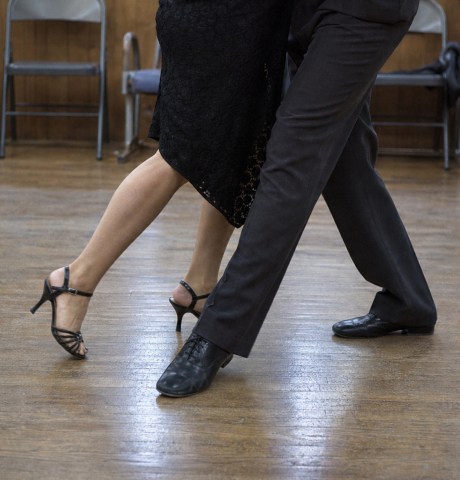
    This movement breaks with the traditionally rigid, vertical axis of the couple. Dancers lean away from each other in a controlled manner (Soltada) or towards each other (Volcada), which enables completely new, circular dynamics and expansive turns. This requires a deep understanding of shared balance.

    • Balance
    • axis displacement
    • dynamics
  • Liquid movement and weight-release

    Adopted directly from contemporary dance, dancers today consciously use their own body weight and gravity for soft, fluid transitions. Instead of actively placing steps, they let themselves fall into the movement and catch the momentum together. This gives the dance an organic and effortless aesthetic.

    • Flow
    • gravity
    • contemporary
  • Shared leading and fluid role swapping

    The rigid division into the leading leader and the following follower is increasingly dissolving. With shared leading, the roles change in the middle of the dance through subtle weight shifts and eye contact. Both partners create the tango step combinations in a modern and equal way in the moment of movement.

    • Role swapping
    • communication
    • improvisation

Tips for implementing new movements as a couple

If you want to keep up with current developments, you have to leave your comfort zone and allow for changed dynamics in your body. The basis for modern tango argentino steps lies in extreme flexibility in the upper body, without losing the connection to your partner. Unlike classical figures, where the axes of the dancers usually remain strictly vertical, modern concepts allow for a controlled play with balance. This requires a high level of core stability and mutual trust.

To execute these new forms of movement safely, it is worth taking a look at the fine technique of connection as a couple. Common mistakes in posture, as described in the guide on the Tango Argentino embrace, block the flow and prevent modern, expansive elements from succeeding organically. Only when the embrace becomes elastic and adaptable do contemporary step combinations unfold their full, fascinating effect on the dance floor.

Modern Tango thrives on the freedom to break traditional structures, allowing you to write your own unique, personal story on the dance floor in dialogue with your partner.

Tango instructor, Berlin

How to master modern dynamics in Tango

Correct

  • Adapt the embrace flexibly to the dynamics
  • Actively pick up and continue the partner's impulses
  • Consciously use your own axis for new balance points

Mistakes

  • Clinging rigidly to the traditionally close hold
  • Waiting exclusively for the leader's lead
  • Performing every movement stiffly and purely vertically

Frequently Asked Questions

  1. Tango Nuevo is understood as the further development of traditional Tango, which began in the 1980s. It integrates new musical influences like jazz and electronic music, as well as dynamic, expansive movements and open embraces.

Tango courses near you

Find the right course on udansa and learn the latest steps directly from the pros.

View all matching courses

Find your dance partner for Tango

On udansa you will find like-minded people to try out new moves with, as well as top-class courses in your area for the perfect start.

Find your dance partner for Tango