Argentine Tango4 minutes

Walking backwards in Argentine Tango: A guide for followers

In a nutshell
  • The movement always starts from the pelvis and the standing leg, while the free leg glides elegantly backwards.
  • The ball of the foot touches the floor first, before the weight is shifted gently and in a controlled manner.
  • The knees remain slightly bent throughout the entire movement sequence and brush against each other as they pass.

The elegant backward movement in Argentine Tango determines how easily and harmoniously a dance couple moves. With the right technique, you transform every step into a flowing work of art full of stability.

What you need for technical training

  • Dance shoes with a sole that slides well (leather or chrome leather)
  • Basic understanding of your own body axis
  • A level, clean floor for gliding

Why walking backwards is the most important foundation

Walking backwards is the heart of the follower role in Argentine Tango. It is far more than simply stepping back: every movement is an active, powerful glide that combines elegance and stability. The biggest challenge when learning to walk backwards in Argentine Tango lies in maintaining balance in your own body without hanging onto the leader or losing the connection in the embrace. Those who master the correct technique move fluidly and light as a feather across the dance floor.

To achieve this lightness, precise footwork is essential. Unlike in everyday life, where we often lose our balance when stepping backwards, tango uses a structured weight transfer. The foot reaches back, finds the floor, and only then does the entire body follow. If you internalize this separation of footwork and weight transfer, you will immediately gain confidence. For the perfect upper body posture and a fine connection to your partner, it is also worth taking a look at our tips for avoiding mistakes in the Argentine Tango embrace.
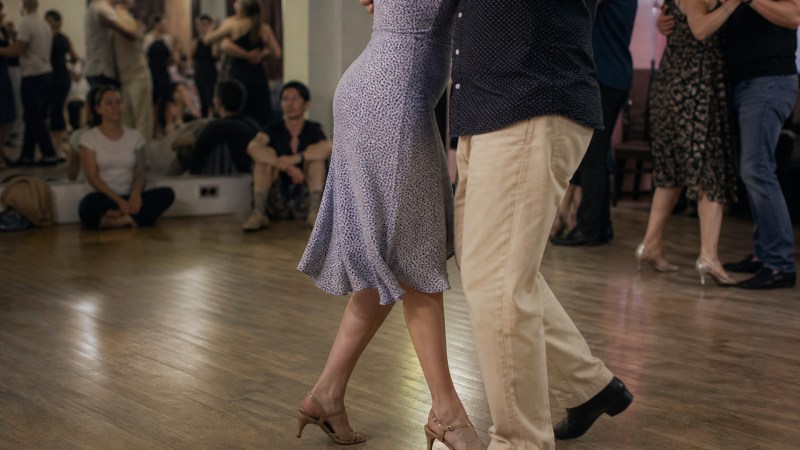
The perfect balance is created in the standing leg: Only when the back foot is firmly planted, the weight shifts.

5 steps to the perfect back step

  1. Activate your standing leg

    Shift your entire body weight onto one standing leg and bend the knee slightly. This makes the other leg completely free and weightless, ready for movement.

  2. Slide your foot backwards

    Gently slide the ball of your free foot backwards across the floor. Keep your upper body upright over your standing leg, without leaning forward.

  3. Place your foot securely

    Guide your free leg back until it is almost straight, and place the ball of your foot down securely. Keep your heel slightly raised for now.

  4. Gently shifting your weight

    Push off actively with your front standing leg to smoothly slide your pelvis and your center of gravity over the new, back foot.

  5. Closing the feet in the center

    Pull the now free, front leg in elegantly, so that both knees and ankles touch briefly in the center before the next step begins.

The most important do's and don'ts for the back step

Like this

  • Slide your toes flat across the floor
  • Keep your knees close together as they pass each other
  • Only shift your weight after your foot is securely planted

Not like this

  • Lifting your foot uncontrollably when stepping back
  • Moving your legs in an O-shape past the other knee
  • Leaning back and losing your balance

Your checklist for perfect footwork

Before training

Preparation

While dancing

Meanwhile

Frequently Asked Questions

  1. You prevent tripping by only shifting your weight onto the back foot once it is flat on the floor. Use your standing leg actively as a brake and anchor to control the movement.

Tango courses near you

Find the right course and learn to walk backwards under professional guidance.

View all matching courses

It is easier to move backwards together

On udansa you will find dance enthusiasts in your area who want to refine their perfect footwork with you. Make connections and take your newly learned technique straight to the dance floor.

It is easier to move backwards together