Argentine Tango4 minutes

Argentine Tango level test: Do you master the basic steps?

In a nutshell
  • Mastering the basics in Argentine Tango is shown by a stable axis and precise weight transfer with every step.
  • Beginners should master giving and receiving impulses without any delay in the upper body.
  • The classic basic figure eight and simple changes of direction must be danced fluidly and without losing balance.
  • Only when walking in a close embrace works reliably, is the foundation for advanced figures laid.

Argentine Tango thrives on the subtle connection within the couple and the precision of the steps. With our quick self-test, you can find out how confident you already are on the dance floor.

Understanding the basics of Tango

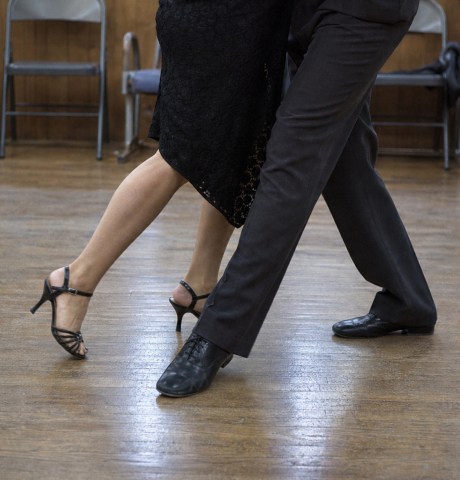
Getting started with Argentine Tango is a fascinating journey that differs fundamentally from other partner dances. Instead of rigid choreographies, this dance is based on constant, silent communication between dance partners. Before you venture into complex turns, you should ensure that your foundation is stable. The most important basis is conscious walking and the absolutely precise weight transfer with every single step.

Many beginners tend to want to learn too many figures too early. But in Tango, the rule is: cleanly executed walking in perfect harmony with your partner is many times more elegant than a shaky turn. When you master the Argentine Tango steps, a natural flow emerges where every step feels effortless. Use our self-test to realistically assess your current level and work specifically on your strengths.

Take the test: How stable are your basics?

  1. How do you feel when walking backwards as a couple?

    • A: I easily lose my orientation and feel insecure
    • B: It usually works, but I have to focus hard on my feet
    • C: I glide smoothly and feel my partner's movement in my upper body
  2. What happens when you have to take an unexpected break while dancing?

    • A: I stumble slightly or lose my balance completely
    • B: I can stop, but sometimes I am on the wrong foot
    • C: I immediately stand stably on one leg and can enjoy the break
  3. How reliably can you cross your legs (Cruzado) on cue?

    • A: I often miss the moment or have to look down
    • B: The step works, but it still feels a bit stiff sometimes
    • C: The crossing happens fluently and without interrupting our shared flow
  4. How do you react when the dance floor suddenly gets very crowded?

    • A: I get nervous and completely forget my steps
    • B: I dodge, but I have to briefly interrupt my sequence of steps
    • C: I adjust my steps effortlessly and continue dancing in a smaller space

Your evaluation

Mostly A: The curious beginner

You are right at the beginning of your Tango journey. For the time being, focus primarily on conscious walking and a stable posture in your upper body to build a solid foundation.

Mostly B: The ambitious improver

You already have the basics, but sometimes you still lose your balance. Use guided practice evenings (Practicas) to strengthen your confidence in weight transfer and simple changes of direction.

Mostly C: The confident advanced dancer

You already move very confidently on the dance floor and have mastered the basic step patterns in your sleep. You are ready to venture into more complex turns and elegant lane changes.

The Tango development levels in direct comparison

CriterionBasic levelIntermediate levelAdvanced
Walking as a coupleUnsure during changes of directionStable when moving forwardFluid in all directions
Weight transferOften incompleteMostly precise on one footAbsolutely secure and conscious
Upper body connectionVery loose or tenseNoticeable contact presentFine, intuitive communication
Handling obstaclesLeads to an immediate stopRequires brief concentrationEffortless adjustment in the flow

The assessment is based on typical learning progress in traditional Tango schools.

How to specifically strengthen your foundation

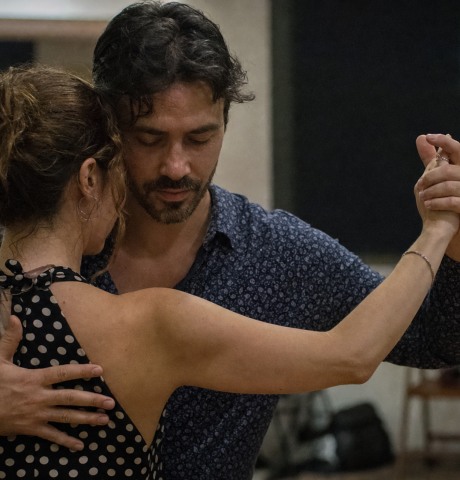
As soon as you have evaluated your test results, you will know exactly which screws you can still turn. If you notice that the connection in your upper body is still shaky, it is worth taking a targeted look at the Argentine Tango embrace. It is the key to transmitting signals without delay and giving your partner the necessary security.

Do not forget that the learning process in Tango is not linear. It is completely normal to feel like you are back at the very beginning after a few weeks. This is usually because your awareness of the fine details is growing. Use milongas and practice evenings to try out what you have learned in a relaxed atmosphere. The more secure your basics are, the freer and more enjoyable your dance on the floor will be.

Frequently Asked Questions

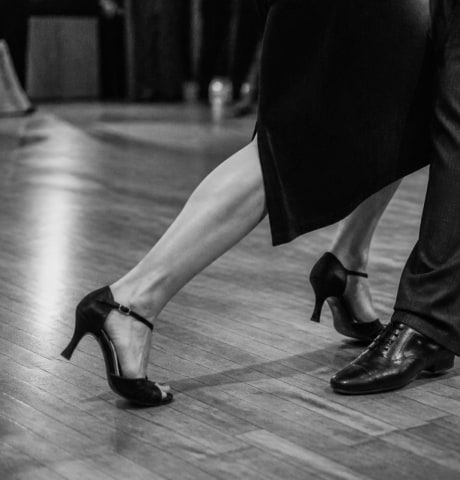
  1. For getting started, shoes with a leather sole or a smooth synthetic sole that allow for easy turning are suitable. Heavy rubber soles block turning on the dance floor and can strain the knees.

Tango courses near you

Find the right course now to take your Tango basics to the next level.

View all matching courses

Find your dance partner for Tango

On udansa you will find like-minded people in your area who share the fascination of Tango just like you. Discover suitable courses and find your ideal dance partner for the next milonga.

Find your dance partner for Tango