Tango technique5 minutes

Argentine Tango systems: Dancing parallel and crossed

In a nutshell
  • The parallel system in Argentine Tango describes the mirror-image movement where partners use opposite feet.
  • In the crossed system, both partners move on the same foot, for example, both with the right leg.
  • Switching between systems occurs through deliberate weight shifts by one partner, without the other moving their foot.
  • Mastering both systems enables complex turns, close figures, and free improvisation in the space.

The magic of Tango lies in improvisation. Only the conscious play with parallel and crossed tracks transforms simple steps into a fascinating, unpredictable dialogue on the dance floor.

DefinitionCrossed system

The crossed system refers to a form of movement in Argentine Tango, where both partners move on the anatomically same foot. This means that both are weighting and moving the left or the right leg at the same time.

Two systems for unlimited freedom on the dance floor

In Argentine Tango, dancers move in a constant, fluid connection. Unlike many ballroom dances, where the partners' steps usually mirror each other, tango offers a fascinating feature: the play with tracks. The foundation of this dance is based on two different systems that determine how the legs of the leader and follower relate to each other. Understanding these systems is the key to breaking away from rigid memorization of patterns and experiencing true improvisation on the dance floor.

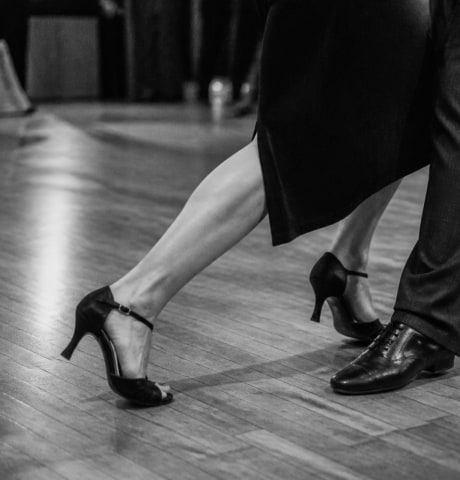
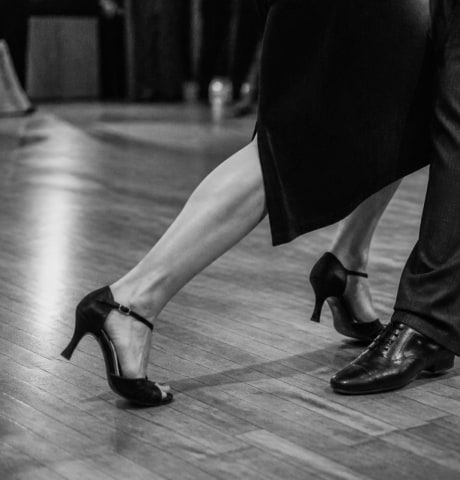
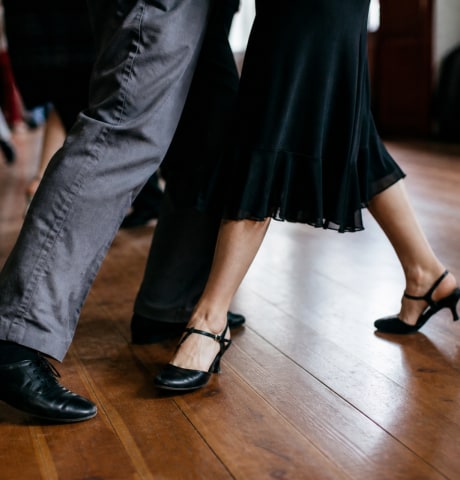
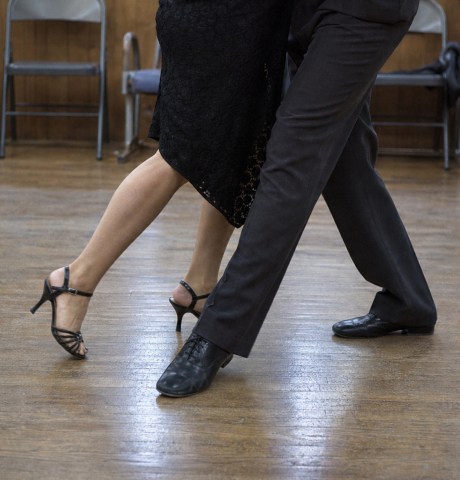
The parallel and crossed system of Argentine Tango concept describes how the feet are placed in space. In the parallel system, partners move on the usual, mirrored tracks. If the leader steps forward with the left foot, the follower steps back with the right foot. In the crossed system, however, this symmetry changes fundamentally. Here, both partners move simultaneously with the same foot, for example, both with the right or both with the left leg. This seemingly small shift opens up a whole new world of movement possibilities and dynamics in the space.

How to switch tracks invisibly

The transition between the two systems is not a question of strength, but of precise weight transfer. To be able to switch tracks in Argentine Tango, the leader must purposefully manipulate the follower's weight. A classic switch from the parallel to the crossed system often occurs via a weight transfer without a step of one's own. While the leader keeps their weight on one leg, they guide the follower into a step so that both land on the same-side feet. This subtle communication requires a stable connection in the upper body.

For movement in space, this means: taking steps in the tango parallel system often feels more natural for beginners, as the familiar symmetry is maintained. However, as soon as the tango crossed system technique comes into play, the alignment of the hips changes slightly in relation to each other. The partners no longer dance frontally chest-to-chest, but slightly offset. This enables tight turns, elegant cross-steps like the Cruzado, and complex changes of direction that can be danced in the tightest of spaces. Anyone who learns to switch between these systems blindly can effortlessly adapt to any situation on a crowded dance floor.

How to switch systems without errors

Correct

  • Shift your weight clearly onto one leg before the step
  • Keep your upper body stable and connected to your partner
  • Lead the system change through an asynchronous weight shift
  • Allow for the slight displacement of the hips in the crossed system

Incorrect

  • Starting steps half-heartedly without a clear standing leg
  • Using your arms to pull your partner into a lane
  • Changing feet frantically without transferring your weight
  • Trying desperately to stay completely front-to-front with each other

Only when you feel the difference between the tracks in your body does the thinking stop and the real Tango begin.

Dance teacher, Berlin

The role of axis and balance when changing systems

To use systems in dance fluidly, both partners must develop a deep sense of their own axis and their shared weight. Any unintentional weight shift leads to a loss of foot coordination and blocks steps. Therefore, it is particularly important that the leader sends their signals clearly through the chest and the follower learns to keep their own axis stable. Only then does changing systems become an elegant dialogue instead of a stumble.

An excellent way to train stability and balance for these demanding changes is through targeted coordination training through dance. It trains body awareness and helps to execute the subtle weight shifts in Tango more precisely. Understanding the general dance direction in the room also helps you to use the newly gained freedom of crossed tracks safely and considerately at milongas, without obstructing other couples.

Two ways of moving in direct comparison

Parallel

The parallel system

The familiar symmetry in partner dance

The partners move in a mirror image. If one steps forward with the left, the other steps back with the right. This system forms the familiar basis for almost all partner dances and ensures linear, stable movement in the room.

Crossed

The crossed system

The asymmetrical variety of tracks

The partners move on the same foot. This asymmetry shifts the body axes slightly towards each other and opens the way for tight turns, complex crosses, and fluid changes of direction in a confined space.

Frequently Asked Questions

  1. In the parallel system, partners move in a mirror image, meaning left foot to right foot. In the crossed system, both partners use the same foot at the same time, which breaks the symmetry of the movement.

Tango courses near you

Find the right dance school to learn the systems of Tango from scratch.

View all matching courses

Find your dance partner for the search

On udansa connect, you will find like-minded people who share the fascination of different dance styles with you. Sign up and discover dance partners in your area who are ready for the next level.

Find your dance partner for the search