Tango technique4 minutes

Argentine Tango embrace: The 7 most common mistakes in the abrazo

In short
  • Incorrect exertion of force in the arms leads to an uncomfortable embrace and blocks non-verbal communication.
  • Raising your shoulders blocks the natural movement of the rib cage and makes breathing together more difficult.
  • Too much pressure or pulling disrupts the balance on the shared axis and restricts flexibility.
  • A conscious focus on spinal alignment and relaxed elbows resolves typical blockages in the abrazo.

The magic of Tango is created in the sensitive connection between two bodies. However, posture errors often creep in unnoticed, making the dance feel heavy and leading to tension.

How we evaluated the posture errors

  • Influence on leading

    These mistakes directly restrict the flow of non-verbal leading through the chest.

  • Ergonomic relevance

    Poor posture is proven to lead to physical tension or pain while dancing.

  • Practical frequency

    These mistakes were most frequently observed in practice by experienced Tango teachers.

  • Independent analysis

    No sponsorship money or paid placements were used to create this list.

The 7 most common mistakes in the abrazo and their effect

  1. 01

    Raised shoulders and a blocked neck

    Mistake 1, affects leaders and followers equally

    • Shoulders
    • neck
    • tension

    Raising your shoulders blocks your cervical spine and quickly leads to painful tension. If you let your shoulders drop, you create space to breathe and stabilize the embrace using your back muscles.

  2. 02

    Clutching with your hands instead of a soft frame

    Mistake 2, leads to stiff arms and loss of control

    • Hands
    • grip strength
    • blockage

    Many dancers try to secure the connection by gripping tightly with their fingers. This clutching blocks the joints of the arms and transfers unnecessary harshness to the partner, which disrupts the subtle communication within the couple.

  3. 03

    Elbows pulled back

    Mistake 3, destroys the shared dance space

    • Elbows
    • frame
    • loss of space

    When the elbows are pulled back behind the body axis, the protective frame of the embrace collapses. The elbows should always remain positioned slightly in front of the body to maintain a stable space.

  4. 04

    Artificial hollow back instead of natural posture

    Mistake 4, restricts the ability to rotate the upper body

    • Back
    • hollow back
    • pelvic blockage

    Arching your back too much creates an artificial hollow back, which puts strain on the intervertebral discs and restricts mobility in the pelvis. A proud, yet physiologically neutral spine is the key.

  5. 05

    Looking down at your feet

    Mistake 5, leads to the upper body collapsing

    • Gaze
    • head posture
    • rib cage

    When the head is tilted down to look at the feet, the entire chest area collapses. Your gaze should always remain directed into the room at eye level to keep the sternum upright.

  6. 06

    Hanging on your partner

    Mistake 6, creates heavy pressure on the arms

    • Weight
    • balance
    • axis

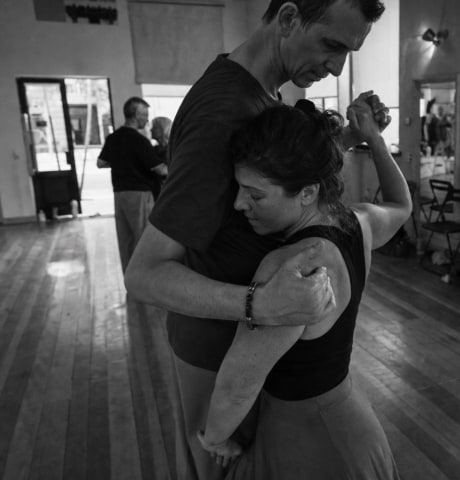
    An asymmetrical load, where one partner sinks heavily into the other's arm, disrupts the shared axis. Both dancers must maintain their own vertical balance to enable free movement.

  7. 07

    Completely rigid fixation of the upper body

    Error 7, makes the dance stiff and unmusical

    • Chest
    • breathing
    • dynamics

    A rigid, immobile chest prevents breathing in the rhythm of the music. The embrace must remain elastic and be able to adapt minimally with every turn, without the connection breaking.

Why the subtle connection in the abrazo is often blocked

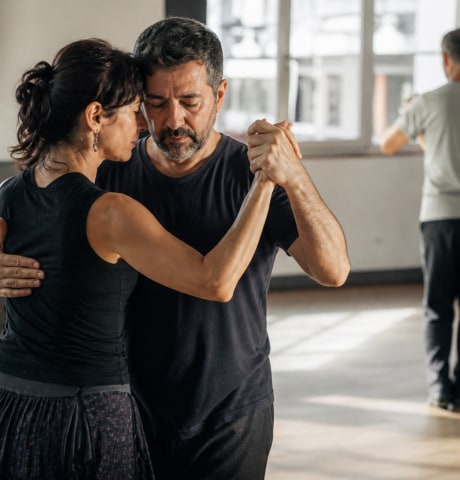
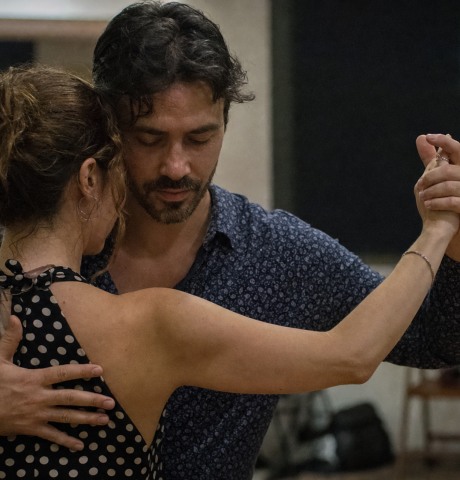
The embrace, affectionately called abrazo in Argentine Tango, is the heart of this dance. It is not a rigid hold, but a living, breathing dialogue between two bodies. When the connection falters, it is rarely due to complicated footwork, but usually due to unconscious blocks in the upper body. A common trigger for an uncomfortable tango embrace is the attempt to force stability through muscle power instead of skeletal alignment. Anyone who clings with their upper body takes away the necessary flexibility for subtle weight transfers from themselves and their partner.

The biomechanics of a relaxed connection

To be able to avoid tango posture errors, a look at anatomy helps: The strength for the embrace does not come from the arms, but from a stable core and a relaxed back. As soon as the shoulders are pulled up, the shoulder blade blocks and the arms become stiff. A successful connection is characterized by the fact that the elbows are allowed to sink heavily downwards and the breastbones remain aligned with each other, without the partners crushing each other.

Facts about ergonomics in Argentine Tango

Posture errors block the lead
7
seconds for conscious posture alignment
5
percent of the leading comes from the core
100

Frequently Asked Questions

  1. You can recognize an uncomfortable Tango embrace by a noticeable pressure on your ribs, pain in your neck, or the feeling of being pushed by your partner. As soon as you have to actively use force to maintain your posture, there is a flaw in the alignment.

Tango courses near you

Find the right course to build your posture in Argentine Tango professionally from the ground up.

View all matching courses

Find your perfect Tango partner

You want to improve your connection in Tango and are looking for like-minded people to work on the perfect embrace with? On udansa, you will meet dance enthusiasts in your area for your journey to the milonga together.

Find your perfect Tango partner