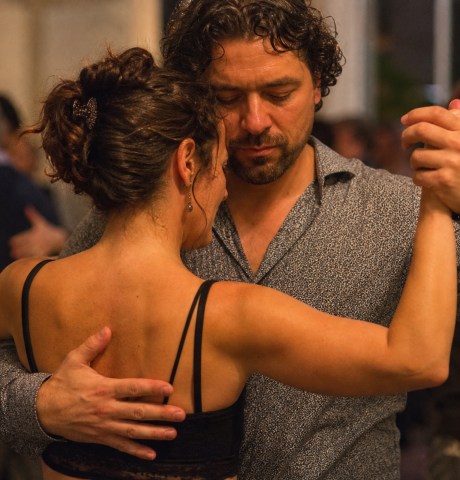
Dance technique5 minutes

Argentine Tango: Leading the open side of the embrace correctly

In a nutshell
  • The open side of the embrace is formed by the leader's left hand and the follower's right hand.
  • Both arms must form a stable but elastic frame that maintains the connection regardless of the steps.
  • The hand connection must never be used for pulling or pushing, but serves as a sensitive signal receiver.
  • A constant and gentle basic tension in both arms prevents the shared posture from collapsing.

The open side of the embrace determines whether a Tango feels light and harmonious or turns into hard work. Learn how to playfully maintain your balance with the correct arm position.

DefinitionTango frame

The Tango frame, often also called the frame, refers to the stable yet flexible body tension in the upper body and arms of the dancers. It ensures that leading signals are transmitted from the leader to the follower without delay.

The open side as an elastic communication channel

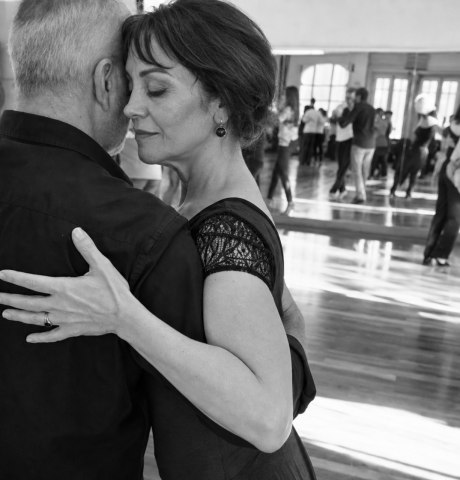
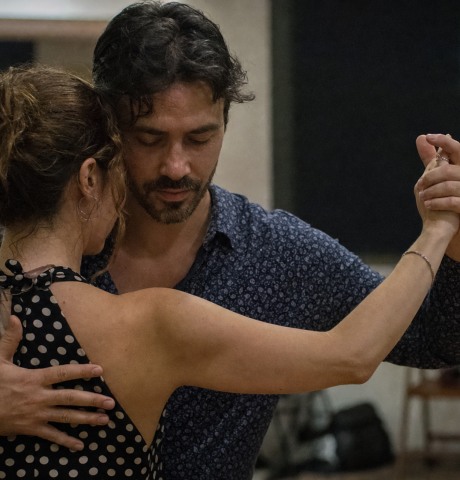
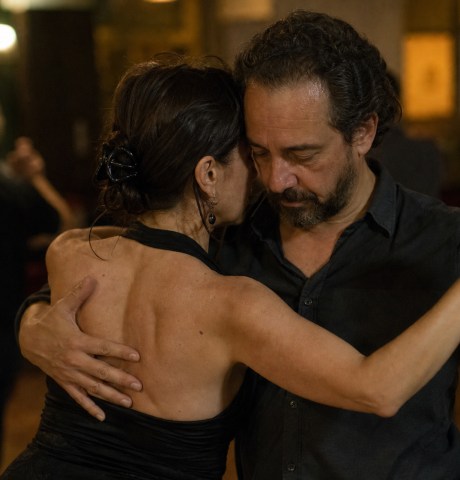
In Argentine Tango, the embrace, the so-called abrazo, is not a rigid structure, but a living dialogue. While the closed side is supported by direct body contact and the leader's right hand, the open side takes on a completely different, dynamic function. The connection between the leader's left hand and the follower's right hand acts as a kind of antenna. It picks up the smallest weight shifts and translates them into fluid movements. Without a precise posture on the open side in Argentine Tango, the couple instantly loses their orientation in space.

This part of the embrace is often misunderstood. Beginners tend to use the joined hands as a lever to pull or push the partner in a certain direction. However, a stable Argentine Tango embrace thrives on the independence of the arms from the rest of the upper body. The arms form a protective frame that remains elastic. Only in this way can subtle communication succeed without the need to use physical force.

How leaders and followers stabilize the frame

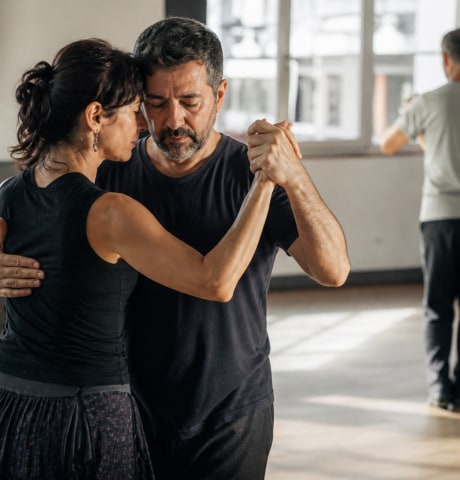
To keep the connection stable, both partners must learn how to stabilize their own frame. For the leader, the movement for the left hand does not originate from the bicep, but from the back muscles. The shoulder remains low and relaxed, while the elbow points slightly outward and downward. The leader's left hand is positioned roughly at the follower's eye level and forms the calm center of this side. This is where the Tango left-hand lead finds its sensitive base.

The follower, in turn, places their right hand lightly into the leader's open hand. Important here is a constant, yet gentle Tango Argentino arm tension. The follower's right arm must neither hang limp like a cooked noodle, nor should it block like an iron bar. It is this fine elasticity that makes it possible to feel turns and changes of direction without delay. A good Tango Argentino step sequence on the full floor requires exactly this responsiveness on the open flank.

The subtle difference in arm work

Correct

  • Consciously let your shoulders sink down, relaxed and low
  • Maintain an elastic base tension in your arms
  • Initiate leading impulses from the rotation of your ribcage
  • Use your hands as sensitive contact points without a firm grip

Wrong

  • Pulling your shoulders up to your ears due to tension
  • Letting your arms hang completely limp or locking them stiffly
  • Actively pulling or pushing your partner with your arms
  • Clenching your fingers tightly into your dance partner's hand

In Tango, your arms are not tools for moving your partner, but the conduits through which the intention of your heart flows.

Tango teacher, Berlin

The secret of the floating hand connection

A successful open hand connection in Tango feels like a floating magnetism. The hands do not interlock, but touch each other with light, constant pressure. The leader offers a stable surface with their palm, against which the follower creates a gentle counter-pressure. This creates a bridge through which information can flow without words. As soon as one of the two loses contact or grips too tightly, the connection collapses.

The secret lies in understanding the arms as an extension of the ribcage. When the leader turns, the entire frame moves as a unit. The arms hardly change their angles in relation to one's own body. Anyone who learns to consciously maintain this space experiences a completely new lightness and stability in Tango, which lifts dancing together to a new level.

Two roles for a perfect balance on the dance floor

Leading

Active and receptive

The leader's supporting antenna

The arm is slightly bent, the shoulder remains low, and the hand offers a stable but flexible resistance. Movements are initiated from the back.

Following

Reactive and stable

The sensitive reaction of the follower

The arm maintains an elastic tension and follows the leader's movement without delay. The hand rests lightly and without gripping in the partner's hand.

Frequently Asked Questions

  1. The joined hands should be roughly at the follower's eye level or at the shoulder level of the shorter partner. This height allows for relaxed shoulders and a natural bend in the elbow.

Tango courses near you

Find the right course to refine your posture and technique in Argentine Tango.

View all matching courses

Find your perfect dance partner

On udansa connect, you will find like-minded people in your region who, just like you, want to polish their perfect connection in Tango. Make contacts and find the right companion for the next milonga or the next course.

Find your perfect dance partner