
Find your K-Pop crew without the pressure
On udansa, you will meet like-minded people who share your passion for K-Pop and with whom you can practice together without stress or pressure.



By Mary De LucaUpdated
On udansa, you will meet like-minded people who share your passion for K-Pop and with whom you can practice together without stress or pressure.
K-Pop Cover Dance is fascinating because of its energy and precision. However, when ambition turns into stress, the passion falls by the wayside. Learn how your crew can protect team spirit and keep the joy of dancing alive.
Performance pressure in a K-Pop dance group describes the mental stress that arises from expectations that are too high regarding one's own performance and the synchronicity of the group. It often leads to frustration, exhaustion, and the loss of the joy of dancing.
K-Pop cover dance thrives on perfection, synchronicity, and incredible stage presence. However, this very demand often leads to noticeable performance pressure in a K-Pop dance group. When the pursuit of the perfect video or a flawless performance takes over, the team spirit suffers. Dancers focus only on mistakes instead of feeling their shared energy. To maintain kpop crew motivation, the focus must be actively shifted from the pure result back to the journey you share together.
Pressure in kpop cover dance often arises from unhealthy comparisons with professional idols or other crews on social media. It is important to understand that behind perfect K-Pop music videos lie months of professional training under extreme conditions. A recreational crew can and should set different standards. Anyone who keeps this difference in mind creates the foundation to stay mentally healthy as a kpop dance group and ensure the joy of dancing in the long term.

For an ambitious group not to fall apart due to its own expectations, clear, shared agreements are needed. Every crew member brings different prerequisites, prior knowledge, and available time budgets. If expectations regarding weekly training or the attention to detail in the choreography diverge too much, conflicts are inevitable. Open communication about individual boundaries and goals helps to clear up misunderstandings early on.
It is recommended to establish fixed feedback rules. Criticism of the execution of a move should always be formulated constructively and appreciatively. Instead of exposing mistakes, it helps to support each other and work on difficult passages together. Those who pay attention to this when starting out lay a strong foundation, as the guide Starting a K-Pop cover group: Instructions for your own crew describes in detail. This way, training becomes a safe space where everyone can try things out without fear of making mistakes.
How to keep the fun alive
How unhealthy pressure builds up
The best performance happens when the group trusts each other on the dance floor and the fear of making mistakes completely disappears.
To keep the fun factor high, training should be regularly loosened up with playful elements. A proven method is the "Random Play Dance" session at the end of a strenuous rehearsal, where it is not about synchronous perfection, but about the pure joy of the music. Celebrating small progress together also strengthens the bond enormously. If you have finally mastered a particularly tricky part of the choreography, you should consciously record this moment as a success.
If you notice that you are struggling to get started with complex choreographies, a look at basic tips on how you can learn K-Pop choreography as a beginner can help. This takes away the fear of being overwhelmed. Ultimately, the most important ingredient for a long-lasting crew is the realization that mistakes are part of the learning process. If the group laughs instead of despairing when a step goes wrong, the passion remains alive.
Growing together without stress
The focus is on the shared experience and the fun of moving. Mistakes are taken with humor and seen as an opportunity to grow together. The group celebrates small steps of progress and supports one another.
Grimness blocks the energy
Every step must be perfect immediately, and deviations are criticized. The fear of making mistakes blocks creativity and leads to a tense atmosphere where crew members feel uncomfortable.
Constructive feedback always focuses on the matter at hand and remains appreciative. Formulate observations as I-statements and offer joint assistance directly, instead of just pointing out the mistake.
Consciously take training breaks where you don't work on the choreography. Use this time for team building, games, or simply to talk, in order to clear your heads and strengthen the team spirit.
Talk openly in the group about your capacities. It is perfectly fine to slow down the pace while learning or to simplify a choreography so that all members can keep up without feeling overwhelmed.
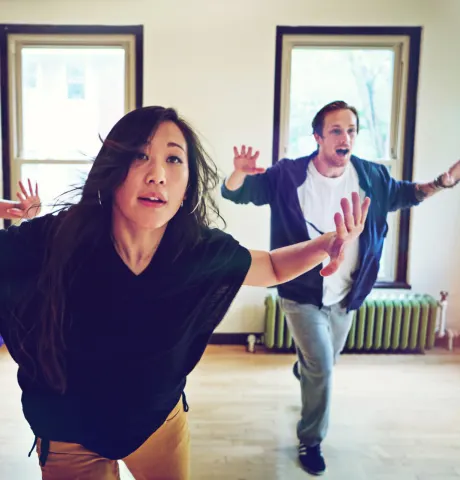 K-Pop Cover Dance Group: How to start and train your crewFrom the first idea to a synchronized performance on stage: Here is how you successfully start, organize, and train your own K-Pop cover dance group.
 Learn K-Pop choreography as a beginner: How to nail your coverK-Pop choreographies often seem extremely complex and intimidating. With the right approach and the right online tools, you can easily master the dance steps at home, even as a beginner.K-Pop Cover Dance Group: How to start and train your crewFrom the first idea to a synchronized performance on stage: Here is how you successfully start, organize, and train your own K-Pop cover dance group.
 Starting a K-Pop cover group: Guide for your own crewDo you dream of having your own K-Pop dance group? Learn here how to lay the organizational foundation for a successful crew launch.
 Group K-Pop dance training: How your crew practicesHow to lead your K-Pop crew to maximum synchronization: A practical guide for perfectly structuring your training sessions.
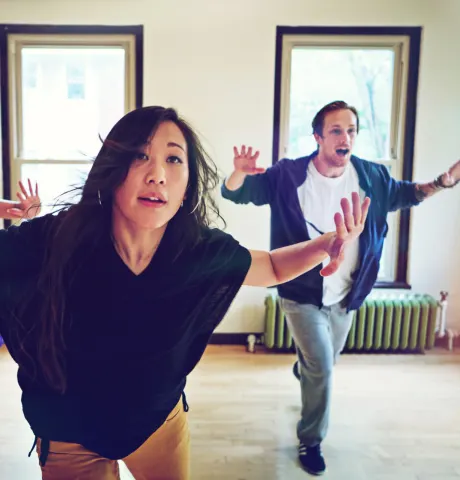 Assigning K-Pop crew roles: How to fill positionsThe right role distribution determines the success of your K-Pop cover. Learn how to perfectly and fairly assign Center, Main Dancer, and more.
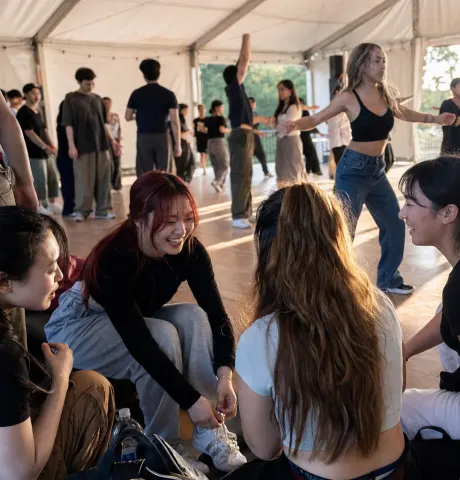 What K-Pop dance type are you: Find your perfect crew roleFind out which role in a K-Pop cover group suits you best with our interactive personality test. Discover your dance and organizational strengths!
 K-Pop Cover Dance Contest: Preparing your crewStepping onto the contest stage requires seamless planning. With our structured checklist, your K-Pop crew will be perfectly prepared for the next competition.
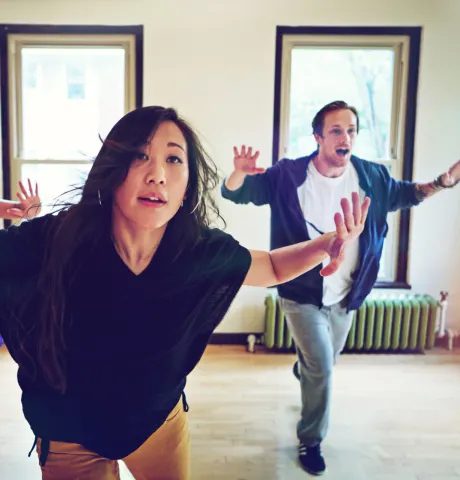 Solving K-Pop crew problems: The 7 biggest team mistakesLearn how to successfully master the typical organizational and interpersonal hurdles in your K-Pop dance group.