Performing Arts5 minutes

How Contemporary Flamenco Is Transforming the Stage

By Bernhard De LucaUpdated

In brief
  • Contemporary Flamenco changes, among other things, space, gender roles, the representation of the body, and the connection between dance and music.
  • La edad de oro and Utopía show different ways of reworking the presentation of solo and ensemble.
  • Viva! shifts gender roles, while Caída del cielo expands the upright dancing figure through images of bodies close to the ground.
  • La curva breaks down the familiar concert format with piano, interruptions, and independent musical actions.

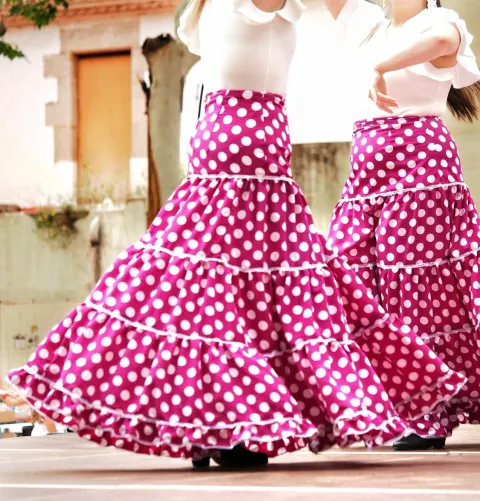
A long skirt alone doesn't reveal the rules a performance follows. Things get interesting when a familiar stage picture suddenly makes room for different bodies, different relationships, or a different sequence of events.

What the selection is based on

  • Named Existing Works

    Included are five documented stage works, with no invented style names; editorial status as of October 31, 2026.

  • Intervention in the Presentation

    The sequence moves from a concentration of familiar forms to their greater dissolution and is a considered interpretation, not a judgment of quality.

  • Visible Differences

    Each work represents a different focus, which you can recognize in its use of space, cast, body imagery, or musical progression.

  • No paid placements

    No one has paid to be included; popularity or current tour dates do not determine the selection.

Even a motionless body can interrupt a musical expectation and thus change the course of a scene.

Five approaches, from concentration to dissolution

  1. 01

    Focus on the solo form: La edad de oro

    Israel Galván, a dance solo with singing and guitar

    • Reduction
    • solo dance
    • musical dialogue

    In La edad de oro, the connection between dance, singing and guitar remains within a familiar framework, while Galván’s abrupt changes of direction, angular body shapes and unexpected pauses draw your attention to the articulation of each moment: the renewal here lies above all in the body and its musical response, not in an elaborate stage world. This work opens the selection because you can still clearly recognize the traditional performance framework and observe just how much change is possible within it.

  2. 02

    Architecture for the Ensemble: Utopía

    María Pagés, Ensemble Work with Live Music

    • Spatial design
    • group formations
    • architecture

    In Utopía, María Pagés draws inspiration from the architecture and ideas of Oscar Niemeyer, giving greater weight to curved lines, spatial relationships, and the arrangement of the group in relation to the individual solo contribution: you can follow how bodies build an image together and then open it up again. This intervention goes beyond the individual dance language, as the stage is composed as a cohesive space, while the connection to Flamenco music and recognizable dance vocabulary is retained.

  3. 03

    Shifting gender perceptions: Viva!

    Manuel Liñán, male dance ensemble

    • Gender roles
    • costume
    • ensemble

    In Viva!, male dancers perform with costume and movement conventions often read as feminine in Flamenco, including long skirts, trains and mantones, without using them merely for comic costume effect. The work is included here because it challenges less the recognizability of Flamenco than the expectation of which bodies are allowed to use which forms of expression: you see familiar stage symbols, but their association with gender is deliberately made fluid, allowing the individual presence of each dancer to emerge.

  4. 04

    Showing the body differently: Caída del cielo

    Rocío Molina, dance solo with live band

    • Groundedness
    • body images
    • rock sounds

    Rocío Molina's Caída del cielo combines Flamenco with a raw soundscape that also makes room for rock drums, setting grounded, heavy and physically exposed images against the upright, representational dance figure: lowering, lying down and the body's relationship to the floor become subjects in their own right on stage. Here, it's not just the casting of a familiar role that changes, but its physical manifestation, so you should pay attention not only to virtuoso footwork, but also to weight, material, duration and the shifts between control and loss of control.

  5. 05

    Breaking Down the Concert Form: La curva

    Israel Galván, with piano, singing and handclaps

    • Fragmentation
    • piano
    • dance theatre

    In La curva, Galván's dancing meets, among other things, Sylvie Courvoisier's piano, with sounds, silence and actions not always brought together into a continuous accompaniment, but also able to stand in opposition or alongside one another. This work concludes the selection as the most radical intervention in the form of presentation considered here, because it repeatedly interrupts your expectation of a continuous dance number and makes the performance tangible as a theatrical whole made up of individual events, rather than aligning every scene with a shared musical climax.

The interventions overlap in the same piece

The five approaches are not separate schools. A work can change the space, shift gender images, and interrupt musical sequences at the same time. The classification names the focus that makes the comparison especially clear. Israel Galván appearing twice is intentional: the same choreographer can concentrate the familiar framework in one work and dissolve it much more in another.

An unusual surface does not yet prove a new choreographic structure. An electronic sound can accompany a conventionally structured dance number. Conversely, a performance with singing and guitar can feel radical through pauses and body images. One observation can help you classify it: Does the expectation of the next cue remain stable, or does the piece change that expectation?

Props do not automatically carry the same meaning either. A mantón, with its weight and reach can make a body appear larger or make a gendered role assignment visible. A train also has a concrete material basis, which the guide to the Bata de Cola and its contact with the floor explains. The technical handling and the meaning onstage remain distinct questions. This makes it possible to describe experimental flamenco more precisely than with the blanket label “modern.”

The comparison in numbers

Named Stage Productions
5
Choreographers
4
Works by Israel Galván
2

Frequently Asked Questions

  1. Contemporary Flamenco is not a uniformly defined technique, but a collective term for different artistic approaches. Some works retain singing, guitar and a recognizable solo form, while others change the structure significantly. That is why the specific title of a work tells you more than the label alone.

Explore performance ideas together discover

On udansa connect, you can find dance enthusiasts to attend a Flamenco performance with and discuss specific scenes afterward.

Explore performance ideas together discover