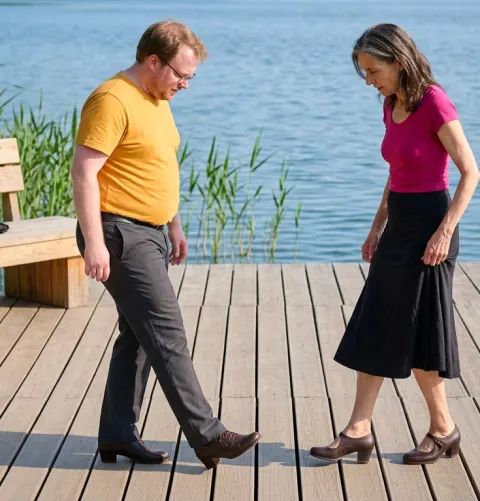
The arm pathway does not need confirmation from every beat
The sequence does not simply increase the speed. After the denser footwork, the pauses become the real challenge, followed by the offbeat start. Both take away the arms' familiar orientation to the sound. A successful run has a continuous arm pathway, even when the feet are silent. The fact that the arms and feet have different tasks does not mean the upper body has to become rigid.
Focus on just one observation point per run: first the elbow immediately after foot contact, then the arm flow during the pause. If you assess your hands, gaze, and the sound at the same time, it is hard to pinpoint an error. Repeat a short block, take a break, and start it again instead of continuing a stuttering sequence for minutes. A practice plan between two classes helps you fit these short sessions in regularly.
The counts here are neutral practice pulses, not accent instructions for a specific Palo. Wear suitable Flamenco shoes on a designated dance floor, not directly on concrete. Louder strikes are not a measure of progress; for longer sessions, what matters is a gradual increase in dance workload. Stop the percussive exercise if you feel pain.