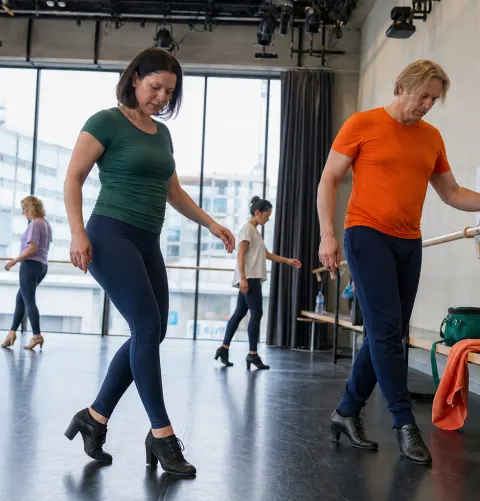
Heels change how the load is distributed
In Heels Dance, the heel is raised while the forefoot rests on the sole. This changes the position of your foot and shifts more of the load forward. A heel that touches the floor still contributes to support, but it does not offload the ball of your foot as much as a flat-footed stance. If you lift your heel as well, the forefoot takes on even more of the supporting work.
How long you stay in this position also matters. A short routine and several songs in a row place different demands on your feet, even if they involve the same steps. Small steps can add up, and holding a still pose is also a form of exertion. When you balance on one foot, your body weight is no longer distributed between both feet.
That is why there is no general number of minutes after which Heels Dance causes pain. Your training history, previous exertion and the specific movements all play a part. If you train after a long day on your feet, you are starting from a different place than after a quiet day.
A position that looks stable can still be demanding. The video shows your line, not the pressure under the ball of your foot. General guidance on gradually increasing your dance workload can help you consider duration and intensity separately.