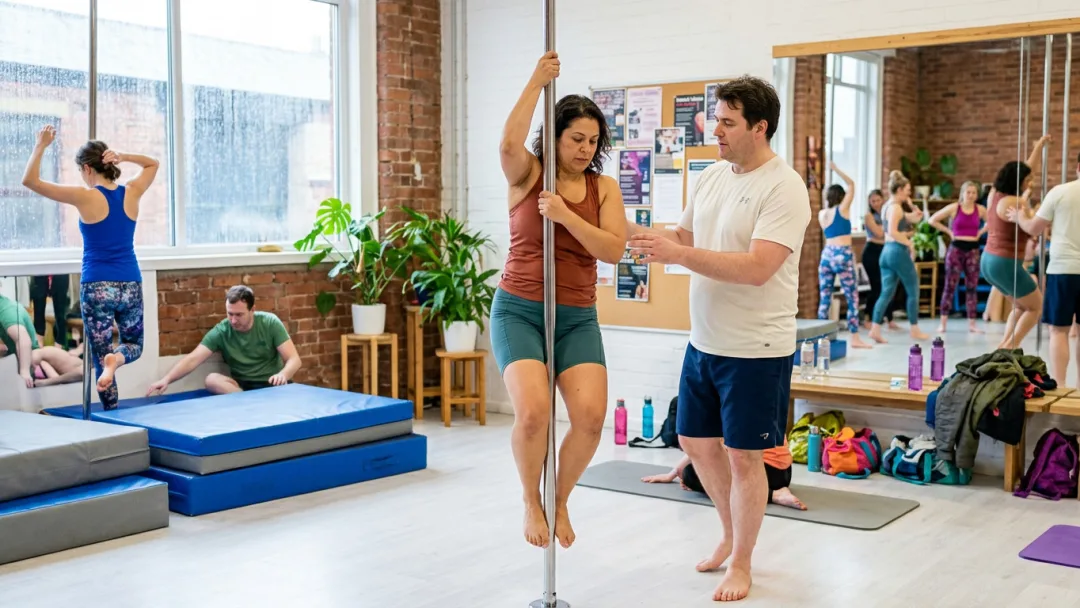
Spotting is part of a specific movement plan
Spotting here means immediate assistance during a pole move. The support needed depends on the movement path, your control and the possibility of losing control. That’s why “I’ll stand beside you” isn’t enough. Your instructor needs to know which variation you’re starting, where support is planned and how the attempt will end. A supervised progression is more sensible than attempting a full move when you haven’t yet mastered how to exit it.
Also discuss whether and where physical contact is expected. You can refuse to be touched; in that case, you need a different way to practise or should leave the move out. This consent is not an instruction on how to grip or catch someone. Manual spotting techniques should be learned through practical training, not attempted on your own based on text.
A crash mat cushions a possible impact, but it cannot prevent a fall or every injury. Its setup and position must suit the exercise and comply with the manufacturer’s instructions. An empty strip of floor beside the mat is not enough room to fall if your body or legs could extend beyond it. If the planned movement path changes, the existing spotting plan may no longer be suitable.
An insecure grip is also not a problem that spotting can simply compensate for. Work on the causes of slipping on the pole separately, close to the floor, before attempting a move off the ground.