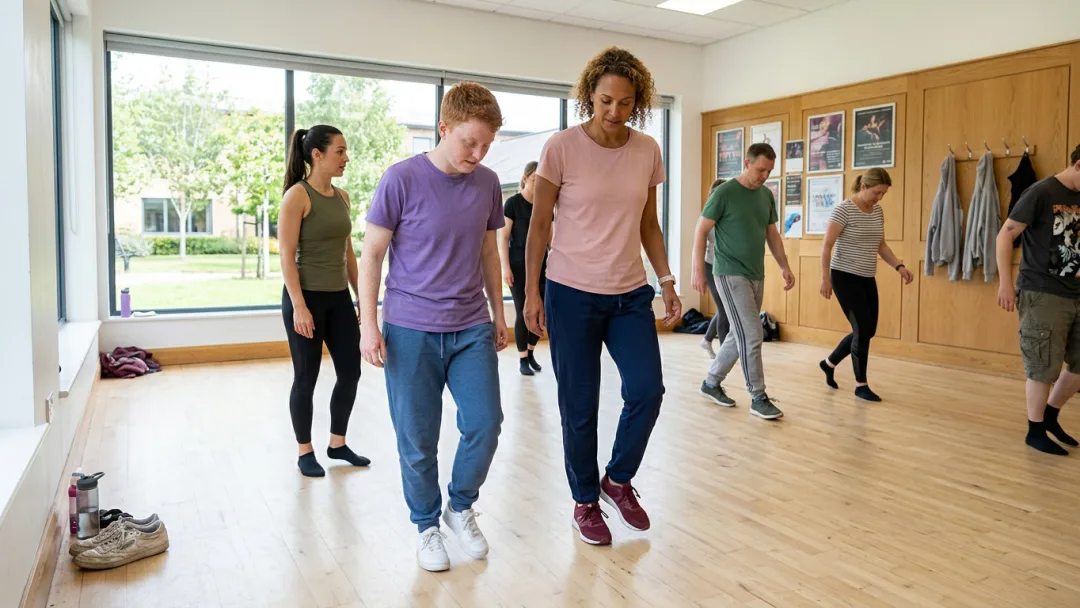
Foot contact and weight transfer are two different things
Amapiano is a music culture that originated in South Africa, with dance practices associated with it. In many tracks, you can hear piano sounds, layered percussion and distinctive low bass pulses, often referred to as the Log Drum. Not every audible accent calls for a step of its own: to get started, choose a steady pulse that you can count evenly to. The bass figure can keep going for now, without you tracing every note with your foot.
The sequence here is a coordination exercise put together by our editors for this music. It does not replace learning named South African moves or understanding their cultural context. Amapiano dance includes different movements and personal interpretations, so a single definitive step sequence would be misleading.
What matters is which foot supports you after contact. In a tap, your body stays over your supporting foot. In a step, your weight shifts to the foot you have just placed down. This distinction is also helpful when practising the Sailor Step, even though its sequence and musical context are different.
Soft knees here means a slight, springy bend, not a deep squat. Your knees point roughly in the direction of your toes, and your chest stays relaxed over your pelvis. Shorten your step if you have to stretch sideways to reach the floor: your foot should land close to you.