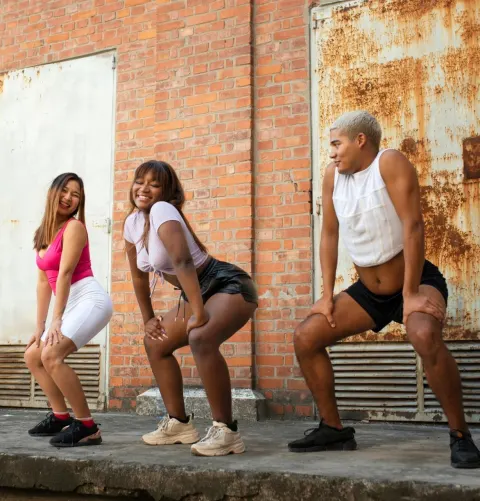
The side-to-side sequence is a learning aid, not a fixed pattern
Shaku Shaku became especially well known in the second half of the 2010s through Lagos's street and club dance scene and Nigerian music videos. The dance is part of the world of Nigerian Afrobeats and street pop music. Loosely crossed arms in front of the body and springy leg movements with a sideways accent are among its recognizable motifs. Variations differ between dancers and musical situations.
This guide focuses on a single spatial element: moving to the right and retracing the same path to the left. The eight counts structure your practice, they are not a prescribed Shaku Shaku choreography. Extra foot accents and arm variations are deliberately left out. This lets you first learn to keep your movement within a small space.
The key is the difference between a step and a tap: a step takes your body weight, while a tap only touches the floor. If both feet stay weighted when you tap, the next change of direction gets stuck. This principle also explains the guide to clear weight changes in the Rock Step, even though its movement sequence is different. When practicing sideways, this means your free foot stays available, while your chest and head can follow your supporting leg. You don't need to tilt your upper body sideways or make a big hip movement.