Three performance formats, each with a different focus
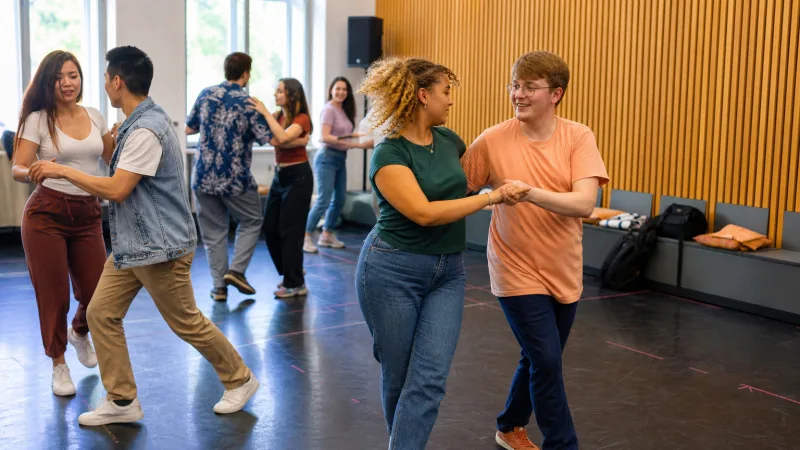
When planning your graduating class performance, the format determines what guests see: many couples dancing at the same time, a shared group movement, or a switch between the two. A couples dance feels festive but needs enough room to move. A group number does not require continuous pairing and can be made easy to follow with recurring steps.
A third option is to start together in rows and then break into a short couples dance. The transition needs its own musical cue and clear paths. If both parts are developed in detail, the rehearsal effort increases considerably.
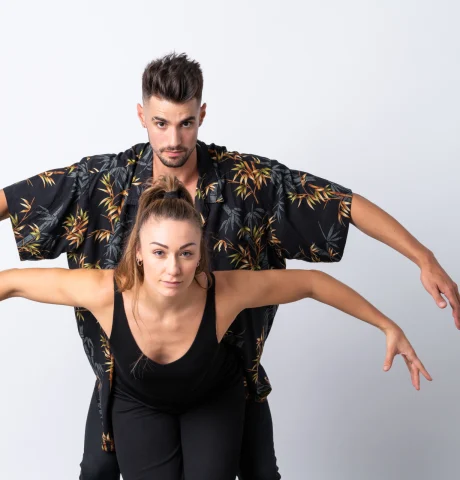
An Abiball flash mob describes the staging: a few people start, then others join in. It is not a dance style of its own. For the seemingly spontaneous participation to work, the cues and entrances need to be planned just as carefully as for an announced number. Inspiration from dances from film and television can be reduced to a recognizable excerpt instead of recreating an entire scene.
As a planning guideline, around two to three minutes can work for the dance number itself, not as a binding ball rule. A shared beginning, a clear progression, and a definite ending are enough. The guide to the Abiball from January to June covers the broader preparation timeline.