Tanzpraxis5 Minuten

Muskelgedächtnis beim Tanzen: Wie Schritte von selbst laufen

Kurz gesagt
  • Das Muskelgedächtnis beim Tanzen beschreibt die Fähigkeit des Körpers, komplexe Bewegungsabläufe durch stetige Wiederholung vollautomatisch abzurufen.
  • Durch die Automatisierung der Schritte wird das Gehirn entlastet, wodurch der Fokus ganz auf die Musik und den Tanzpartner gerichtet werden kann.
  • Ein sauberes und langsames Training im Vorfeld verhindert, dass sich fehlerhafte Bewegungsmuster dauerhaft im System einprägen.

Kennst du das Gefühl, wenn die Füße plötzlich genau wissen, was zu tun ist, ohne dass du aktiv darüber nachdenkst? Das ist keine Zauberei, sondern die faszinierende Kraft deines Körpers, Bewegungen tief abzuspeichern.

Definition
Muscle memory in dance

Muscle memory in dance refers to the storage of movement sequences in the central nervous system, allowing steps and figures to be performed without conscious control. This learning effect ensures that patterns, once learned, can be quickly recalled even after long breaks.

Why your head gets in the way at the beginning

Anyone starting to dance knows the feeling of being overwhelmed. The music is playing, your partner is waiting, and an endless to-do list is rattling around in your head: Which foot moves first? How did that hand position go again? This mental block is completely normal. When learning new movements, our brain has to consciously plan and control every centimeter of the path at the beginning. The phenomenon of simplifying dance steps through psychology and repetition starts in the head and slowly migrates into the body. Only when we gradually relinquish conscious control does the fluid, intuitive dance style we admire in experienced dancers emerge.

To master this transition, it helps to let go of the idea of a perfect choreography. Especially with Lead & Follow in partner dance, it is not about playing back rigid sequences in your head, but about reacting flexibly to signals. Anyone who logically analyzes every weight shift will lag behind the beat. The magic happens when the brain takes over the rough planning, while the muscles execute the details as if by themselves.

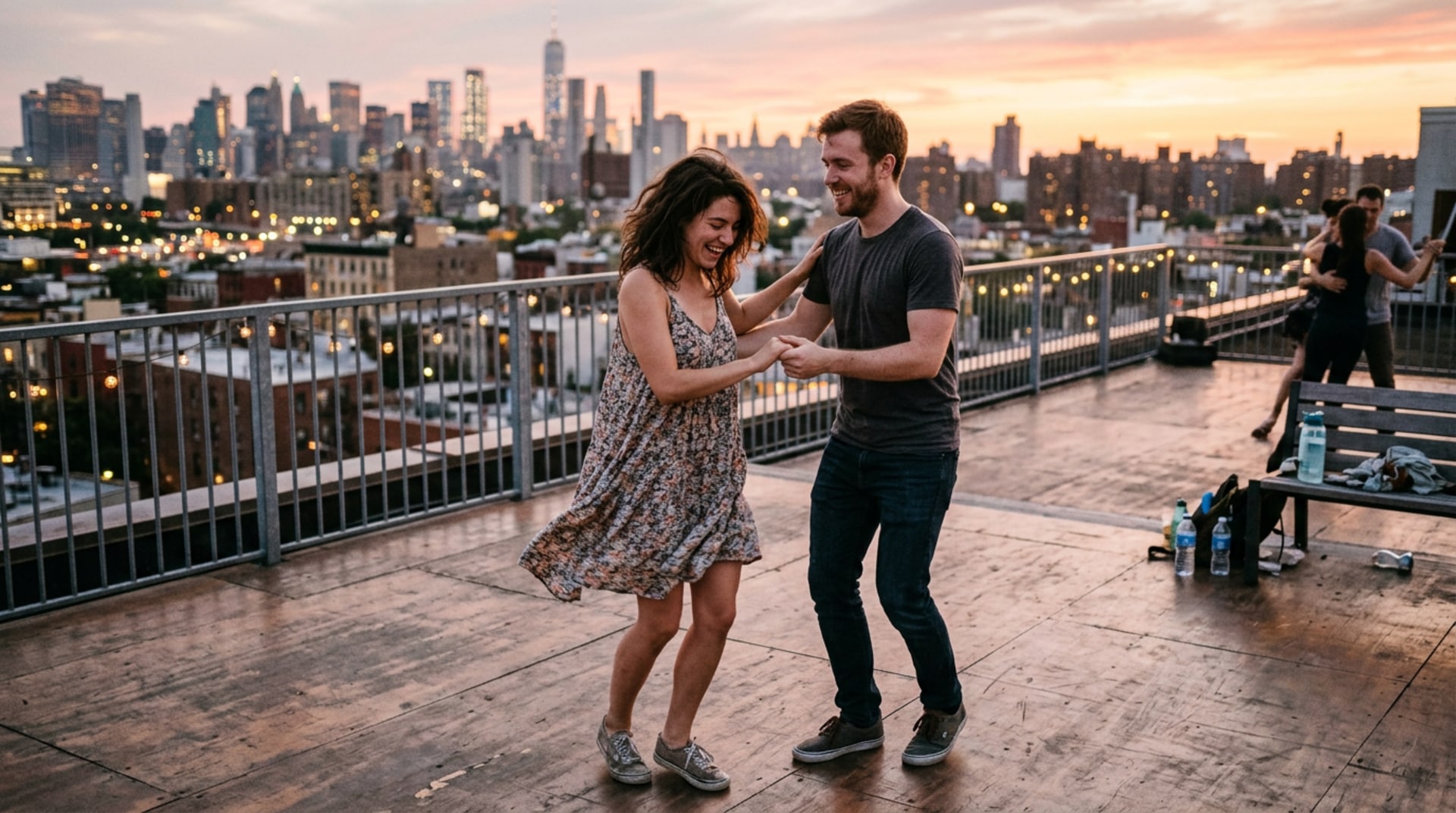
The moment when the steps flow: When muscle memory takes over, your mind is free for the music.

The path from your head to your feet

The key to automation lies in conscious, slow repetition. When we execute a movement precisely over and over again, our neural pathways build a kind of expressway for that signal. If you want to automate a movement sequence, you have to be patient: the system saves every sloppy repetition just as it does a clean one. That is why it is so important in a dance class to practice new figures at a snail's pace before the tempo of the music increases.

As soon as muscle memory kicks in while dancing, your perception on the dance floor changes fundamentally. You no longer have to think about how your feet move, but instead gain the mental space to listen to the music, maintain eye contact, or perceive the dynamics in the room. The mechanical processing of patterns turns into a real, emotional experience. This is the moment when social dance lets you overcome fear and brings pure joy.

How to build stable muscle memory with udansa

Training correctly

  • Perform steps extremely slowly at the beginning
  • Use short and regular training sessions
  • Visualize movements in your mind

Fehler im Training

  • Hektisch und zu schnell neue Figuren erzwingen
  • Nur einmal im Monat stundenlang trainieren
  • Fehlerhafte Abläufe einfach ignorieren
udansa-Tipp

Wenn eine neue Figur im Kurs nicht klappt, halbiert das Tempo. Tanzt den Übergang extrem langsam und ohne Musik, bis die Füße den Weg von alleine finden. Erst dann kommt der Rhythmus dazu.

Erst wenn die Füße den Weg alleine finden, fängt das eigentliche Tanzen an. Vorher ist es nur Gehen im Takt.

Tanzlehrer, Hamburg

Weniger ist mehr für den Lernerfolg

Viele Tanzanfänger machen den Fehler, zu früh zu viel zu wollen. Sie sammeln Figuren wie Trophäen, beherrschen aber keine davon flüssig. Für ein stabiles Muskelgedächtnis ist jedoch Qualität entscheidend, nicht Quantität. Es ist weitaus effektiver, drei Grundschritte und eine einfache Drehung blind zu beherrschen, als zwanzig komplexe Wickelfiguren, bei denen man ständig ins Stolpern gerät.

Nutze die Kraft der Visualisierung, wenn du gerade keinen Tanzpartner zur Hand hast. Das reine gedankliche Durchgehen der Schritte aktiviert im Gehirn dieselben Areale wie die tatsächliche Bewegung auf dem Parkett. Wenn du dann das nächste Mal eine Tanzschule betrittst oder dich auf einer Party ausprobierst, wirst du merken, wie viel schneller dein Körper die gelernten Muster wieder abruft. Lass locker, vertraue deinem Körper und gib ihm die Zeit, die er für diese wunderbare Transformation braucht.

Two phases of movement learning

Kopfarbeit

Die Analyse im Fokus

Die Phase des bewussten Lernens

Du steuerst jede Bewegung bewusst, korrigierst deine Haltung aktiv im Spiegel und konzentrierst dich voll auf die technische Präzision der Schritte.

Body flow

Trust in movement

The phase of automatic recall

Your body takes the lead, you react intuitively to the music and your partner, while your thoughts can flow completely freely.

Häufige Fragen

  1. Das Muskelgedächtnis entsteht durch kontinuierliche, präzise Wiederholung einer Bewegung. Das Gehirn legt dabei feste Nervenbahnen an, die den Ablauf mit der Zeit immer schneller und ohne bewusste Steuerung abrufbar machen.

Tanzkurse in deiner Nähe finden

Melde dich für einen Kurs an und beginne noch heute damit, dein Muskelgedächtnis aufzubauen.

Alle passenden Kurse ansehen
udansa community

Learning is easier together

On udansa connect, you meet other dance enthusiasts who, just like you, want to solidify their dance steps and anchor muscle memory through joint practice.

Quellen

Erfahrungswerte aus der sportwissenschaftlichen Praxis im Tanzsport und gängige Methoden der Bewegungslehre, Stand August 2026.