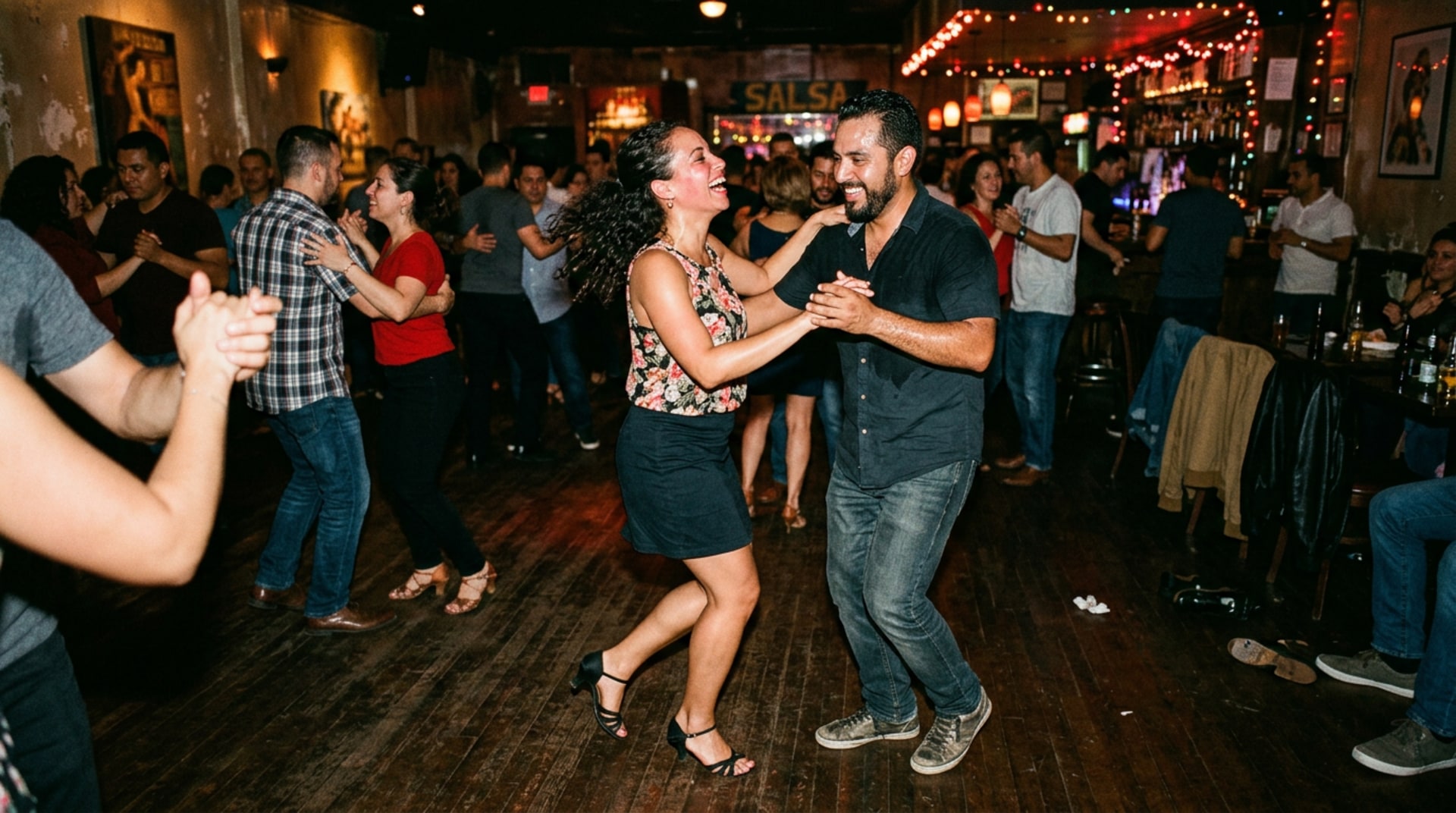
Tanzkurs-Vergleich4 Minuten

Tanzen lernen zu hause oder kurs: Was bringt dich weiter?

Kurz gesagt
  • Das Training zu Hause bietet einen geschützten Raum ohne Leistungsdruck, um erste Schritte und Rhythmen völlig ungestört zu verinnerlichen.
  • Ein Tanzkurs vor Ort ermöglicht direkte Rückmeldungen von Lehrern und schützt vor dem Einschleifen von Haltungsfehlern.
  • Die soziale Interaktion und das für Paartänze essenzielle Führen und Folgen lassen sich nur im direkten Kontakt mit echten Tanzpartnern erlernen.
  • Die Kombination aus privatem Solo-Üben und dem gemeinsamen Training in der Gruppe führt nachweislich zum schnellsten und nachhaltigsten Lernerfolg.

Der Einstieg in die Tanzwelt wirft oft eine grundlegende Frage auf: Solltest du die ersten Schritte lieber ungestört in den eigenen vier Wänden wagen oder direkt den Sprung in die Tanzschule wagen? Beide Wege haben ihre ganz eigenen Vorzüge.

Definition
Solo-Training

Solo-Training bezeichnet das selbstständige Üben von Tanzschritten, Körperisolationen und Rhythmen ohne Tanzpartner. Es dient dazu, die eigene Körperbeherrschung und Bewegungssicherheit unabhängig von einer Führung aufzubauen.

A safe space for your first steps at home

The idea is tempting: you close the door to your room, start a video, and simply begin. When choosing to learn to dance at home or in a course as a starting point, your living room offers unbeatable advantages. There are no spectators here, no pressure to perform, and no fear of embarrassing yourself in front of others. If you want to overcome your fear as a beginner, you will find the perfect entry point in the protected space of your own four walls.

Practicing undisturbed allows you to focus entirely on your own body. You can wear comfortable clothing, repeat the steps as often as you like, and set your own pace. This environment is ideal, especially for internalizing basic steps and rhythms. You build a solid foundation without being distracted by the hustle and bustle of a busy dance school.
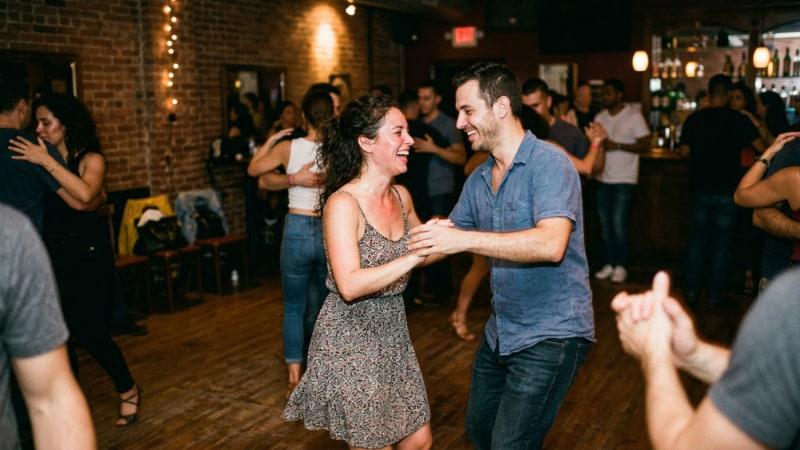
Direct contact in class trains non-verbal communication, which is crucial for social dance.

Why partner dance needs a counterpart

Despite all the advantages of solo training, practicing alone quickly reaches its limits as soon as it comes to real partner dance. Social dance styles like Salsa or Bachata thrive on the direct interaction between two people. The interplay of impulse and reaction simply cannot be simulated without a counterpart. Only through real contact will you learn how the subtle interaction of lead and follow in partner dance feels.

In a local dance school, you also benefit from immediate correction by experienced teachers. Mistakes that creep in unnoticed during solo training at home are gently corrected here right away. This saves time in the long run and protects you from frustration when the steps suddenly do not work on a real dance floor later on.

The smart way to learning success

So ja

  • Grundschritte in aller Ruhe verinnerlichen
  • Die eigene Balance und Koordination stärken
  • Sicher im Takt der Musik werden
  • Das Gelernte im eigenen Tempo wiederholen

Not like this

  • Forcing complex figures without a partner
  • Permanently internalizing incorrect movements
  • Hiding before your first group class
  • Completely ignoring the social component
udansa-Tipp

Nutze beim Üben zu Hause einen großen Spiegel oder filme dich kurz mit dem Smartphone. So erkennst du Haltungsfehler selbst und kannst sie korrigieren, bevor sie zur Gewohnheit werden.

If you practice the steps at home, you bring the necessary calm into the class. Only in the community does the dance truly come to life.

Dance teacher, Hamburg

The perfect combination for rapid learning success

The choice between your living room and a dance studio doesn't have to be an either-or. The most successful strategy for aspiring dancers is a combination of both worlds. Use your private time at home to train your coordination, improve your balance, and internalize musical rhythms. This gives you the necessary confidence to fully engage with the dynamics of other people in class.

In an in-person class, you then get to know the social component of dancing: laughing together over botched moves, quickly adapting to different partners, and the feeling of being part of a vibrant community. Anyone who cleverly combines these two forms of training will quickly build genuine self-confidence and will soon be dancing with joy at every party.

Zwei Wege zum selben Ziel

Solo

Learn to dance at home

Flexibility and a safe space

You set the pace, choose your own music, and can experiment without any inhibitions. It is perfect for developing an initial feel for your own body and the beat.

Gruppe

Tanzkurs vor Ort

Echte Verbindung und direktes Feedback

Du trainierst die echte Interaktion mit wechselnden Partnern, erhältst professionelles Feedback und erlebst die motivierende Energie einer Gruppe von Gleichgesinnten.

Häufige Fragen

  1. Ja, absolut. Einzelne Tanzschritte zuhause lernen hilft enorm, um ein Gefühl für den Rhythmus und die grundlegenden Gewichtsverlagerungen zu bekommen, bevor man eine Tanzschule betritt.

Tanzkurse in deiner Nähe entdecken

Finde den passenden Kurs vor Ort und bringe deine Schritte vom Wohnzimmer auf die echte Tanzfläche.

Alle passenden Kurse ansehen
udansa community

It is simply better to dance together

On udansa, we connect people who share their passion for movement. Find the right courses in your area now or discover like-minded people for your next dance adventure.

Quellen

Erfahrungswerte aus der udansa-Redaktion und bewährte Lehrpraktiken deutscher Social-Dance-Tanzschulen, Stand August 2026.