Figure Sequences6 minutes

Create Rock'n'Roll Choreography: Transitions Without Detours

By Mary De LucaUpdated

In brief
  • You connect figures you know by matching the ending position of one figure to the starting position of the next.
  • For each figure, you note its duration, hand connection, direction of gaze, and the weight-bearing foot of both dancers.
  • A hand change works without an extra step if you complete it in time within a figure you know.
  • First, you practise individual transitions while counting, then dance the full sequence to the music.

A move you can do confidently can suddenly falter in a sequence. Often, you don't need another move: one hand is still occupied, your body is facing the other way, or the next lead comes sooner than expected.

What you need for your episode

  • Rock'n'Roll basic step you both know
  • Three dance figures you can perform confidently, without acrobatics
  • Familiar hand changes within these figures
  • Open practice space and suitable sports shoes
  • Music with an easily heard, familiar tempo
  • Note sheet for durations and positions

The transition begins before the figure ends

If you want to connect Rock'n'Roll figures, the figure name alone isn't enough. What matters is the position you arrive in: Who is where, which hands are connected, where are you looking, and which foot is carrying your weight? Two figures can each be secure on their own and still not fit together directly.

No extra steps doesn't mean no preparation. A familiar preparation is still part of the figure you're doing. If you need another weight change afterward just to be able to start the next figure, the connection still doesn't fit. In that case, arrange the figures differently instead of sneaking in a step or leaving out a planned contact.

Note the duration using the counting system you've already learned. Here's a practice example: A lasts six counts, B twelve, and C six. Together, that's 24 counts. This is a way to help with the math, not a required figure length. The sixth count of a figure also isn't automatically the end of a musical bar or phrase.

Keep the selection deliberately small. New individual figures and requirements for beginner classes don't belong in this exercise. To help plan how you distribute your repetitions, use the practice plan between two classes: Work on one connection specifically before repeating the whole sequence.
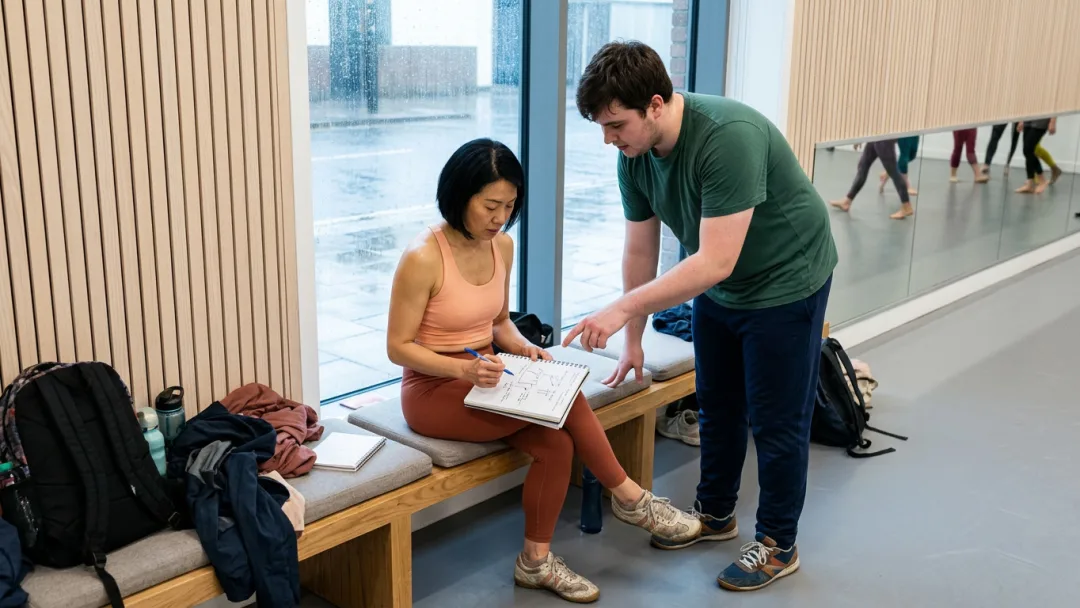
A written-down sequence is still easy to follow after a break from training, as long as both use the same abbreviations.

Seven steps to a cohesive sequence

  1. Choose three well-known figures

    Choose three figures with your partner that you can dance confidently without any acrobatics, and name them A, B, and C. Dance each one individually once in the familiar version; only include figures you can dance without searching for the steps.

  2. Note the starts and ends

    Write down the start and end for each of A, B and C: handhold, position relative to each other, facing direction, and the weight-bearing foot of both people. Add the actual duration danced; for longer figures, keep the six-count groups they contain visible as well.

  3. Line Up Compatible Transitions

    Place the exit of A next to the entry of B, then B next to C. If the handholds, position, direction, or weight distribution do not match, switch the order; if no suitable combination remains, replace one move with another one you already know.

  4. Set the timing for a hand change

    If a familiar figure includes a hand change, note its usual count and the required ending connection. Make the change within that figure, without pulling on the arm; the new connection must be secure before the next movement cue.

  5. Dance through the transitions slowly

    Dance the end of the first figure and the beginning of the second while counting aloud, then dance the second transition. Stop only after the transition: if you can do it without making contact in between, adjusting your hold afterward, or adding a weight shift, the connection works.

  6. Count through the entire sequence

    Dance A, B, and C together and count each figure in the groupings you're used to. In the example, you reach six plus twelve plus six counts; if an extra count appears along the way, isolate the affected transition and practice it again.

  7. Start and finish with the music

    Start together after counting in, on a clearly audible musical beginning, and dance the sequence at a familiar tempo. After the final figure, agree on a familiar, secure ending; both partners stay balanced independently and release the connection without pulling.

These corrections hold the sequence together

Do it this way

  • If the alignment is wrong, change the order of the figures
  • Take the next connection with a relaxed grip
  • Keep the full duration of the figure as you learned it
  • If you're unsure, isolate the transition in question

Not like this

  • Squeeze an extra turn in between the figures
  • Pull your partner into position by their held arm
  • Skip the last count to start earlier
  • Repeat the entire sequence faster and faster

Your checklist for the practice run-through

Before Connecting

Planning

After the connection practice

Connection

After the music run-through

Conclusion

Frequently Asked Questions

  1. Three moves you already know are enough for this exercise. This lets you work on two transitions between moves without making the sequence hard to remember. Once both connections feel solid, you can add another element later. A longer list won't help much if you still have to search for a foot or hand between moves.

Partner dance classes for your next sequence of moves

On udansa, you'll find classes where you can keep practicing familiar figures together.

See all matching classes
  • Couple danceLimbach-Oberfrohna · Germany

    Goldkurs

    Thursday · 17:30 · Nov 5, 2026 - Jan 28, 2027

    Limbach-Oberfrohna

    €154Total price
  • Couple danceLimbach-Oberfrohna · Germany

    Paartanzkreis

    Thursday · 18:50 · Nov 5

    Limbach-Oberfrohna

    €38.50Monthly

Your routine needs a partner

On udansa connect, you can find dance partners to put your familiar Rock'n'Roll figures together into a short routine. Mention your repertoire in your profile and that you'd like to practice without acrobatics.

Your routine needs a partner