

Find your dance community
At udansa, you will find like-minded people who want to get active with you. Discover suitable courses and events in your area and bring more movement into your life.

By Bernhard De LucaUpdated

At udansa, you will find like-minded people who want to get active with you. Discover suitable courses and events in your area and bring more movement into your life.
A steady stance and fluid movements are not a question of age, but of training. With Latin American rhythms, you playfully boost your balance and strengthen your reaction skills for every everyday situation.
Zumba balance describes the body's ability to maintain stability during the fast, dance-like changes of direction in the workout. This interaction between nerves and deep muscles effectively protects against falls in everyday life.
Anyone who trips in everyday life or loses their balance when turning around quickly soon realizes how important good body control is. A targeted Zumba coordination training starts exactly here, without you having to memorize complicated step sequences. The dynamic changes between fast and slow movements challenge the brain and muscles equally. By constantly balancing on different parts of your feet, you improve your reaction speed in a fraction of a second.
In contrast to rigid strength equipment in the gym, the dance workout trains the muscle chains throughout the entire body. When you regularly complete your Zumba Fitness sessions, you strengthen the fine deep muscles around the spine and the ankles. These muscles react reflexively in everyday life when you walk on uneven ground or have to balance unexpectedly on the bus. This is how the training becomes a real life insurance policy against falls.
Many people believe that you have to master highly complicated, acrobatic sequences for coordination training. The opposite is the case: it is precisely the simple, repetitive steps from Latin American dance that are excellent for improving your coordination through exercise and applying it in everyday life. Zumba is not about stage-ready perfection, but about the constant change of movement directions.
By combining forward, backward, and sideways steps, your nervous system learns to orient your body precisely in space. This so-called spatial orientation ability helps you in everyday life, for example, to elegantly avoid obstacles or to securely grasp objects while walking. If you are wondering whether this sport is right for you, it is best to take a look at the guide Zumba for beginners, which makes it easy to get started without any prior knowledge.
Training correctly
Avoiding mistakes
The best fall prevention is movement that challenges the brain and is fun at the same time, because that is when we repeat it regularly.
A stable stance is no coincidence, but the result of a well-coordinated interaction between the eyes, the vestibular system, and the muscles. When you use your flexibility while training in your Zumba sessions, you playfully challenge this system. The fluid hip movements and targeted weight shifts ensure that the joints remain supple and can utilize their full range of motion.
This training is the ideal preparation for all situations in life: whether carrying heavy shopping bags, climbing stairs, or quickly dodging someone on the sidewalk, a trained body reacts elastically instead of stiffly. By becoming more aware of your body's signals while dancing, you develop a natural body awareness that carries you upright and securely through life all day long.
Balance in motion
Dynamic balance trains the ability to keep the body in balance during rapid weight shifts and changes of direction. This is especially important when dodging or catching yourself from stumbling in everyday life.
Security in a firm stance
Static balance stabilizes the body in resting positions or on one leg. It strengthens the feet and ankles and ensures a firm, upright posture when standing or lifting loads.
Yes, the training improves the reaction speed of your muscles. Through quick weight shifts, the body learns to compensate for trips in everyday life lightning-fast and to catch falls.
No, no prior knowledge is necessary for the health benefits. The steps are designed so that you can intuitively follow the instructor's movements without having to memorize step sequences.
Just two training sessions per week are enough to achieve noticeable improvements. Initial effects on balance and reaction speed often appear after just a few weeks.
Find the right studio now and boost your balance.
ZumbaLimbach-Oberfrohna
ZUMBA® Fitness Clubrunning since Aug 18
Limbach-Oberfrohna
 Zumba Fitness: The effective workout for body and mindZumba Fitness is the perfect workout for anyone who loves to move and wants to improve their health at the same time. Find out how to get perfectly equipped here.
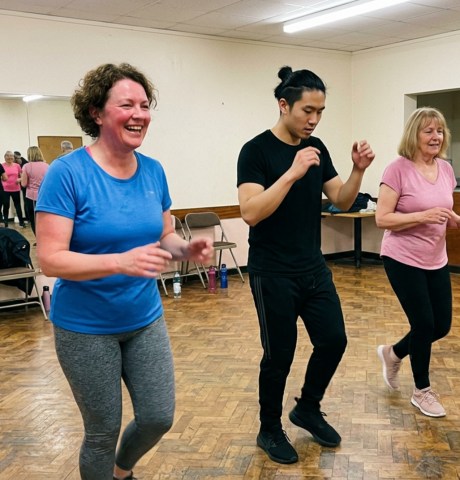 Zumba for beginners: The easy way to start your dance workoutGetting started is easy: With our beginner's guide to Zumba, you will learn about the most important formats and find out what to expect in your first class.Zumba Fitness: The effective workout for body and mindZumba Fitness is the perfect workout for anyone who loves to move and wants to improve their health at the same time. Find out how to get perfectly equipped here.
 Zumba Fitness Trends 2026: Wearables and New StylesFind out how smart wearables and the latest functional styles are revolutionizing Zumba training in 2026. The ultimate trend report for your workout.
 Zumba wear: The perfect outfit for your workoutThe right style for maximum energy: Learn how the perfect Zumba wear gives you maximum freedom of movement and keeps you comfortably cool.
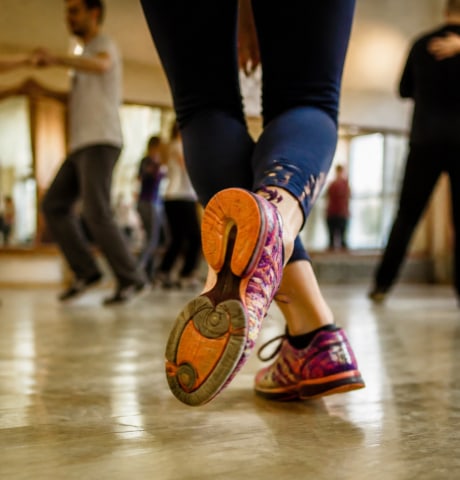 Zumba shoes: How to find the perfect gripThe right grip is key to safety and fun when doing Zumba. This guide shows you what to look for in a sole to protect your joints during quick turns.
 Zumba Gear: The 7 Essential Fitness ItemsReady for your next workout? With these seven essential items in your gym bag, you are perfectly prepared for every sweaty Zumba class.
 Zumba calorie burn: How effective is the workoutFind out how many calories you really burn per hour with Zumba and learn simple tricks to maximize your energy expenditure while dancing.
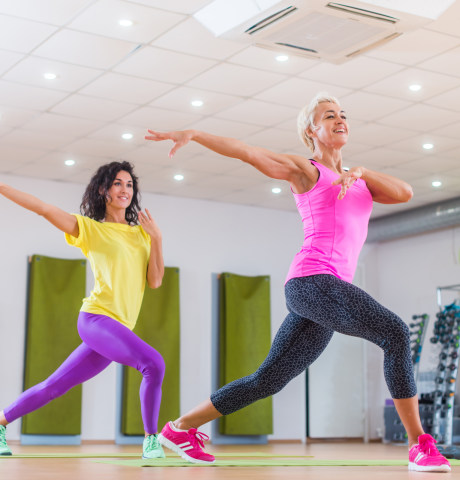 Zumba Warm Up: Start your workout injury-freeWith the right Zumba warm up, you start your training injury-free. This simple routine for home optimally prepares your body for the Latin American rhythms.