Dance Nights5 minutes

Social Dance in Düsseldorf: Which evening format is right for you?

By Bernhard De LucaUpdated

In brief
  • You can distinguish social dancing in Düsseldorf by the music, open dance time, partner rotation, and the amount of instruction.
  • A free social is a good fit if you want to use familiar fundamentals to the music without a set sequence of figures.
  • A guided introduction is a good fit if you first want to get to know the rhythm and connection as a couple.
  • Partner rotations can be organized or voluntary, and you can't tell from the name Social alone whether there will be one.

You want to dance, but find yourself thinking about a lesson, while someone else expects an entire evening of social dancing. Differences like these are often in the format, not the event name.

DefinitionPractica

Practica refers to a practice format where you can try out and repeat dance moves on your own. Depending on how it’s organized, an instructor may be available to offer brief guidance.

The Music Shapes Your Dance Language

When you categorize social dance in Düsseldorf on udansa, the musical focus is more informative than the word “Social.” It refers first and foremost to a shared dancing situation, not to a specific rhythm. An evening with music for one dance style makes different demands than a mix where different dances suit one song after another.

At a social focused on one style, you can use familiar basic movements in new ways again and again. Tempo, accents and phrases change, while the shared dance language remains. At a mixed evening, by contrast, recognizing the right dance is also part of it. Being confident with a basic step doesn’t automatically make it suitable for every song.

Musical confidence doesn’t mean filling every beat with a step. You can dance pauses together, too. The article about shared stops and entries in Boogie Woogie explains how this works, for example. So your choice depends on whether you want to deepen a familiar rhythm or switch between several dance languages. The music description is more helpful than a general evening title.

Breaks are part of a dance evening: A lively song isn't a missed class.

Free dancing is a different task from a lesson

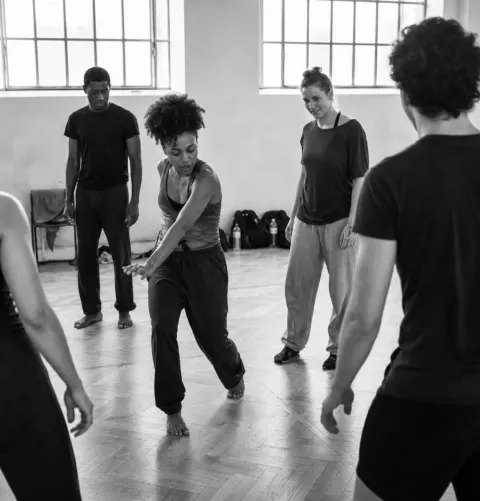
In a lesson, a teacher decides what you focus your attention on. For example, the group repeats a weight change, a connection or a turn. On an open dance floor, these decisions are made by the pair: you respond to each other, the song and the space available. No one has to dance the same sequence of figures as everyone else.

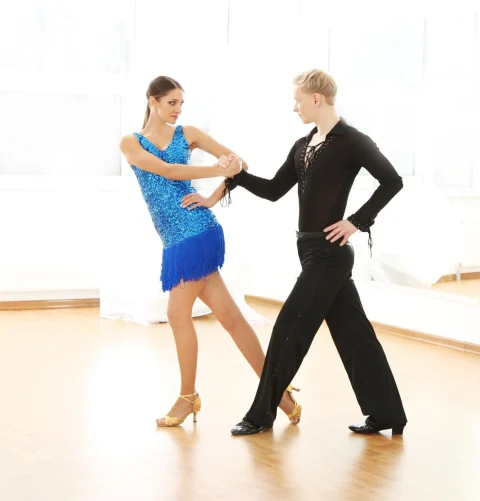
A short introduction before a social can provide a shared starting point. For example, it teaches a basic rhythm and a simple movement. But it does not turn the dance time that follows into a supervised class. The transition from copying to making your own decisions can feel unfamiliar, especially. The article about missing fundamentals when starting classes later on also explains which foundations matter for this.

A practica is closer to practicing independently: you can pause a movement, start again and talk about how to execute it. At a social, constant corrections would change the shared dance. The difference lies in the purpose of the dance time, not in how well the participants dance. On udansa, a described format can therefore be understood as an introduction, a practice session or free dancing, even if several of these phases come together in one listing.

Recognize the format instead of relying on the name

That's right

  • Open dance time means making your own choices to the music
  • An introduction provides a limited starting point
  • Organized rotations follow an announcement
  • A music mix may require a foundation in several dances

Myths

  • Open dancing means dancing without any fundamentals
  • An introduction replaces a complete beginner course
  • Every social dance requires you to change partners
  • Every dance step works with every song in the music mix

An evening format becomes easier to understand once you consider music, instruction, and free dance time separately.

udansa editorial

Partner rotation changes the way people interact

Organized partner rotation and voluntarily changing partners between songs are different parts of an evening format. In a guided session, an announcement can specify when the next partnership begins. At an open social, it happens through mutual consent. The term alone does not say which option is planned.

Changing partners makes small differences noticeable: one person starts earlier, while another needs more time to transfer their weight. This helps you learn to make movements easy to read and notice responses, rather than insisting on a memorized sequence. You can explore this principle further in the article about timely signals when leading and following in Rumba.

Dancing with the same person for several songs offers a different experience. You can get in sync with each other and develop subtle musical choices. Both approaches have value in dance. Partner rotation is neither a performance test nor a guarantee of contact, and anyone can decline.

That is why specific details about the format, such as “guided rotation” or “open dancing,” are helpful when choosing an event on udansa. Music, instruction, and partner rotation go together, but they are separate features: an evening can offer plenty of open dance time and still begin with an organized introduction.

Two different ways to experience music

Go deeper

One dance style shapes the evening

Familiar foundations, changing songs

A social focused on one dance style lets you use the same dance language with different people and songs. You can focus on small changes: How long can a movement last, where does a pause fit, how does your partner respond?

Switching

Several dances share the music

Variety between songs

A mixed dance evening makes room for different rhythms. You choose the songs for which you know the right basics, and can consciously skip others. The appeal lies in changing your posture and sense of movement with each dance.

Frequently Asked Questions

  1. A practica is focused on practice, while a dance party is more about dancing continuously to the music. A practica may include repetitions, breaks, and brief technical discussions. On an open dance floor, your dance with your partner usually follows the song currently playing.

Find the right dance format for you

On udansa, you can find dance events in Düsseldorf whose described format may suit your preference for free-form or guided dancing. You can also find suitable dance partners to connect with.

Find the right dance format for you