Dance occasions6 minutes

Dancing without alcohol in Münster: Which setting is right for you?

By Bernhard De LucaUpdated

In short
  • You can dance without alcohol in Münster, even if alcoholic drinks are offered at an event.
  • An explicitly alcohol-free event needs a clear rule about alcohol, not just a selection of non-alcoholic drinks.
  • If udansa does not clearly specify the event’s policy, an alcohol-free dance party has not been confirmed.
  • Before choosing, decide whether your own abstinence is enough or you need an alcohol-free setting.

A dance evening can be just right musically and still feel wrong when it comes to drinks. That’s why your personal boundaries can already play a role when choosing, without you having to justify them on the dance floor.

What you need for your selection

  • Setting your own limits around alcohol at events
  • A dance event you can join in yourself
  • Access to event details published on udansa
  • An alternative if the setting isn’t right for you

Drinks offering and event rules are different

If you want to dance alcohol-free in Münster, three different types of statements can help you. “Alcohol-free drinks available” describes what is on offer, not the rules for guests. Water, juice or a drinks menu with alcohol-free options may be available alongside beer and wine. “No alcohol sales” also leaves open whether you can bring your own drinks. Only an explicit rule such as “Alcohol is not allowed during the event” sets a boundary for the occasion.

This distinction concerns the social setting, not the dance style. Basic steps, music and partner changes tell you nothing about what is served at the bar. Photos showing glasses of water or a low-key event title are just as little proof of an alcohol ban. A phrase like “attend sober” refers to the state of the participants and is not automatically a statement about the entire building.

For musical compatibility, the guide to choosing a Swing party offers a different perspective. If your uncertainty is mainly about having no dance experience, the article on finding a dance partner with no prior experience can help. Both questions are separate from your alcohol limit. This does not assume that an alcohol-free event is currently being offered in Münster: what matters is the statement for the specific date, not an assumption about its audience.
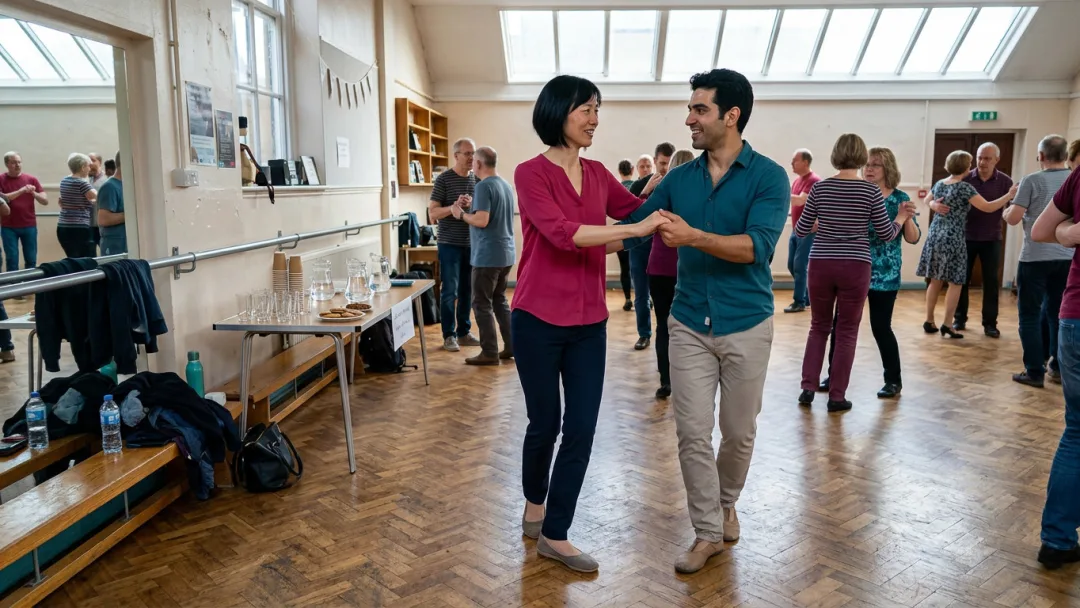
A glass of water indicates a drink choice, but not yet a binding rule for the entire event.

How to choose your alcohol-free setting

  1. Set your own boundary

    State your preference clearly: “I don’t drink” or “I don’t want alcohol in the event area.” Add whether a shared bar or visibly intoxicated guests would also bother you; this makes your boundary useful when choosing an event.

  2. Open a suitable dance event

    Open a published dance event in Münster on udansa where you can dance yourself. A stage performance isn't an alternative, even if the drinks selection is right; an alcohol-free setting alone doesn't create an opportunity to dance.

  3. Put the statement about alcohol in context

    Read the published information about drinks and alcohol as a whole, including any limitations. Assign it to a category: non-alcoholic options, no alcohol served, or an explicit event rule. Without a clear statement, the situation remains unknown.

  4. Addressing an information gap directly

    If an explicitly alcohol-free setting is the only option for you, check with the organizer if this information is missing: “Is alcohol prohibited in the event area for this event, including in drinks brought in?” An unanswered inquiry is not confirmation.

  5. Choose or skip the date

    Choose only an event whose documented setting aligns with the boundary you set beforehand. If personal abstinence is enough for you, alcohol being offered isn't an automatic deal-breaker; if you need an explicit rule, a friendly description without a clear statement isn't enough.

  6. Coordinate with your companion and choose your drink

    Before your visit, tell your companion what setting you’ve chosen and that you don’t want to drink alcohol. At the venue, order a clearly named drink, such as water or juice, instead of relying on names like “Special” or “House Mix.”

  7. Act consistently when a boundary is crossed

    If the situation there doesn't match your boundary, you don't have to stay. If you're personally choosing not to drink, you can decline an offered drink and keep dancing; if an alcohol-free setting was promised, visible alcohol consumption is a significant departure from that agreement.

These conclusions are sound, these are not

Like this

  • Relate a rule to the specific area explicitly mentioned
  • Associate a statement about an appointment only with that appointment
  • Name the drink specifically when ordering
  • Respect a no to the drink offered

Not like this

  • Apply a room rule to the entire building
  • Assume one event represents all events
  • Automatically call an unfamiliar house mix alcohol-free
  • Accept an unwanted drink out of politeness

Your selection to check off

Before the Decision

Classification

Before your visit

Preparation

After Arriving

Participation

Frequently Asked Questions

  1. No, you don't have to justify your personal choice not to drink. A friendly “No, thank you, I'll have water” is enough, even when someone invites you or offers you a round. Your choice of drink doesn't require you to give a health-related explanation or comment on other guests' choices.

Your boundaries, your dance partner

On udansa, you can find a dance partner in Münster and openly share your wish to go out alcohol-free. This turns a personal boundary into a shared plan.

Your boundaries, your dance partner