Brazilian Dance5 minutes

Forró in Hamburg: Five Common Beginner Mistakes

By Bernhard De LucaUpdated

In short
  • When dancing Forró, keep your upper body upright and your arms relaxed and supple instead of holding onto your partner.
  • Take smaller steps and fully shift your weight before starting the next step.
  • Follow the rhythm of the music instead of rushing through the basic steps or dancing independently of your partner.
  • Only practice turns once the basic step, distance, and both dancers' consent are all in place.

Many stumbles may seem like a lack of rhythm, but they start with poor posture or too much movement. Once you recognize the cause, you can practice more comfortably and give your partner clearer guidance.

DefinitionWeight Transfer

Weight transfer means consciously moving your body weight from one foot to the other. In Forró, it makes a step clear and creates space for the next movement impulse.

Getting started in Hamburg begins with small movements

With Forró, beginner mistakes often seem like isolated slip-ups, but they are frequently connected. A large step throws your upper body off balance; tense arms make it harder to sense your partner’s impulse. In Hamburg, as everywhere, the best way to learn the basics is in a class that builds up the steps at a relaxed pace. The city profile doesn’t list any specific Forró classes, so it’s worth asking directly about a beginner class when choosing one. If you’re weighing different class formats, this overview of dance class formats in Hamburg can help.

The five most common stumbling blocks are a posture tilted forward or backward, stiff or pulling arms, steps that are too big, movement without a clear weight shift, and turns that come too soon. They aren’t five independent technique tests. Often, it all starts when you try to control several things at once: your feet, the music, and your connection with your partner. So focus on just one thing first. When your upper body stays upright and your steps get smaller, you can better feel when your weight actually shifts to the other foot.

Lower bodies of women in a dance studio
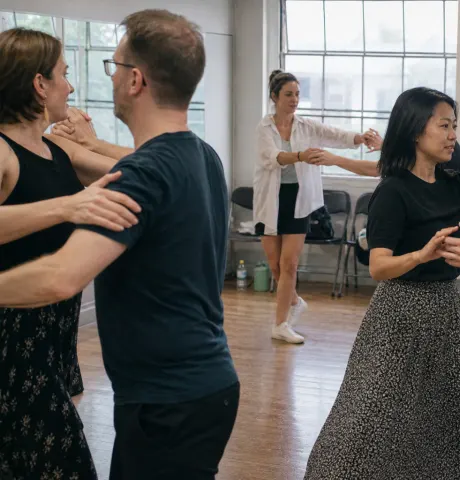
Small steps leave more room for the rhythm and for your partner's movements.

Why mistakes tend to occur together while learning

When you’re new to a partner dance, you often look at your feet to avoid missing a step. This can easily make your upper body lean forward, your shoulders rise and your arms tense up. Your partner then feels tension rather than a clear movement cue. Conversely, worrying that you’re not leading clearly enough can tempt you to pull on your partner’s arm. Both take away freedom of movement from your shared dance.

Step size also changes the connection. Large steps need more space and often shift your weight so far that the next step becomes rushed. Small, controlled movements aren’t automatically slow or stiff: they give you time to hear the rhythm and finish shifting your weight. Turns can make you feel even less sure when your basic step or distance from your partner isn’t stable yet. So don’t let them become the measure of your progress. In a trial lesson, you can observe whether the teacher explains individual movements clearly and adapts to different tempos. If something remains unclear despite group lessons, private dance lessons in Hamburg can be a way to work through a specific posture or sequence of steps.

Five common mistakes and how to correct them

Like this

  • Keep your upper body upright and your shoulders relaxed
  • Maintain contact with relaxed arms
  • Take small steps beneath your body
  • Shift your weight first, then move on
  • Start turns only with clear, shared leading

Not like this

  • Push your upper body forward or lean back
  • Pull on your partner’s arm or cling to them
  • Take big steps into your partner’s path
  • Move your feet quickly without shifting your weight
  • Force turns before you’re both ready

When the steps get smaller, the connection becomes clearer and both can feel the rhythm better.

Forró dance instructor

What corrections reveal about dancing well together

Correcting a beginner's mistake is not just about making a foot movement cleaner. It changes how well both people can read the movement. An upright, flexible posture makes it easier to stay balanced, while a clear shift of weight makes the next step easier to follow. The person leading does not need to push harder, and the person following does not need to guess the next figure. Both can respond attentively to the connection and the music.

In Forró classes, it is worth paying attention to how the connection is discussed. When roles are presented as fixed tasks, it is easy to overlook that both people dance actively and give feedback. So, good questions to ask the class provider are: Do you practise the basic step without figures? Do you get guidance on distance and comfortable contact? Can participants practise more slowly if they need to? The course filter on the Hamburg page shows current classes and dates; check there whether Forró and a suitable beginner level are explicitly listed. That way, you can compare options without concluding anything about your dancing skills from a single turn or a complicated figure.

Two Perspectives on the Same Connection

Leading

Impulse Instead of Pulling

Orientation Comes from Posture and Weight Shifts

When you lead, you communicate movement impulses through your own body while staying upright. Pulling on the arm can quickly feel like a command and make it harder for your partner to take the step comfortably.

Following

Connection instead of guessing

Pick up the movement without getting ahead

As a follower, you can wait for the lead and respond with your own shift of weight. If a step is unclear, slowing down a little helps more than guessing the next figure.

Frequently Asked Questions

  1. No, many Forró classes are specifically designed for beginners with no prior experience. Before signing up, ask whether the basic step, rhythm and partner changes are explained from the start.

Forró Classes in Hamburg

Compare current classes and dates in Hamburg, and make sure the lessons are explicitly suitable for Forró beginners.

The next step begins with Forró

On udansa, you can discover Forró classes and dance partners in Hamburg that are right for you. Compare options to see whether they give beginners room to work on basic steps, posture and practicing together.

The next step begins with Forró